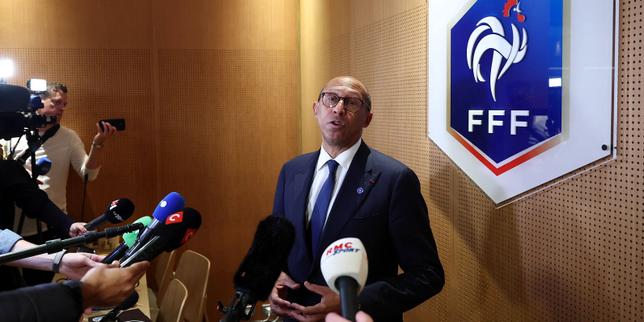
Football politics rarely offer a plot twist as sharp as Philippe Diallo stepping forward to challenge Gianni Infantino. When the French Football Federation president entered the race in November 2026, he immediately turned a predictable coronation into a genuine fight for the March 18, 2027, FIFA Congress in Rabat. Yet his entire campaign hinges on one brutal mathematical reality: you cannot win the FIFA presidency without breaking Gianni Infantino's grip on Africa.
Europe gave Diallo the launchpad. UEFA's executive committee, chaired by Aleksander Ceferin, unanimously backed him on November 16, 2026, putting 55 European associations squarely in his corner. That sounds impressive on paper. It isn't nearly enough. With 211 member federations holding equal voting power—210 eligible to cast ballots while Nepal remains suspended—a candidate needs an absolute majority of 106 votes. Even if every single European nation stays loyal to Diallo, he still sits roughly 50 votes short of the crown. That explains why the Frenchman flew straight to Abuja, Nigeria, for the Confederation of African Football (CAF) General Assembly days after declaring his candidacy. He went there to test the waters, introduce himself to African powerbrokers, and see if his Senegalese heritage and Francophone ties could crack open a continent that Infantino treats like his personal fortress.
The Brutal Math of the 2027 FIFA Presidential Race
To understand what Philippe Diallo is actually up against, you have to look at how FIFA's one-country, one-vote system works in practice. On election day in Morocco, Germany's vote carries the exact same weight as Djibouti's, and France counts no more than Comoros. For a decade, Infantino has mastered this arithmetic by building deep institutional alliances outside Europe.
Right now, the continental breakdown looks lopsided before campaigning even hits full stride. Infantino already holds public endorsements from CONMEBOL in South America, the Asian Football Confederation, and the Union of Arab Football Associations. Add CAF's 54 member federations to that tally, and the incumbent is staring at a massive head start. Reports from RMC Sport suggest Infantino already has 80 to 90 locked-in votes months ahead of the ballot.
Diallo isn't the only challenger trying to disrupt this equation. Former Japan Football Association chief and FIFA Council member Kozo Tashima also submitted his candidacy before the November 18 deadline, running on a platform of restoring FIFA's credibility. Tashima has already spoken by phone with Diallo and plans to meet him in Europe to discuss potential cooperation or a strategic withdrawal. Honestly, Tashima's presence barely registers as a threat to Infantino unless he steps aside and funnels whatever Asian or reform-minded votes he can muster directly to the Frenchman. Even then, Africa remains the decisive battleground. Fifty-four votes sit on that table. If Diallo gets shut out there, the election is over before the envelopes are opened in Rabat.
What Happened in Abuja When Diallo Met CAF
If Diallo expected a warm homecoming in West Africa, the reception in Abuja delivered a cold dose of reality. Attending CAF's Ordinary General Assembly, the FFF president kept a low profile, declining media interviews and stating he was there simply to introduce himself to federations and observe the room.
What he observed was a choreographed display of loyalty to his opponent. CAF President Patrice Motsepe took the stage and publicly reaffirmed that all 54 African associations unanimously support Infantino's bid for another term. Motsepe went further, praising the FIFA president and inviting the entire assembly to stand and applaud him.
To make matters worse, Diallo suffered an embarrassing own goal from inside his own delegation. Joëlle Monlouis, the general secretary of the French Football Federation who accompanied Diallo to Nigeria, posted a public congratulatory message to CAF right after the assembly where Motsepe rallied the room behind Infantino. Inside French football circles, that misstep looked terrible. When your own senior administrator publicly applauds a gathering that just endorsed your rival, it signals that your campaign machine isn't ready for the cutthroat world of global football diplomacy.
Motsepe did meet privately with Diallo during the trip, acknowledging the Frenchman's African roots. Still, the South African billionaire made his stance crystal clear to reporters. He admitted that Diallo's connection to the continent complicates things optically, yet he insisted CAF's decision comes down to cold, hard self-interest and a proven track record.
Follow the Money Why African Federations Back Infantino
People in European media often scratch their heads at why African federations stick so closely to Infantino despite governance controversies and friction with UEFA. It isn't complicated at all. You just have to look at the balance sheets of national football associations across Africa.
Under FIFA's Forward development program, funding to member associations has exploded during Infantino's tenure. Speaking directly to African delegates in Abuja, Infantino reminded them of the exact numbers: when he first took office in 2016, each association received $250,000 per year—or $1 million over a four-year cycle. For the upcoming cycle starting in 2027, that figure jumps to $25 million per federation over four years.
Think about what $25 million means to a small or mid-sized African federation. In dozens of countries, government sports budgets are erratic, domestic broadcast rights bring in peanuts, and corporate sponsorships barely cover national team travel. FIFA's direct cash transfers pay staff salaries, fund youth academies, build technical centers, and keep the lights on. When an incumbent president delivers a 25-fold increase in guaranteed funding, asking federation presidents to risk that stability for a European challenger promising "better governance" is a massive ask.
The Symbolic and Structural Pull of FIFA Under Infantino
Money does the heavy lifting, sure, but Infantino has also handed Africa tangible political and sporting wins that previous regimes withheld:
- Expanded World Cup access: Moving to a 48-team World Cup guaranteed Africa at least nine direct qualification spots, up from five, transforming the commercial value of CAF qualifiers.
- High-profile visibility: Infantino shows up constantly in African capitals, cultivating personal ties with influential figures like Morocco's Fouzi Lekjaa, Cameroon's Samuel Eto'o, and Egypt's Hany Abo Rida.
- Term-limit optics: Motsepe explicitly framed the 2027–2031 cycle as Infantino's final term, reassuring African leaders that backing him one last time won't block future ambitions from within their own ranks.
Diallo walks into this environment with virtually zero international name recognition outside France and UEFA committees. Having Senegalese roots helps open doors for polite conversations over dinner, yet personal heritage doesn't pay for stadium renovations or charter flights for World Cup qualifiers.
Why the Secret Ballot Keeps Diallo's Hopes Alive
So why hasn't Philippe Diallo packed his bags and conceded? Because in FIFA elections, public endorsements and actual votes are two completely different animals.
Every single ballot cast at the FIFA Congress in Rabat on March 18, 2027, is strictly secret. Confederation presidents can stand on stage, demand standing ovations, and declare unanimous bloc support all day long. Once a federation president steps behind that voting booth curtain, nobody—not Patrice Motsepe, not Gianni Infantino, and not their regional allies—can verify which box they ticked.
History proves how quickly unanimity evaporates in secret FIFA ballots. Look back at 2016, when Infantino himself ran for the presidency. When he traveled to Kigali, Rwanda, ahead of that election, African federation bosses gave him the cold shoulder and barely wanted to speak with him because CAF's leadership had backed Sheikh Salman bin Ebrahim Al Khalifa. Weeks later, enough African federations broke ranks in the secret ballot to hand Infantino the presidency.
Beneath the surface of CAF's public unity, real fault lines exist. Francophone African federations share deep historical, linguistic, and technical ties with French football. Dozens of African national team coaches, technical directors, and star players trained within France's system. Diallo knows every nook of that network from his years leading the French union of professional clubs before taking over the FFF. If he can quietly peel away 15 to 20 Francophone associations—nations that publicly applaud Infantino in Abuja while privately resenting certain power dynamics inside CAF—the electoral math suddenly shifts.
There is also a lingering legal cloud hanging over Infantino's candidacy. Critics and legal observers have raised questions regarding FIFA's term-limit rules and whether Infantino's current run for what they view as a fourth term—counting his initial partial term from 2016 to 2019—violates governance statutes. While FIFA's electoral committee reviews all submitted candidacies before formally clearing them, any legal challenge or governance blowup between now and March could give hesitant voters an excuse to defect.
What Diallo Must Do Before the March 2027 Vote
Diallo told reporters in Abuja that he would stay quiet for roughly three weeks before launching his full public platform. If he wants his trip to Africa to produce actual votes rather than polite handshakes, he cannot run a campaign built purely on European grievances about Infantino's management style. African leaders don't care about UEFA's turf wars with Zurich.
To turn his surprise candidacy into a viable upset, Diallo's campaign team has to execute four concrete moves over the next three months:
- Match or beat the financial guarantees: Diallo must put a concrete funding commitment in writing before January. He doesn't need to promise reckless spending, but he has to guarantee that the $25 million four-year FIFA Forward allocation won't shrink by a single dollar if he wins.
- Target Francophone federations one by one: Forget winning over CAF as an institution—Motsepe has locked that door. Diallo needs quiet, bilateral meetings with federation presidents in West and Central Africa where French football's technical partnerships, coaching education, and youth development programs carry real weight.
- Consolidate the opposition with Kozo Tashima: Having two challengers split the anti-Infantino vote is political suicide. Diallo must finalize a clear pact with Tashima early in 2027 so that whoever trails withdraws well before Rabat, presenting wavering federations with a single, unified alternative.
- Tighten internal campaign discipline: Episodes like the Monlouis social media blunder in Abuja kill credibility overnight. Diallo needs a dedicated campaign staff completely separate from FFF daily operations so every public message reinforces one clear narrative.
Gianni Infantino remains the heavy favorite heading toward Rabat, backed by massive financial disbursements and institutional endorsements across four confederations. Yet football politics has a habit of punishing incumbents who assume unanimous applause equals unanimous ballots. If Philippe Diallo can convince even a third of Africa's federation presidents that their $25 million is safe with him, March 18 in Morocco won't be a coronation—it will be a genuine political earthquake.