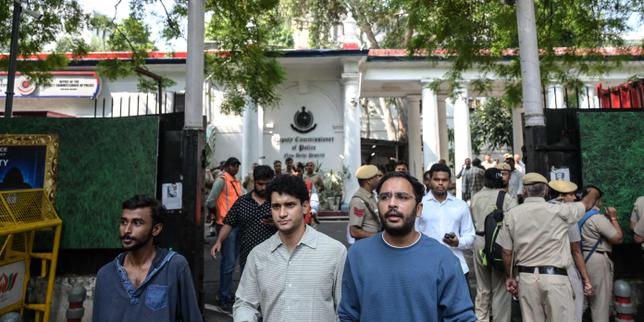
When news broke that senior political leaders were placed back into custody in India, it triggered immediate debates about legal procedure, judicial oversight, and democratic norms. Opposition parties in India have faced intensifying legal scrutiny in recent years. Central agencies like the Enforcement Directorate (ED) and the Central Bureau of Investigation (CBI) are handling high-profile financial and political cases.
Understanding these arrests requires looking past headline political rhetoric. You have to examine how Indian bail law works, why pre-trial detention keeps happening, and what this trend means for electoral politics. If you found value in this post, you might want to look at: this related article.
How Indian Bail Laws Keep Political Figures Behind Bars
Getting bail in India used to follow a simple judicial principle: bail is the rule, jail is the exception. Higher courts repeated this phrase for decades. In recent financial crime investigations, that principle effectively flipped.
Statutes like the Prevention of Money Laundering Act (PMLA) contain strict double conditions for bail. Under Section 45 of the PMLA, the court must be satisfied that there are reasonable grounds for believing the accused is not guilty, and that they are not likely to commit any offense while on bail. Meeting this standard before a trial even begins is extraordinarily difficult. For another angle on this event, check out the latest coverage from The Washington Post.
+-------------------------------------------------------------+
|               TRADITIONAL BAIL vs PMLA BAIL                 |
+-------------------------------------------------------------+
| Standard Bail (IPC / CrPC)   | PMLA Bail (Section 45)       |
| - Presumption of innocence   | - Reverse burden of proof    |
| - Custody as exception       | - Must prove non-guilt early |
| - Focus on flight risk       | - Hard threshold for courts  |
+-------------------------------------------------------------+
When investigative agencies re-arrest or re-detain opposition figures under fresh charges or separate cases, it extends pre-trial custody for months or years. Defense attorneys argue this creates a pattern of prolonged detention without conviction. Prosecutors maintain that complex financial investigations require extended custody to trace money trails and prevent tampering with evidence.
The Role of Central Investigative Agencies
The Enforcement Directorate has seen its powers expanded significantly by statutory amendments and Supreme Court rulings over the past decade.
- No immediate FIR requirement: Unlike the police, the ED is not strictly required to hand over a formal First Information Report (FIR)—known in PMLA terms as an Enforcement Case Information Report (ECIR)—to the accused at the time of arrest.
- Admissibility of statements: Statements recorded before ED officers are admissible as evidence in court, unlike statements given to standard police officers under Section 161 of the Code of Criminal Procedure.
- Broad scope of attachment: Properties can be provisionally attached early in an investigation if agencies suspect they represent proceeds of crime.
Critics argue that these expanded powers disproportionately target opposition members, creating an uneven political playing field. Government representatives push back against this narrative, arguing that law enforcement operates independently based on evidence and that no political figure is above the law.
Electoral Impact and Public Perception
Re-detaining prominent regional or national opposition leaders directly impacts campaign operations. Party strategy breaks down when key strategists and decision-makers are removed from active politics ahead of elections.
Voter response to these detentions remains split:
- Anti-corruption messaging: Supporters of the government see these arrests as proof of a firm commitment to clean up governance and eradicate financial malfeasance regardless of political status.
- Political persecution narrative: Opposition supporters view the moves as targeted harassment designed to derail campaign momentum and silence critics.
Whether these legal actions help or hurt political parties depends heavily on local dynamics. In some states, arrests turn detained leaders into martyrs, boosting sympathizers' turnout. In others, prolonged legal troubles weaken party structures and discourage donors.
Navigating Legal Appeals in Political Custody Cases
For legal teams defending political figures in India, navigating extended detention requires a clear multi-tiered strategy.
- Challenge procedural flaws immediately: Defense teams look for technical lapses in arrest memos, compliance with Section 19 of the PMLA, or failure to communicate grounds of arrest promptly.
- Highlight trial delays: Higher courts, including the Supreme Court of India, have repeatedly ruled that prolonged pre-trial detention violates Article 21 (Right to Life and Personal Liberty) if the trial shows no sign of concluding anytime soon.
- Seek interim medical relief: When merit-based bail stalls, defense lawyers often apply for interim bail on health grounds, backed by detailed medical records.
If you are tracking Indian political law or evaluating case outcomes, monitor trial court filings rather than press briefings. Watch whether agencies present final charge sheets on time and whether courts begin framing charges—those are the real indicators of whether a case moves to trial or remains bogged down in pre-trial detention.