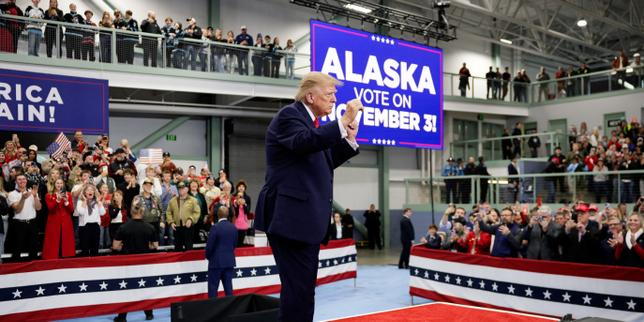
Donald Trump recently took to Truth Social to proclaim that "massive oil, gas, and mineral exploration" is about to kick off in "our new and beautiful Greenland". He framed it as a massive economic victory for American energy dominance and defense.
It makes for a great headline. But if you talk to officials in Nuuk or take a close look at Greenlandic law, you quickly realize the reality on the ground looks nothing like the social media post. Recently making waves in related news: Political Detentions in India and the Crackdown on Opposition Leaders.
Here's the truth: no massive drilling campaign is starting anytime soon.
Why Trump Can't Just Order Drilling in Greenland
To understand what's actually happening, you have to look back at 2021. That's when Greenland's parliament (Inatsisartut) officially placed a total moratorium on all new oil and gas exploration licenses. Further information into this topic are explored by Al Jazeera.
The island's leadership decided the climate impact and economic risks of Arctic offshore drilling far outweighed any potential payoffs. That ban remains fully in effect today. The White House can't simply override a foreign legislature's environmental laws.
Greenlandic officials were quick to respond to Trump's declaration. Naaja Nathanielsen, Greenland's Minister for Business and Mineral Resources, made it clear that any resource extraction is still years away from reality. As she put it plainly, there won't be any Greenlandic oil hitting the market in the near future.
So why is Trump making these claims now?
It mostly comes down to a security agreement signed in late September between Washington, Copenhagen, and Nuuk. The deal permits the U.S. to modernize its presence at Pituffik Space Base (formerly Thule Air Base) and potentially establish two new defense outposts in East and South Greenland. The agreement includes provisions to block strategic investments from non-NATO nations—aimed directly at keeping Chinese capital away from Arctic infrastructure.
Crucially, that pact is about military access and foreign investment limits. It doesn't hand over commercial exploration rights to American energy giants.
The Brutal Reality of Mining Under Two Miles of Ice
Even if Greenland stripped away its environmental laws tomorrow, extracting resources from the Arctic is a logistical nightmare.
The Greenland ice sheet covers roughly 80% of the island. It's up to two miles thick in some places. You can't just set up a standard rig or open-pit mine when you're dealing with extreme sub-zero conditions, frozen sea lanes, and a complete lack of basic infrastructure like roads or deep-water ports.
| Factor | Geologic Potential | Practical & Regulatory Reality |
|---|---|---|
| Oil & Natural Gas | Estimated 7.8B barrels of oil & 91.9T cubic feet of gas. | Moratorium in place since 2021. Zero active offshore production rigs. |
| Critical Minerals | Contains 24 of 34 EU-designated critical raw materials. | Only two active mines currently operate across the entire island. |
| Infrastructure | Massive potential in ice-free coastal belts. | No interconnected road grid, harsh seas, short operational windows. |
There's no doubt the island holds vast mineral wealth. Geologists estimate the subsoil contains 24 of the 34 critical raw materials identified by the European Union, including rare earths vital for defense tech and electronics. But having minerals in the ground is very different from getting them out at a profit. Right now, out of roughly 135 exploration licenses, only two mines are actually operational in the entire territory.
What about legacy oil permits? A few pre-2021 licenses do exist, like the Jameson Land project in Eastern Greenland. But holding a legacy permit only grants permission to run tests—it doesn't give a company the right to start commercial production without passing stringent local environmental reviews.
What This Means for Arctic Geopolitics
Trump's rhetoric isn't happening in a vacuum. The Arctic is warming, sea ice is receding, and short maritime routes between Russia, Europe, and North America are opening up. Washington is genuinely worried about Russian military buildup and Chinese investment in the far north.
By projecting absolute American dominance over Greenland's resources, Trump is sending a message to foreign rivals: the Western Hemisphere's Arctic frontier is off-limits.
It also serves a domestic political purpose. Talking about "massive" energy finds plays well with voters focused on gas prices and energy independence. But confusing geopolitical posturing with actual industrial capacity is a mistake.
If you're following this story, keep your eyes on regulatory approvals from Nuuk rather than statements from Washington. Watch whether the Greenlandic parliament makes any moves to adjust its 2021 oil moratorium or alter its environmental screening process for mining permits. Until those local laws change, all the social media posts in the world won't bring heavy machinery to the ice sheet.