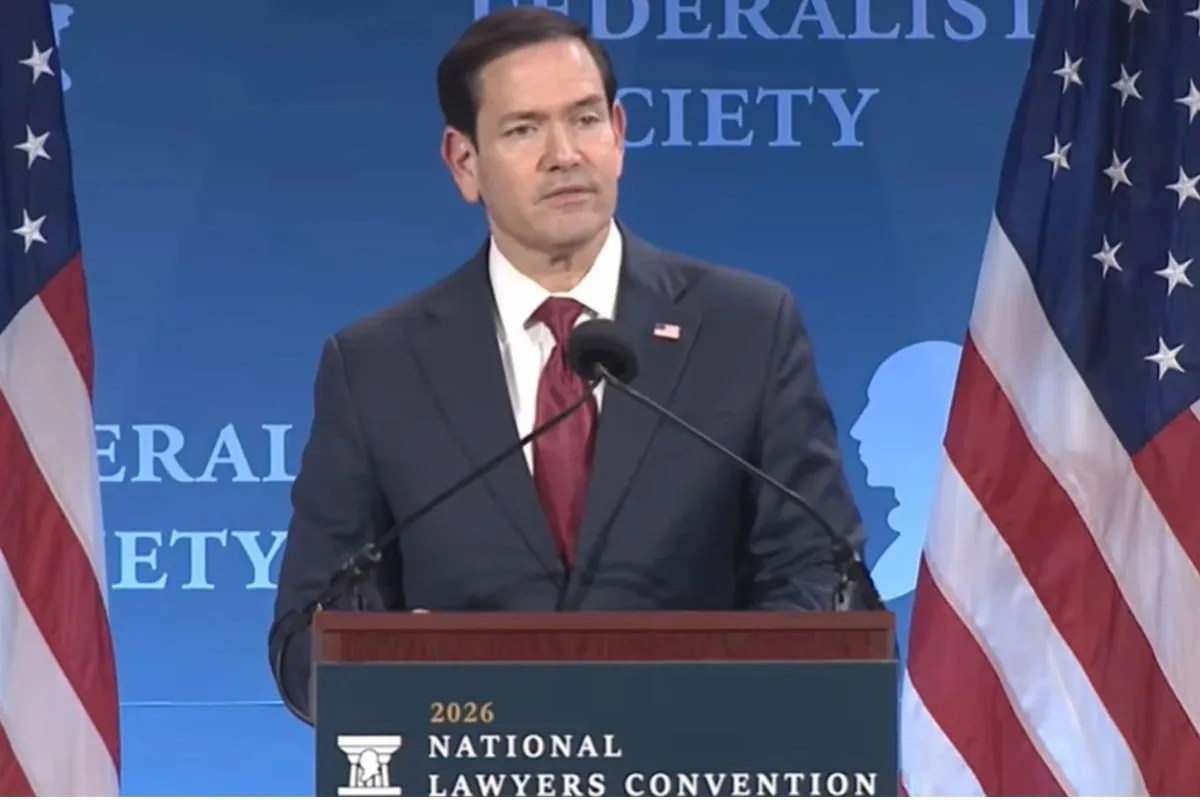
President Donald Trump praised the United States Coast Guard and local first responders following the collision between an oil tanker and a cruise ship in Louisiana, highlighting their rapid rescue efforts in the treacherous waters of the Mississippi River. While federal leadership rightfully commended the bravery of the crews who prevented a catastrophic loss of life, the political applause obscures a far more troubling reality about maritime congestion, aging infrastructure, and regulatory gaps along one of America's most vital industrial corridors. The immediate emergency response succeeded, yet the collision exposes chronic vulnerabilities in how commercial shipping and passenger vessels share restricted waterways.
The Lower Mississippi River is an unforgiving artery of global trade. Every year, thousands of deep-draft ocean vessels navigate its shifting shoals, sharp bends, and powerful currents alongside barges, tugs, and commercial cruise liners departing from New Orleans. When a massive petroleum tanker and a multi-deck passenger vessel occupy the same narrow channel, the margin for human or mechanical error drops to zero. Praise for the rescuers is entirely warranted, as pulling passengers and crew to safety in fast-moving river currents requires immense skill and coordination. However, focusing exclusively on the heroism of the aftermath allows maritime authorities and policymakers to sidestep the uncomfortable question of why two vessels of that scale were ever placed on a collision course in the first place.
The Anatomy of a River Collision
To understand how an oil tanker and a cruise ship collide in modern waters, you have to look beyond simple pilot error and examine the physics of river navigation. Unlike open-ocean transit, where ships have miles of sea room to maneuver, river navigation forces colossal vessels into tight geometric constraints. A fully loaded tanker carries immense momentum. Even when engines are thrown full astern, a vessel weighing tens of thousands of tons can take more than a mile to come to a complete stop, losing rudder authority as water flow over the steering gear diminishes.
Cruise ships present the opposite aerodynamic and hydrodynamic profile. With towering superstructures acting like giant sails, passenger liners are highly susceptible to crosswinds and erratic river eddies. In the winding stretches of Louisiana's waterways, particularly near sharp turns like Algiers Point or English Turn, strong currents push vessels laterally toward the opposite bank. Pilots rely on constant communication via VHF radio, radar, and Automatic Identification Systems to coordinate passing arrangements. When a steering gear malfunctions, an engine loses power, or a communication misinterpretation occurs in these tight corridors, the physics of mass and velocity take over instantly.
First responders operate under the assumption that such incidents are inevitable rather than preventable. Coast Guard Sector New Orleans, local harbor police, tugboat operators, and parish emergency management teams drill continuously for mass-casualty maritime events. When the collision occurred, that preparation paid off. Tugboats already working the river often serve as the true first responders, using their immense horsepower to push crippled hulls out of the main shipping channel and prevent secondary collisions or grounding on the riverbank. Coast Guard cutters, small response boats, and helicopters then establish a perimeter, evacuate injured personnel, and deploy containment booms if hull integrity is compromised.
Why Political Applause Distracts From Regulatory Drift
Whenever a high-profile transportation accident occurs without mass fatalities, the political response follows a predictable script. Leaders commend the bravery of uniformed personnel, express relief that the outcome was not worse, and move on to the next news cycle. This pattern is deeply familiar to anyone who has covered maritime and aviation safety over the past three decades. By framing the event as a triumph of emergency response rather than a failure of traffic management, officials inadvertently lower the urgency for structural reform.
Consider the economic pressure exerted on the Lower Mississippi River corridor. The ports of South Louisiana, New Orleans, and Baton Rouge handle a massive percentage of American agricultural exports and petrochemical imports. Every hour a channel is closed costs the supply chain millions of dollars. Simultaneously, the cruise industry has aggressively expanded its Gulf Coast footprint, deploying larger ships that carry thousands of passengers through the exact same bottlenecks used by hazardous-material tankers.
The Coast Guard's Vessel Traffic Service monitors these movements, acting much like air traffic control for the water. Yet maritime traffic control lacks the rigid, mandatory separation protocols that govern commercial aviation. River pilots—highly trained local experts who board foreign and domestic vessels to guide them through treacherous waters—retain ultimate tactical control over ship handling. While the pilot system has kept the river running for centuries, the sheer size of modern vessels has outpaced the physical dimensions of the channels they transit. Ultra-large tankers and mega-cruise ships leave little room for error when passing port-to-port in narrow bends.
Environmental and Human Stakes on the Lower Mississippi
The collision in Louisiana carried the dual threat of mass human casualties and an environmental disaster. A breach in a double-hulled tanker may not always result in a catastrophic spill, depending on the angle and velocity of impact, but the proximity to sensitive coastal wetlands and municipal water intakes makes any tanker incident a high-stakes gamble. The Mississippi River supplies drinking water to millions of residents downriver from New Orleans. A major petroleum or chemical release forces immediate shutdowns of municipal water intakes, threatening public health alongside the commercial fishing and oyster industries that sustain coastal Louisiana parishes.
On the human side, evacuating a modern cruise ship in a fast-moving river is vastly more dangerous than evacuating one in calm coastal waters. Lifeboats designed for open-ocean lowering can be swept away or crushed against the hull by a six-knot river current. Passengers—many of whom are elderly, children, or unfamiliar with maritime safety procedures—face extreme peril if forced to abandon ship in the dark or during inclement weather. The fact that first responders managed to stabilize the situation and account for everyone involved speaks to the competence of local crews, not the inherent safety of the system.
Hypothetically, if a similar collision were to occur during peak spring flood stage, when the Mississippi River runs high, fast, and thick with debris, the outcome would look entirely different. Tugboats would struggle to hold a damaged tanker against the current, Coast Guard small boats would face severe hazards navigating floating logs and eddies, and containment booms used to trap spilled oil would fail completely—since standard booms cannot hold back oil when water currents exceed roughly one knot. We were spared a generational disaster not because our safeguards are impenetrable, but because river conditions and impact angles worked in our favor.
Aging Infrastructure and the Cost of Delay
Behind every maritime collision lies a trail of deferred maintenance and slow-moving modernization. Dredging operations along the Mississippi River Ship Channel are a constant battle against siltation. When shoaling narrows the navigable width of the river, vessels are forced closer together during passing maneuvers. Federal funding for the Army Corps of Engineers to maintain optimal channel depths and widths frequently lags behind the rapid growth in global vessel dimensions.
Furthermore, technological upgrades in maritime navigation often suffer from fragmented adoption. While electronic chart display systems and real-time current meters have improved situational awareness on the bridge, mechanical reliability remains an Achilles' heel. Loss of propulsion and steering failures remain among the leading causes of collisions and allisions in U.S. waters. Strict enforcement of maintenance standards for foreign-flagged vessels entering American ports falls under the Coast Guard's Port State Control program, an inspection regime that is chronically stretched thin by budget constraints and competing missions, from drug interdiction to migrant rescue operations.
When the President praises the Coast Guard, it serves as a welcome morale boost for a service that routinely operates with aging cutters and limited resources. Yet praise does not fund additional marine inspectors, upgrade Vessel Traffic Service radar arrays, or widen dangerous river bends. The men and women who pulled people from the water in Louisiana did their jobs under immense pressure. The burden now shifts to the regulatory agencies, port authorities, and lawmakers who decide whether to treat this collision as a closed chapter of successful rescue or a final warning before the river's luck runs out.
What Investigators Must Uncover Next
As the National Transportation Safety Board and the Coast Guard conduct their formal marine casualty investigations, the public should look past the political soundbites and demand answers to specific operational questions. Investigators will pull the Voyage Data Recorders—the maritime equivalent of aviation black boxes—from both the tanker and the cruise ship. Those recordings will reveal bridge audio, radar displays, rudder angles, and engine orders in the critical minutes before impact.
Three core areas will determine whether this incident leads to meaningful change:
- Traffic Separation and Scheduling: Did Vessel Traffic Service or port authorities allow high-consequence vessels to meet in a known geographic chokepoint during unfavorable current or visibility conditions?
- Mechanical Integrity: Was the collision triggered by a sudden loss of steering or propulsion on either vessel, and if so, had previous Port State Control inspections flagged maintenance deficiencies?
- Bridge Resource Management: Did effective communication break down between the ship's master, the bridge crew, and the local river pilot during critical passing maneuvers?
Accountability in the maritime industry rarely happens swiftly. Final NTSB reports often take more than a year to publish, long after public attention has drifted elsewhere and the damaged hulls have been repaired and returned to service. Industry lobbyists routinely push back against stricter speed limits, tug-escort mandates, or scheduling restrictions, arguing that such measures slow down commerce and inflate shipping costs.
Until federal regulators mandate strict buffer zones for passenger vessels operating near hazardous-cargo tankers in restricted channels, first responders in Louisiana will remain the last line of defense against preventable catastrophe.