Senior political appointees at the Department of Justice rarely resign in isolation; their departures represent the predictable recalibration of executive branch power following an electoral setback. When a high-profile division head—such as a Civil Rights Division chief—steps down in the wake of Republican midterm losses, the move signals a structural transition from offensive policy enforcement to defensive institutional preservation. Understanding this exit requires mapping the friction between political mandate, congressional oversight, and careerist bureaucracy within the federal legal apparatus.
The Architecture of a Post-Midterm Departure
Standard political commentary treats high-level resignations as sudden personal decisions or isolated reactions to election night tallies. In practice, a departure from the Civil Rights Division following a midterm shift operates according to three distinct institutional pressures.
The Oversight Cost Function
A midterm loss that shifts control of either the House or the Senate fundamentally alters the operational cost of leading a controversial DOJ division. The Civil Rights Division sits at the center of partisan legal battles over voting access, affirmative action, and federal law enforcement consent decrees. When the opposing party gains subpoena power and committee chairmanships, the Assistant Attorney General transitions from an architect of litigation to a primary target of congressional oversight. Preparing for depositions, document production demands, and budget battles consumes up to 40 percent of senior leadership bandwidth, reducing actual policy execution to a secondary function.The Litigation Horizon Mismatch
Major federal civil rights litigation operates on a multi-year timeline that rarely aligns with a two-year congressional cycle. Initiating systemic lawsuits against state election boards or municipal police departments requires sustained political backing from the White House and the Attorney General. When midterm results signal a weakened political mandate, the White House frequently shifts its capital toward defending existing executive actions rather than bankrolling high-risk, long-horizon affirmative litigation. For an appointee brought in specifically to advance aggressive legal theories, this strategic contraction removes the core utility of the role.The Careerist-Appointee Friction Curve
The DOJ Civil Rights Division maintains one of the most entrenched career attorney workforces in the federal government. Political appointees rely on top-down executive momentum to direct career staff toward priorities that may diverge from the division's historical institutional culture. Following a midterm setback, career staff recognize that the political leadership's runway has shortened. Passive resistance—manifested through slower case reviews, heightened procedural caution, and strict adherence to traditional departmental norms—increases naturally. Managing this internal friction without overwhelming political cover from the White House becomes an exhausting, low-yield endeavor.
Known Facts Versus Institutional Hypotheses
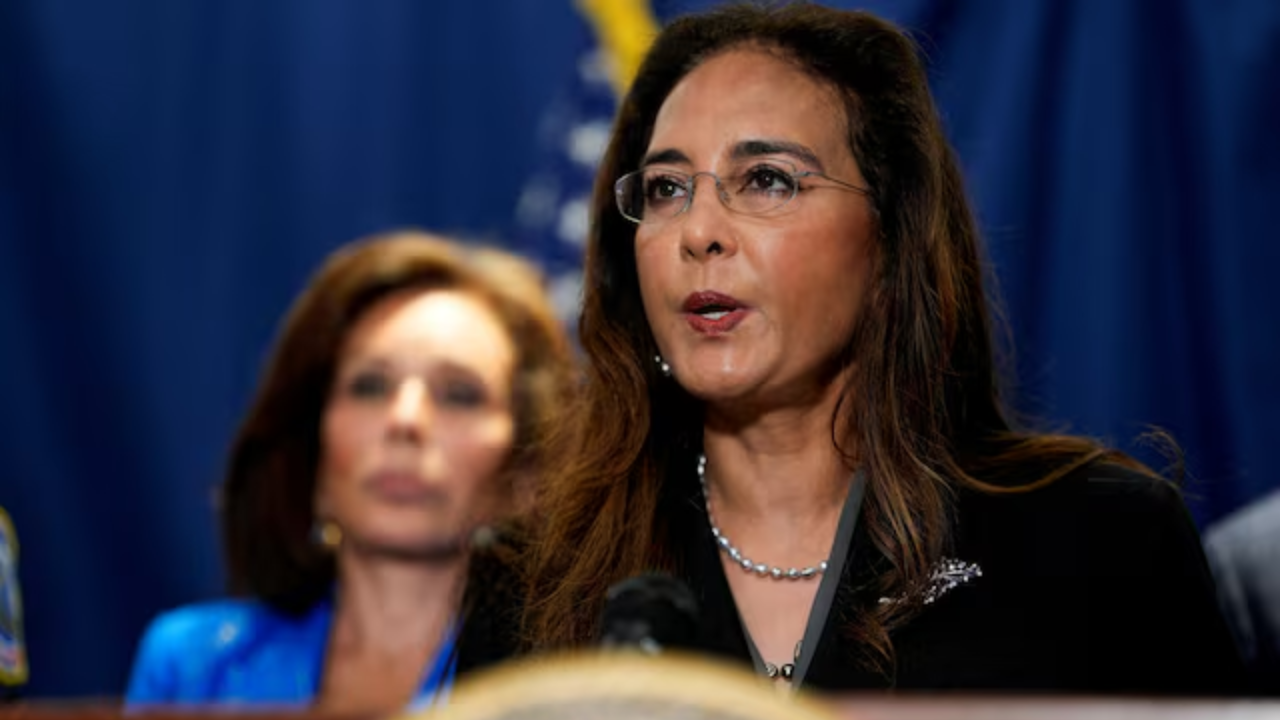
Analyzing the resignation of an Indian-American Republican legal figure like Harmeet Dhillon from a senior DOJ civil rights post requires separating verifiable political mechanics from unconfirmed internal dynamics.
- Established Structural Realities: Harmeet Dhillon built her national profile as a prominent conservative election lawyer, RNC committeewoman, and founder of the Center for American Liberty, focusing heavily on First Amendment litigation, election integrity challenges, and opposition to corporate diversity mandates. Placing a litigator with that specific background at the helm of the Civil Rights Division represents a deliberate ideological inversion of the division's traditional post-1964 enforcement posture. A resignation following a GOP midterm setback aligns directly with the historical pattern of ideological appointees exiting once the legislative environment turns hostile to their specific legal agenda.
- Unverified Internal Catalysts: Without direct access to internal DOJ memoranda or White House personnel discussions, external observers cannot confirm whether the exit was driven by a specific policy dispute with the Attorney General, a pre-planned two-year service window, or an immediate pivot toward private-sector election litigation ahead of the next presidential cycle. Treating any single factor as the sole cause ignores how multi-variable executive exits actually occur.
How Civil Rights Enforcement Shifts Under Divided Power
The Civil Rights Division does not possess a static mandate; its operational output fluctuates based on the ideological alignment of its leadership and the broader political environment. When a conservative legal strategist leads the division, enforcement priorities shift away from disparate-impact theories and institutional reform agreements toward religious liberty claims, anti-discrimination cases involving college admissions, and election procedure enforcement.
A midterm setback interrupts this trajectory through two mechanisms:
- Resource Reallocation: Congress controls the appropriations process. A hostile House Appropriations Committee can attach riders to funding bills that explicitly prohibit the DOJ from spending funds on specific litigation categories, effectively freezing the division's offensive capabilities.
- Judicial Confirmation Bottlenecks: Civil rights enforcement depends entirely on the federal judiciary's willingness to accept novel legal interpretations. If a midterm loss stalls or halts the confirmation of aligned federal judges, the long-term viability of the division's test cases drops sharply. Appointees recognize that filing ambitious lawsuits without a receptive appellate pipeline risks generating unfavorable legal precedent that binds future administrations.
The Opportunity Cost of Remaining in Public Service
For high-profile private-sector litigators, government service carries a quantifiable financial and strategic opportunity cost. While in office, senior DOJ officials operate under strict ethics rules, recusal requirements, and compensation caps that freeze their private practice and limit their public commentary.
During a period of unified government or strong political momentum, this trade-off is justified by the ability to wield the full weight of the federal government—filing amicus briefs at the Supreme Court, launching federal investigations, and shaping national legal standards. Once a midterm election degrades that institutional reach, the calculus flips. The appointee absorbs maximum political heat and ethics restrictions while exercising diminished operational power.
Stepping down immediately after the midterm cycle allows a seasoned election and constitutional litigator to re-enter the private sector at the exact moment demand for their services spikes. Post-midterm political ecosystems generate immediate, lucrative litigation surrounding redistricting challenges, campaign finance disputes, and early presidential primary ballot access—arenas where a former senior DOJ official commands premium market value without bureaucratic constraints.
Reputational Insulation and Political Positioning
Within party politics, timing a departure is a critical exercise in narrative control. Staying through the final two years of a weakened administration often forces senior officials into defensive compromises, watered-down settlements, or damaging congressional hearings that tarnish their standing within their own ideological movement.
Exiting directly after a midterm setback preserves the appointee's ideological credentials intact. By departing before the administration enters a lame-duck defensive crouch, the official avoids ownership of subsequent policy retreats. Furthermore, for prominent minority figures within the GOP coalition—such as Indian-American legal leaders who play an increasingly visible role in conservative jurisprudence—maintaining a clean, uncompromised record of aggressive advocacy ensures continued influence over future judicial nominations and party platform architecture.
Operational Next Steps for Legal and Policy Stakeholders
Organizations, state attorneys general, and advocacy groups tracking federal civil rights enforcement must adjust their operational posture immediately following a leadership exit of this nature.
- Audit Active Consent Decrees and Investigations: Expect an immediate slowdown in new systemic investigations and a temporary administrative freeze on novel legal theories while an acting assistant attorney general manages day-to-day operations. Career section chiefs will regain temporary control over case pacing, favoring routine enforcement over ideological test cases.
- Shift Litigation Venue Strategy: Private-sector legal groups seeking to advance the departing chief's specific agenda—particularly regarding religious liberty, Title IX, or election procedures—cannot rely on DOJ intervention or favorable federal amicus support during a transitional period. Legal strategies must pivot back toward private plaintiff standing and state-level attorney general coalitions to keep active cases moving through federal appellate courts.
- Prepare for Acting Leadership Dynamics: Senate confirmation of a replacement Civil Rights Division chief becomes exceptionally difficult after a midterm setback. Stakeholders should plan for a prolonged period—often exceeding twelve months—under an acting head or a laterally transferred official who does not require Senate confirmation, resulting in a cautious, maintenance-oriented DOJ posture until the next national election cycle resets executive authority.