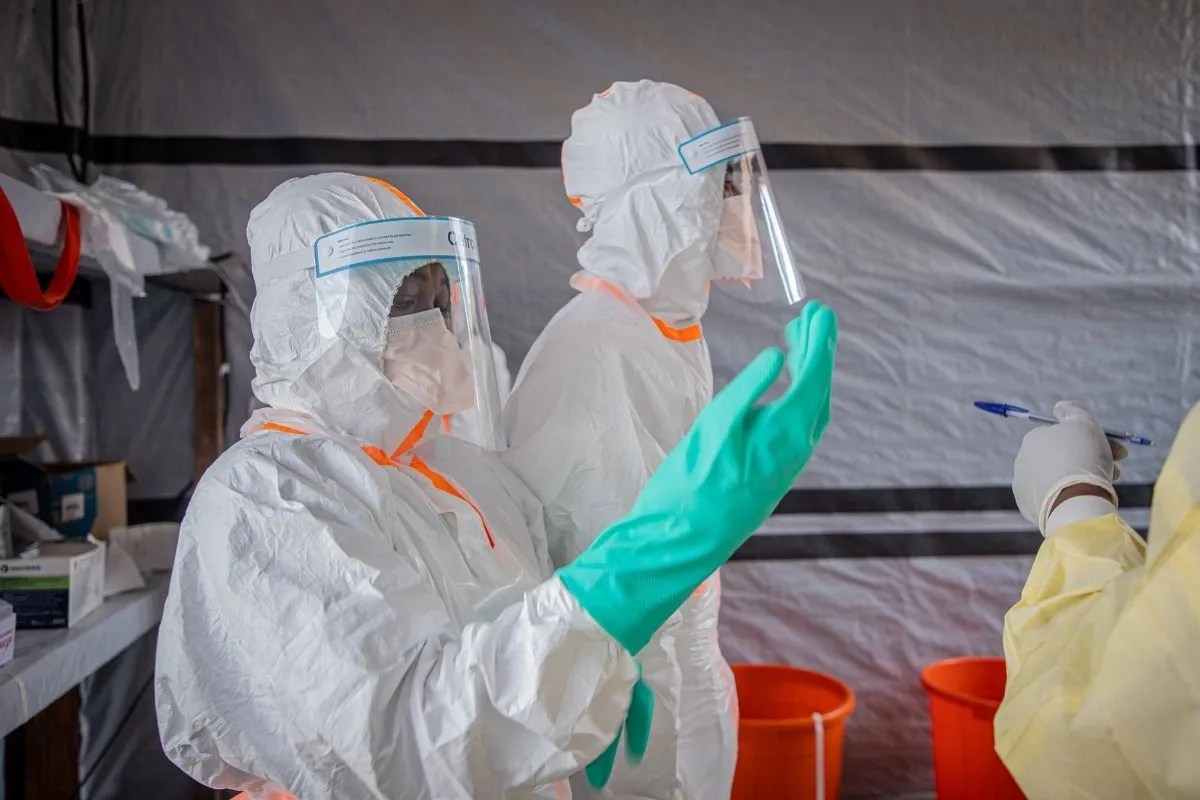
Epidemiological Baseline and Structural Realities
The seventeenth recorded outbreak of Ebola virus disease in the Democratic Republic of Congo represents an unprecedented operational crisis. With confirmed cases approaching eleven thousand and cumulative fatalities exceeding five thousand two hundred, the mortality rate stabilizes near forty-eight percent. This statistic is not merely a numerical indicator of pathogen lethality; it is a direct function of systemic friction, delayed diagnostic interventions, and severe infrastructural degradation across the eastern provinces, particularly Ituri and North Kivu.
Standard epidemiological metrics often obscure the granular mechanics of viral propagation in conflict zones. The current transmission velocity exceeds historical models established during previous Central African outbreaks. Unlike controlled clinical trials or well-resourced urban settings, the theater of operations is characterized by high population mobility, armed militia activity, community distrust, and acute displacement. These variables alter the basic reproduction number ($R_0$) dynamically, rendering static forecasting models obsolete. You might also find this connected article insightful: The Quiet Takeover of American Medical Research.
When evaluating public health interventions, analysts must separate therapeutic efficacy from operational throughput. The deployment of seventy thousand total doses of the Ervebo vaccine—allocated as fifty thousand doses for frontline and healthcare workers and twenty thousand reserved for structured observational trials—serves as the primary immunological intervention. However, vaccine availability does not equate to immunization coverage. The friction points between cold-chain logistics, population tracking, and biological mismatch dictate the true efficacy of the intervention.
The Antigens and the Mismatch Dilemma
The fundamental immunological challenge of the current deployment lies in viral taxonomy. Ervebo, manufactured by Merck, is a live-attenuated recombinant vesicular stomatitis virus vector vaccine engineered to express the surface glycoprotein of the Zaire ebolavirus species. It achieved regulatory validation based on overwhelming efficacy data accumulated during outbreaks in West Africa and equatorial provinces of the Democratic Republic of Congo where the Zaire species predominated. As reported in latest coverage by Mayo Clinic, the effects are worth noting.
The pathogen driving the current seventeenth outbreak, however, is the Bundibugyo ebolavirus species. Zaire and Bundibugyo represent distinct viral species within the genus Ebolavirus, separated by significant genetic divergence in their glycoprotein sequences—the primary target of neutralizing antibodies induced by vaccination.
Biologically, cross-protection between distinct Ebolavirus species cannot be assumed. While animal model studies suggest that immune responses generated against the Zaire glycoprotein may confer partial or heterologous protection against related species through conserved T-cell epitopes or sub-dominant cross-reactive antibody binding sites, human clinical data confirming this protective threshold remain sparse.
This antigenic mismatch creates a dual-risk matrix for public health planners:
- False Security Risk: Recipients of Ervebo may exhibit behavioral disinhibition, altering their adherence to personal protective equipment and barrier nursing protocols under the assumption of absolute immunity.
- Resource Opportunity Cost: Deploying scarce cold-chain resources toward an unproven cross-species match diverts capital and logistical bandwidth away from the development, scale-up, and distribution of species-specific therapeutics and vaccines tailored to the Bundibugyo strain.
To measure the utility of this intervention, international agencies structured the deployment not as a proven prophylaxis, but as an active clinical evaluation. The operational reality forces a pragmatic calculation: in the absence of a licensed vaccine for the Bundibugyo species, deploying an available, safe, well-tolerated vaccine with potential heterologous activity is preferred over absolute inaction, provided that rigorous scientific monitoring accompanies the rollout.
Distribution Logistics and Frontline Stratification
Logistical architecture dictates epidemiological outcomes. Transporting biological products requiring ultra-cold or strict cold-chain storage across terrain marked by compromised road networks, active conflict, and intermittent power grids requires an intricate supply chain network.
The allocation model breaks down into distinct operational tiers:
| Tier | Allocation Volume | Target Population | Primary Objective |
|---|---|---|---|
| Tier One | 50,000 Doses | Healthcare personnel, triage staff, burial teams, and active frontline responders | Occupational risk mitigation and maintenance of workforce integrity |
| Tier Two | 20,000 Doses | Enrolled participants in observational and clinical trials | Generation of empirical cross-species efficacy data |
Frontline stratification is governed by occupational exposure indices. Healthcare workers operating within high-density treatment centers face cumulative viral loads that exponentially increase infection probability compared to community residents. Protecting this cohort serves a dual purpose: stopping transmission within nosocomial environments and preserving health system capacity. When medical personnel fall ill, facility closures follow immediately, precipitating a cascading collapse of surrounding community health services.
The rollout encountered early friction in regional hubs such as Bunia, the capital of Ituri province. Mandatory vaccination policies for medical staff, while defensible from an epidemiological containment perspective, intersected with localized distrust of institutional authorities. Compliance cannot be modeled as a binary variable of administrative decree; it requires active community engagement, transparent communication regarding the experimental nature of the cross-species trial, and immediate compensation for adverse events or work-related disruptions.
The Clinical Trial Framework and Efficacy Uncertainty
The inclusion of twenty thousand doses within a formal clinical trial architecture—exemplified by frameworks such as the BRAVO study—represents an attempt to convert an emergency response into actionable empirical data. Traditional randomized controlled trials are ethically and logistically impossible during an active, rapidly accelerating hemorrhagic fever outbreak in a volatile security zone.
Researchers instead rely on observational cohort studies, test-negative designs, and ring vaccination tracking to estimate vaccine effectiveness against the Bundibugyo species. The mechanism relies on tracking infection incidence rates among vaccinated frontline workers versus unvaccinated matched controls within identical high-exposure environments.
The variables distorting these trials are numerous:
- Confounding Variables: Frontline workers utilize personal protective equipment, undergo varying degrees of safety training, and experience different baseline nutritional and immune statuses. Isolating the specific protective vector of Ervebo from these confounding parameters requires sophisticated multivariable regression models.
- Ascertainment Bias: Mild or asymptomatic infections among vaccinated personnel may go unreported, skewing effectiveness calculations upward if diagnostic testing is restricted to symptomatic presentation.
- Strain Mutation Rates: RNA viruses exhibit high substitution error rates during replication. If the circulating Bundibugyo strains drift antigenically over the course of the multi-month outbreak, baseline efficacy estimates calculated in month one may diverge from outcomes observed in month six.
The suspension of certainty is the defining characteristic of this phase. Public health communications must walk a narrow line between projecting institutional competence and transparently acknowledging the limits of current scientific instrumentation. Premature claims of absolute protection risk catastrophic failure if breakthrough infections occur at scale among immunized staff.
Systemic Vulnerabilities and Transmission Dynamics
Pathogen transmission is fundamentally a reflection of human behavior and environmental constraints. The spread of the current outbreak across multiple provinces is accelerated by specific systemic vulnerabilities that defy standard containment protocols.
Security disruptions heavily impact containment efficacy. Armed conflict restricts contact-tracing operations. When epidemiological teams cannot access specific villages or neighborhoods due to active combat or generalized violence, chains of transmission persist undetected.
Furthermore, behavioral anomalies compound the biological threat. Reports of patients fleeing treatment facilities out of fear or cultural mistrust introduce infected individuals directly back into susceptible community networks. Each displaced, infectious individual acts as a mobile vector capable of initiating new transmission chains across provincial borders.
Institutional responses must account for the economic fragility of the affected population. Quarantines and movement restrictions impose severe economic shocks on subsistence workers. Without financial and nutritional support structures embedded alongside vaccination drives, compliance collapses. People will evade detection systems to secure daily sustenance, neutralizing the isolation advantages of the public health response.
Strategic Forecast and Operational Directives
Relying on vaccination alone will not terminate the outbreak. Immunization is a defensive buffer designed to buy time for active case finding, safe burials, clinical management improvements, and community-level isolation.
To alter the trajectory of the epidemic, resource allocation must pivot toward four synchronized operational directives:
- Decentralize diagnostic processing by deploying rapid molecular testing units directly to rural health zones, reducing turnaround times from days to hours.
- Integrate vaccination tracking databases with real-time contact-tracing software to eliminate friction between logistics management and field surveillance.
- Decouple infection control measures from punitive enforcement structures, replacing mandatory compliance directives with community-led health committees that manage local isolation logistics.
- Scale up supportive care infrastructure—such as fluid resuscitation, electrolyte management, and oxygen delivery—to drive baseline survival rates upward independently of experimental vaccine performance.
The ultimate metric of success is not the volume of doses administered, but the systematic compression of the serial interval between symptom onset and clinical isolation. Until that operational metric is optimized, the outbreak will continue to outpace immunological interventions.