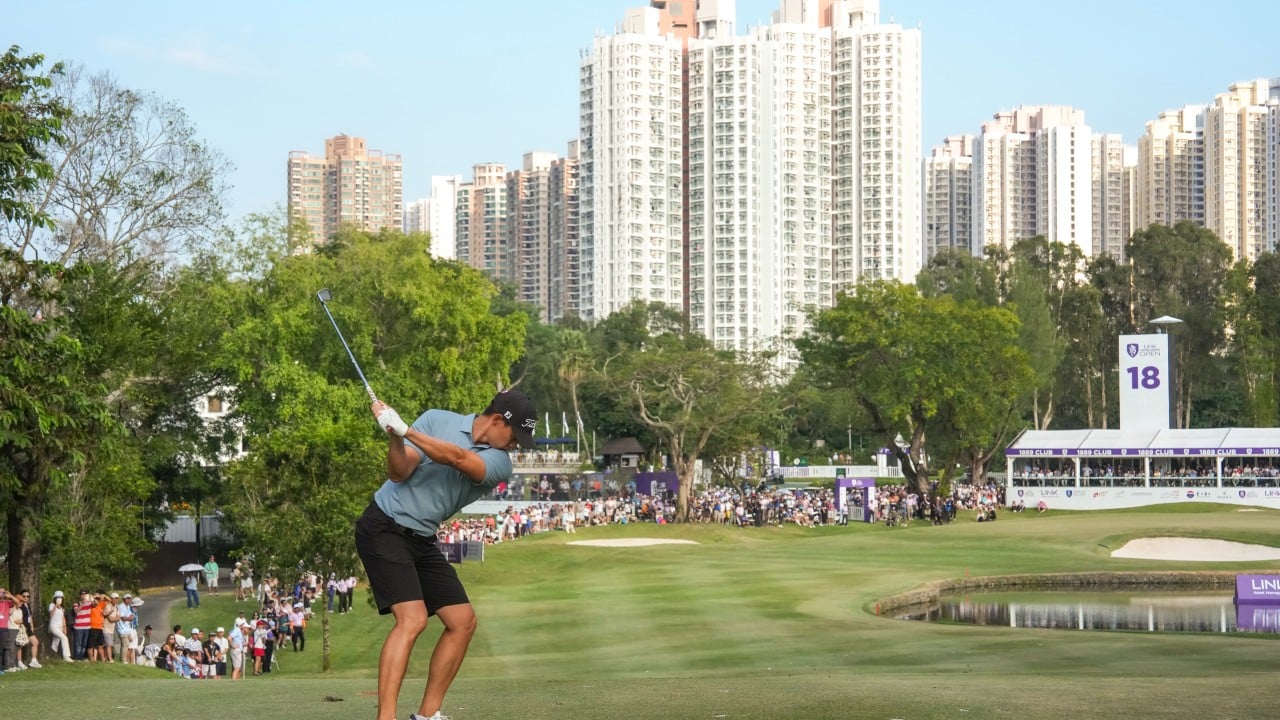
At 5:45 in the morning, before the humid subtropical heat settles like a heavy wool blanket over Causeway Bay, the sound of a tennis ball striking gut strings echoes across a manicured lawn.
To the commuter rushing past on the tram just beyond the perimeter wall, that sharp thwack sounds like privilege. It sounds like old money, colonial relics, and exclusive enclaves hoarding precious square footage in one of the most densely packed vertical cities on earth. When the government proposes sweeping changes to the land leases of Hong Kong’s private sports clubs, the public reaction is predictable. Take it back. Build flats. Open the gates.
I used to think that way too. Looking up at forty-story residential towers where families squeeze into three-hundred-square-foot apartments, staring down at acres of emerald grass can trigger a visceral, entirely understandable resentment. Why should a fraction of the population enjoy sprawling cricket pitches and bowling greens while the rest of the city fights for space on concrete public courts?
Then you step inside the gates at dawn, and the caricature dissolves.
The Invisible Engine Behind the Gates
Consider a hypothetical fourteen-year-old named Chloe. She does not come from a dynasty of shipping magnates or investment bankers. Her parents are secondary school teachers living in a modest flat in Sha Tin. Chloe wakes up at five every morning, takes two trains, and arrives at a private sports club in Kowloon before the sun clears the Lion Rock. She is there because she holds a junior development scholarship, one of thousands quietly funded by club memberships and sustained by facilities that simply do not exist anywhere else in the territory.
For two hours before her school bell rings, Chloe trains on regulation clay courts maintained by groundskeepers who have spent thirty years perfecting the drainage of that specific patch of earth. She is coached by former Olympic athletes whose salaries are underwritten by the club’s dining room revenues and corporate debentures.
This is the mechanical reality that gets lost in populist debates over Hong Kong’s Private Recreational Leases (PRLs). Currently, around sixty-six sites across the city operate under these specialized leases, encompassing roughly four hundred hectares of land. On paper, they look like private playgrounds. In practice, they function as the unsubsidized training academies for Hong Kong’s entire sporting ecosystem.
Think of these clubs like the root system of an old banyan tree. Above ground, you only see the thick, gnarled trunk—the exclusive clubhouse, the members-only bar, the shiny German sedans parked out front. It is easy to resent the trunk. Yet beneath the soil, those roots are pumping nutrients into the entire forest. According to government data and sports federation records, over eighty percent of the training venues used by Hong Kong’s national sports associations for disciplines like tennis, rugby, lawn bowls, and squash are hosted by these private clubs.
When Hong Kong athletes stood on the podium at the Tokyo and Paris Olympics, delivering historic gold medals that united a divided city in tears of pride, they did not train exclusively in government-run leisure centers. Public facilities in Hong Kong are overwhelmed, booked out within seconds of opening online, and often lack the specialized surfaces required for elite competition. Without the private clubs absorbing the colossal maintenance costs of specialized turf, Olympic-grade pools, and dedicated coaching staffs, the city’s athletic pipeline would dry up within a single generation.
A Policy Built on Shifting Sand
So why are these institutions suddenly fighting for survival?
Over the past few years, the government has overhauled the Private Recreational Lease policy, introducing steep land premiums, mandatory public opening hours, and strict compliance metrics that treat centuries-old non-profit sporting institutions like commercial real estate developers. Under the revised framework, clubs renewing their leases face paying one-third of the full market value in land premiums—a staggering sum in a city where a single square foot of dirt can cost more than a luxury car—alongside requirements to open their facilities to the general public for a set percentage of operating hours.
On a spreadsheet in a government office in Admiralty, this looks like a tidy compromise. Extract revenue from wealthy clubs, force them to share their toys, and pacify housing critics.
In reality, it is a slow-motion demolition.
Let us look closely at the economics of a non-profit sports club, because the phrase "private club" is wildly misleading. In Hong Kong, the vast majority of PRL holders are not profit-generating corporations paying dividends to shareholders. They are member-owned associations governed by voluntary committees. Every dollar collected in monthly subscriptions goes directly into paying staff wages, maintaining aging infrastructure, and funding youth sports programs.
Imagine you own a family bakery that has operated on the same corner for eighty years. You do not own the building; you lease it from the city at a nominal rate because the city recognizes that your bakery feeds the neighborhood school every morning for free. Suddenly, the city informs you that your lease renewal now requires a multi-million-dollar upfront fee based on the value of luxury condos next door, and you must also give away a third of your oven space to walk-in customers who do not pay for the flour or electricity.
You cannot simply raise the price of a loaf of bread to cover a fifty-million-dollar land premium. You go bankrupt. You close the doors. And the luxury condo developers move in anyway.
That is the exact trap closing around Hong Kong’s sports clubs. If a historic club—say, a rowing club on the Shing Mun River or a football club in Happy Valley—is forced to pay hundreds of millions of dollars in lease premiums, where does the money come from? It cannot come from thin air. Clubs will be forced to jack up membership fees to astronomical levels, effectively purging middle-class families, retirees, and civil servants from their rosters. Ironically, a policy intended to democratize access will achieve the exact opposite: it will ensure that only the ultra-wealthy can afford to belong.
Worse still, the mandate to open facilities to outside groups ignores the brutal logistics of sports management. Turf is not concrete. A grass rugby pitch or a cricket square can only withstand a finite number of hours of foot traffic before the root structure dies and the surface turns into a mud pit. Club groundskeepers manage pitch usage down to the minute, balancing youth clinics, national squad practices, and league matches. Forcing clubs to arbitrarily hand over prime hours to unvetted external bookings without providing funding for the resulting wear and tear is a recipe for ruined facilities.
The Myth of the Housing Cure-All
Whenever the fate of these leases comes up in the Legislative Council or on talk radio, the conversation inevitably circles back to housing. Hong Kong’s housing crisis is real, painful, and urgent. Watching young couples delay marriage because they cannot afford a shoebox apartment is heartbreaking. Anyone who dismisses the need for more land in Hong Kong is out of touch with human suffering.
Yet framing the destruction of private sports clubs as the solution to the housing crisis is an intellectual sleight of hand.
Let us look at the actual geography. Most of these clubs sit on small, irregular plots tucked into steep hillsides, wedged beside highway flyovers, or positioned directly over major underground drainage tunnels and MTR lines. They lack the road capacity, sewage infrastructure, and school networks required to support high-density residential towers. Even if you bulldozed every single bowling green and tennis court in the urban area tomorrow, the resulting housing yield would be a rounding error against the government’s long-term supply targets—while permanently erasing the city’s last breathing spaces.
Cities need lungs.
Anyone who has lived through a Hong Kong summer knows the suffocating weight of the urban heat island effect. Concrete absorbs the sun all day and radiates it back at midnight. The open green expanses of the sports clubs—even when viewed from the outside—lower ambient temperatures, absorb torrential monsoon rains that would otherwise flood neighboring streets, and provide vital corridors for migratory birds and urban wildlife. Once a green field is paved over for a residential podium, it never comes back. Never.
When Bureaucracy Kills Community
There is another cost here, harder to quantify on a balance sheet, yet deeply felt by anyone who has ever belonged to a community institution.
Walk into the clubhouse of one of Hong Kong’s older sporting associations on a Saturday afternoon. You will not see a room full of cartoon aristocrats lighting cigars with hundred-dollar bills. You will see a seventy-year-old retired clerk who has played lawn bowls there every Tuesday and Saturday since 1978, nursing a lemon tea and laughing with a twenty-five-year-old graphic designer. You will see Indian, Chinese, Filipino, and British families sharing tables after a junior hockey tournament.
In a transient city where people constantly arrive, burn out, and leave, these clubs act as social anchors. They are repositories of institutional memory and cross-cultural camaraderie that cannot be manufactured by government recreation departments.
A public sports center managed by the Leisure and Cultural Services Department is transactional. You book your slot on an app, you play for fifty-five minutes, the buzzer sounds, and a security guard ushers you out so the next person can sweep the floor. There is no lingering. There is no mentorship. There is no intergenerational bond formed over decades of shared stewardship.
By imposing punitive, uncertain lease conditions—shortening tenure lengths and dangling the constant threat of non-renewal over club committees—the government paralyzes long-term investment. Why would a club spend twenty million dollars upgrading its filtration systems, installing solar panels, or building an accessible ramp for disabled athletes if its lease might be revoked or priced out of existence in five years? Uncertainty is a quiet poison. It stops maintenance, freezes youth scholarships, and forces boards to hoard cash for legal battles instead of investing in sport.
A Better Path Forward
If the goal is genuinely to maximize public benefit without destroying the golden goose of Hong Kong athletics, the answer does not lie in punitive land premiums or rigid bureaucratic quotas. It lies in structured partnership.
First, the government must recognize non-profit sporting clubs for what they are: public utility partners. Instead of extracting cash premiums that drain club reserves, lease renewals should be tied to measurable, audited sporting outputs. How many hours of free coaching did the club provide to underprivileged schools this year? How many national squad athletes use the facilities without charge? How many district tournaments did the club host?
If a club meets ambitious targets for community outreach, youth development, and elite athlete support, its land premium should remain nominal. Let the clubs pay their rent in sweat, coaching hours, and podium finishes rather than cash.
Second, public access should be channeled through organized partnerships rather than chaotic open-door mandates. Instead of forcing a specialized cricket or rowing club to operate like a walk-in municipal gym—which creates liability nightmares and destroys delicate playing surfaces—require clubs to partner directly with local schools, charities, and regional sports associations. Structured programs bring neighborhood kids onto the pitches under proper supervision, teaching them the rules, etiquette, and safety protocols of the game. That is how you turn a curious teenager into a lifelong athlete.
Finally, give these institutions stability. A fifteen-year or twenty-one-year lease with clear, transparent renewal criteria allows committees to plan, fundraise, and maintain world-class facilities. It allows them to keep fees affordable so that a teacher’s daughter from Sha Tin can still stand alongside the child of a CEO on the same baseline at dawn.
The View Over the Wall
I think back to that 5:45 AM tennis match in Causeway Bay.
If you stand on the pedestrian footbridge overlooking the courts, you can watch the city wake up. Delivery trucks rumble down the avenue. Neon signs flicker off one by one. Down on the grass, two players—one a retired civil servant in his sixties, the other a university student—finish their final set. They walk to the net, shake hands, and laugh about a missed volley.
Around them, the glass towers of Hong Kong rise like a canyon of steel and stone, relentless and unforgiving. That patch of green below is small, fragile, and utterly irreplaceable. If we let dubious lease policies squeeze the life out of it, we will not gain a fairer city. We will just wake up one morning to find that the concrete has finally swallowed everything, and the quiet sound of the game is gone forever.