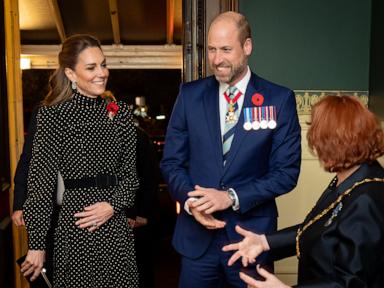
When Britain's Prince William and Princess Catherine touch down in India for a three-day official visit, the standard coverage treats the trip like a high-budget fashion shoot. Photographers track the hemlines, royal watchers parse every handshake, and press releases celebrate cultural ties. That surface narrative misses the actual mechanics of the trip. Royal tours are not vacations, and they are rarely spontaneous gestures of goodwill. They are calculated instruments of British soft power deployed at moments when Downing Street needs diplomatic friction smoothed over, trade corridors widened, or geopolitical alignment reinforced without the formal baggage of a ministerial summit.
To understand why the Prince and Princess of Wales are on the ground in India, you have to look past the palace itinerary and examine the ledger sitting on the desk of the Foreign, Commonwealth and Development Office. Every stop, charity visit, and dinner reception is mapped against specific economic, environmental, and strategic objectives that the British government cannot achieve through dry policy papers alone. Meanwhile, you can read similar stories here: The Quiet Closing of the American Dream Door.
The Machinery of Soft Power Diplomacy
A royal visit operates on a simple premise. Politicians carry expiration dates and partisan baggage, whereas senior members of the British royal family represent institutional continuity. When a prime minister flies to New Delhi, every meeting is transactional, measured in tariffs, visa quotas, and defense contracts. When Prince William and Princess Catherine arrive, the atmosphere shifts to pageantry and shared heritage, creating political cover for bilateral talks happening three floors above the banquet hall.
In Whitehall, this is known as deploying the crown. The royal household does not set foreign policy, nor do William and Catherine freelance on international relations. Their schedule is negotiated line by line between Buckingham Palace, Kensington Palace, and the Foreign Office. If the British government wants to signal a commitment to green technology, the Prince suddenly finds himself touring a solar facility or meeting young climate innovators. If London wants to soften public sentiment in a partner nation following rocky trade negotiations, the Princess spends an afternoon at a community health initiative or a local school. To see the complete picture, check out the excellent report by TIME.
The three-day window is itself a telling detail. A short, compressed itinerary indicates high-intensity signaling rather than a sprawling ceremonial tour. In past decades, royal visits to the subcontinent stretched across weeks, featuring elaborate state banquets, tiger reserves, and slow train journeys. Modern tours are lean. Security costs, shifting public attitudes toward the monarchy at home, and the sheer pace of modern diplomacy mean every hour must generate maximum media return in both countries.
The Economic Subtext Nobody Mentions at the Banquet
Behind the photo opportunities sits a hard economic reality. Post-Brexit Britain has spent years trying to lock down comprehensive trade agreements with major global economies, and India sits near the top of that list. Negotiations between London and New Delhi have historically stalled over stubborn sticking points. India wants easier mobility and more work visas for its massive tech and service workforce. Britain wants steep tariff reductions on Scotch whisky, automobiles, and financial services, while facing domestic political pressure to keep immigration numbers down.
Royal diplomacy cannot sign a trade treaty, nor can Prince William negotiate customs duties. What a high-profile visit does is reset the public temperature. Media saturation in India around the royal couple temporarily crowds out coverage of diplomatic stalemates, reminding both electorates of deep commercial and diaspora ties.
Consider the numbers that quietly underpin the trip. Hundreds of Indian companies operate in the United Kingdom, employing tens of thousands of British workers, while British firms maintain massive footprints across Mumbai, Bengaluru, and New Delhi. When William and Catherine meet business leaders, tech founders, or philanthropic donors during these three days, the guest lists are curated to include key stakeholders in bilateral investment. A brief conversation with a future monarch at a reception carries immense social currency in corporate circles, often unlocking doors that trade envoys spend months knocking on.
Environmental Politics and the Earthshot Agenda
For Prince William specifically, international travel is tightly bound to his long-term environmental platform, most notably the Earthshot Prize. India is not merely a backdrop for climate speeches; it is the decisive battleground for global carbon emissions. As the world's most populous nation and one of its fastest-growing major economies, India's energy transition will largely determine whether international climate targets survive the next two decades.
Yet India's position on climate policy frequently clashes with Western expectations. New Delhi argues, with considerable historical justification, that industrialized Western nations built their wealth on centuries of unchecked fossil fuel consumption and cannot now demand that developing economies sacrifice poverty reduction to hit aggressive net-zero deadlines. Indian policymakers push hard for climate finance and technology transfer rather than lectures on coal phase-outs.
When Prince William steps into this environment, he walks a tightrope. Preaching sustainability from the vantage point of a wealthy Western institution risks immediate backlash in Indian media. Consequently, royal advisers steer the itinerary away from top-down environmental lecturing and toward grassroots innovation. By spotlighting Indian entrepreneurs developing clean water systems, urban air-quality solutions, or sustainable agriculture, the Prince aligns himself with Indian ingenuity rather than Western scolding. It is a subtle shift in framing, designed to keep his environmental brand relevant in the Global South without triggering post-colonial resentment.
Navigating the Colonial Echoes
No British royal visit to India happens in a historical vacuum. The British Raj ended in 1947, yet the memory of colonial extraction, the Partition, and centuries of imperial rule remains a live wire in Indian politics and public discourse. In recent years, younger generations in India have grown far more vocal about colonial history, demanding everything from formal apologies for historical atrocities to the repatriation of artifacts like the Koh-i-Noor diamond.
For William and Catherine, this creates an unavoidable perceptual trap. Traditional royal pageantry relies on pomp, hierarchy, and deference—the exact visual language of the empire. If they lean too heavily into grand, gilded ceremonies, critics accuse them of romanticizing the Raj. If they dress down too much or skip major historical sites, they risk looking dismissive of India's heritage.
Modern royal handlers solve this problem through curated informality. Instead of riding in carriages or inspecting military parades, the couple is routinely placed in dynamic, unscripted-looking environments. They play cricket with local children, sit cross-legged on floor cushions at community centers, sample street food, and wear garments incorporating Indian textiles or designers. These moments are engineered to project humility and modernity, distancing the next generation of the British monarchy from the imperial past without ever issuing a formal state apology—a step the British government strictly forbids royals from taking due to legal and diplomatic liabilities.
The Wardrobe as Diplomatic Currency
It is easy to dismiss coverage of Princess Catherine's outfits as trivial celebrity gossip, yet in diplomatic circles, royal fashion is treated as a serious communications tool. Sartorial diplomacy allows the palace to send non-verbal messages of respect to the host nation without uttering a word that could be misconstrued by political analysts.
When Catherine wears a piece by an Indian designer or incorporates traditional embroidery techniques, the choice triggers immediate coverage in regional lifestyle and mainstream press. That coverage reaches demographics that never read foreign policy columns. More importantly, it signals meticulous preparation. By highlighting local craftsmanship, the royal team validates India's creative and textile industries on a global stage, generating goodwill that costs the British taxpayer nothing.
The Domestic Audience Back in London
A royal tour is always a two-way mirror. While the cameras in New Delhi capture the couple engaging with Indian society, the images are beamed directly back to living rooms in the United Kingdom, where the royal family faces its own set of domestic pressures.
The British monarchy operates on visibility. Its constitutional relevance and public funding depend on demonstrating utility to the nation. When polls show declining enthusiasm among younger Britons, or when internal family drama threatens to overshadow institutional work, an overseas tour restores the image of a hardworking, statesmanlike monarchy executing duties on behalf of the country.
Three days of crisp, disciplined appearances in India provide Kensington Palace with months of positive visual assets. Images of William discussing global challenges and Catherine engaging with children and healthcare workers reinforce their positioning as stable, reliable heirs to the throne. It is a deliberate contrast to the noisy, fractured nature of daily Westminster politics.
The Limits of Royal Influence
Despite the sophisticated choreography, royal diplomacy has hard boundaries. Skeptics within foreign policy circles point out that the warmth generated by a three-day visit rarely survives the first tough negotiating session over tariffs or defense procurement. Indian foreign policy is famously pragmatic, guided by strategic autonomy—the doctrine of balancing relationships with the United States, Russia, Europe, and regional neighbors strictly according to New Delhi's national interest.
India does not alter its stance on global trade rules, Russian energy imports, or regional security because a British prince smiled at a charity gala. Furthermore, as India's global economic clout eclipses that of the United Kingdom, the traditional dynamic of the Commonwealth has inverted. Britain needs access to India's vast consumer market and tech talent far more urgently than India needs validation from Buckingham Palace.
There is also the risk of logistical or public relations missteps. Dense urban schedules, unpredictable monsoon or heat conditions, and intense media scrutiny leave zero margin for error. A single tone-deaf remark, an awkward photo angle, or an overly aggressive security cordon pushing back local journalists can dominate headlines and undo months of careful diplomatic prep.
What the Itinerary Actually Reveals
If you want to read a royal tour like an intelligence analyst rather than a tabloid reader, ignore the adjectives in the official press releases and look strictly at the locations and funding streams attached to each stop.
- Tech and Innovation Hubs: Visits to incubators or universities in cities like Bengaluru or Mumbai indicate that London is actively courting Indian venture capital, AI talent, and life-sciences partnerships.
- Grassroots Health and Education Charities: Appearances at maternal health clinics or youth mental health programs reflect Princess Catherine's core domestic portfolio, designed to build a unified global brand around early childhood development.
- Cultural and Religious Landmarks: Stops at historic temples, mosques, or memorials serve a dual purpose—demonstrating respect for India's religious pluralism while producing iconic, timeless imagery for international wire services.
- Business Receptions: Evening events hosted by the British High Commissioner are where the real work happens, bringing together British executives, Indian industrialists, and government ministers under the soft glow of royal prestige.
Every handshake on this three-day swing is an investment in long-term access. The British government understands that in an era of shifting global alliances, maintaining relevance in New Delhi requires every tool in the shed, even one rooted in a thousand-year-old hereditary institution. Once the royal plane wheels up from the tarmac and the press corps files its final dispatches, the real test begins in the quiet, unglamorous boardrooms where trade negotiators and diplomats find out whether three days of royal charm actually moved the needle.