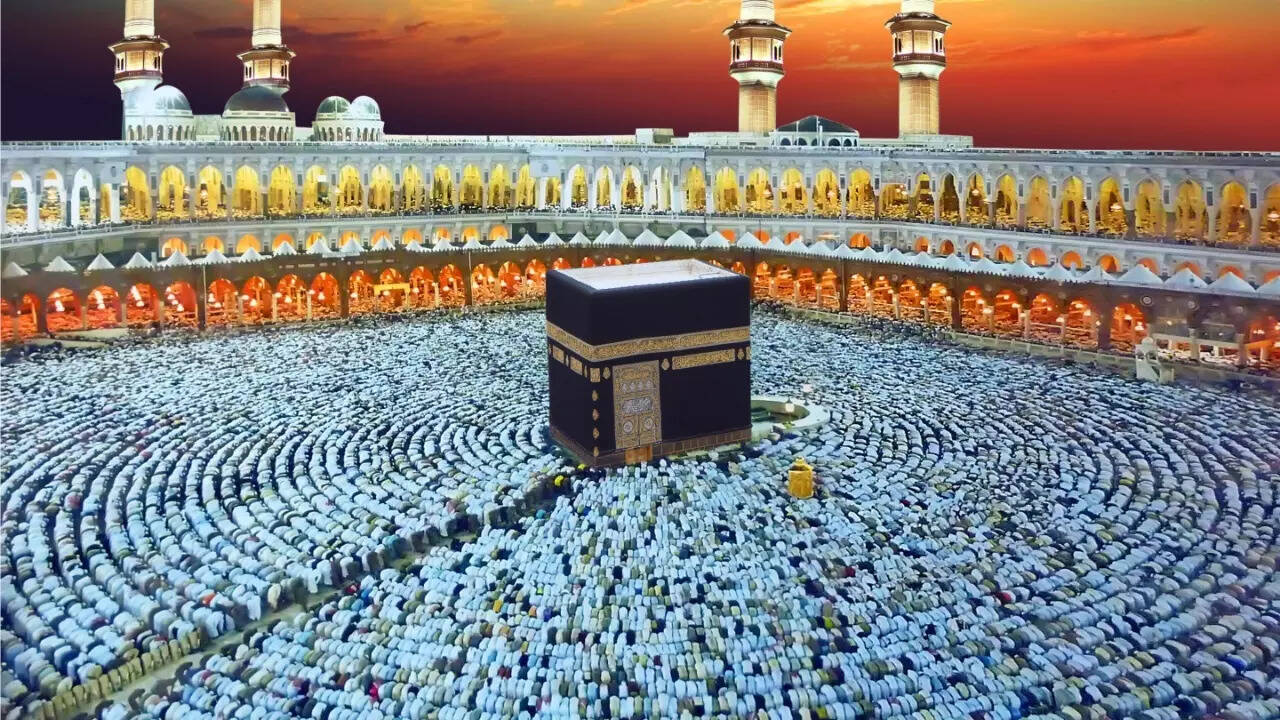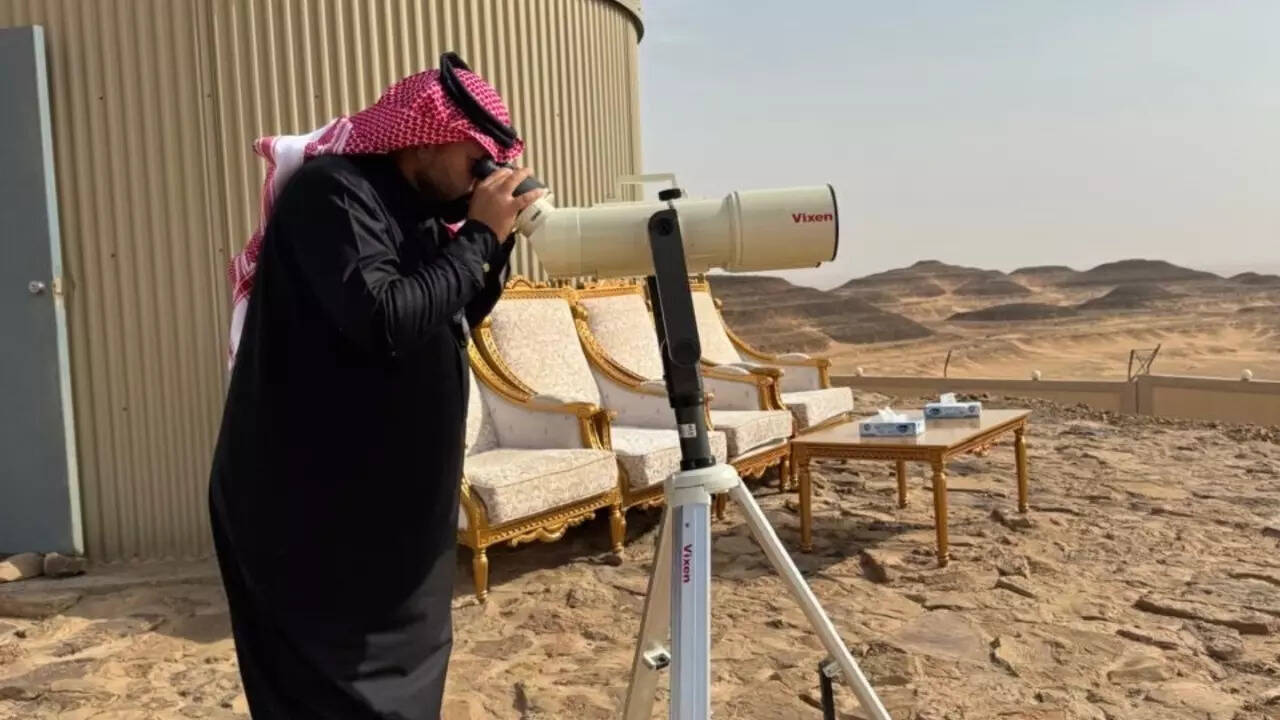
The Saudi Arabian Supreme Court has officially issued a call for Muslims across the Kingdom to search the skies on the evening of Wednesday, March 18, 2026. This directive, standard in its phrasing yet complex in its implications, seeks the first sliver of the Shawwal crescent—the celestial signal that Ramadan is over and Eid ul Fitr has arrived. If the moon is spotted, Eid begins on Thursday, March 19. If the horizon remains empty, the fast continues for one more day, pushing the celebration to Friday, March 20.
While the court’s announcement is framed as a matter of simple observation, it masks a deep-seated tension between ancient tradition and modern astrophysics. The data suggests a collision course. While the Kingdom’s official mechanisms are pivoting for a Wednesday sighting, astronomers are pointing at the sky with a different message: the moon won’t be there. You might also find this connected coverage insightful: Strategic Asymmetry and the Kinetic Deconstruction of Iranian Integrated Air Defense.
The Science of an Invisible Moon
The "New Moon" phase—the moment of conjunction where the moon sits directly between the Earth and the Sun—is scheduled to occur on Thursday, March 19, 2026, at approximately 01:23 UTC. This creates a physical impossibility for anyone in Riyadh or Mecca to see a crescent on the evening of March 18. On that Wednesday, the moon will set before the sun, or it will be so close to the sun’s glare that its illuminated edge is nonexistent.
For the investigative eye, this raises a recurring question in Islamic jurisprudence: why look for something that science says isn't there? The answer lies in the Umm Al Qura calendar, the official civil calendar of Saudi Arabia. Because the current month of Ramadan began based on a specific sighting (or lack thereof), the 29th day of the month falls on March 18. By law and tradition, the Supreme Court must call for a sighting on the 29th day of any lunar month. As discussed in recent articles by The Guardian, the effects are widespread.
It is a bureaucratic necessity that often ignores the telescope. Even if the probability of a sighting is zero, the ritual must be performed to maintain the legal integrity of the month.
The Politics of the Crescent
Moon sighting is never just about the moon. It is about authority. Saudi Arabia has long positioned itself as the "leader" of the Islamic world, and its declarations often trigger a domino effect across the Middle East, Europe, and North America. When the Supreme Court announces a sighting, millions of people break their fast, regardless of whether their local astronomers agree.
Critics have often pointed to "ghost sightings"—reports from well-meaning but mistaken individuals who claim to see the moon when it is astronomically impossible. In the past, these testimonies have been accepted by the Saudi courts, leading to Eid being celebrated on different days in neighboring countries like Oman or Morocco, which adhere to stricter sighting protocols.
The Regional Split
- The Saudi Bloc: Usually follows the Supreme Court’s announcement immediately.
- The Verificationists: Countries like Morocco and Oman often wait for a confirmed, locally visible sighting, frequently resulting in a 24-hour delay compared to Riyadh.
- The Calculationists: Turkey and many European councils rely entirely on pre-calculated dates, viewing the physical sighting as a symbolic gesture rather than a requirement.
In 2026, this split is likely to be pronounced. With the moon becoming easily visible to the naked eye only by Friday, March 20, for much of the Eastern Hemisphere, a "Thursday Eid" in Saudi Arabia would be a significant outlier in the global scientific community.
Why the High Peaks Matter
The Supreme Court has specifically requested that sightings be reported by the naked eye or through binoculars. This is why official committees gather on high-altitude points, such as the mountains of Taif and the outskirts of Riyadh, to escape the light pollution and dust of the cities.
These committees aren't just hobbyists. They include members of the judiciary, scholars, and sometimes astronomers, though the latter often serve more as advisors than decision-makers. The process is a human one: a witness must stand before a judge, swear an oath, and describe the orientation of the crescent's horns.
If a single credible witness is accepted, the entire Kingdom shifts gears. Markets stay open late, the "Takbeer" begins to echo from the mosques, and the 30th day of fasting is instantly canceled.
The Logistics of a Floating Date
The uncertainty of the date creates a massive logistical headache for the Saudi Ministry of Human Resources and Social Development. They have already earmarked a four-day break for the private and non-profit sectors, but the "start" of that clock is tethered to the moon.
Businesses in the Gulf operate on a knife-edge during this week. Supply chains for fresh food, the scheduling of Eid prayers in massive public squares, and the deployment of security forces for crowd control all depend on an announcement that usually comes just two hours before the new day begins.
It is a system that defies the modern urge for three-month-advance planning. It forces a society to remain present, looking at the horizon rather than a digital calendar.
The Modern Compromise
There is a growing movement within the Kingdom to integrate technology more deeply into this process. The use of CCD cameras and sophisticated telescopes has become more common, even if the Supreme Court still prioritizes the "human eye" to satisfy traditionalist requirements.
This year, the stakes are higher because of the clear astronomical data. If the court accepts a sighting on Wednesday night, it will reignite the debate over the reliability of individual witnesses. If they wait—as the science suggests they must—and declare Friday, March 20, as the first day of Eid, it will be seen as a victory for the integration of modern science and Islamic law.
The moon will ultimately do what the laws of celestial mechanics dictate. Whether the human institutions on the ground choose to see it, or see what they hope to see, remains the perennial drama of the Shawwal crescent.
Keep your eyes on the official Saudi Press Agency (SPA) late Wednesday evening. The gap between the telescope and the testimony has never been thinner.
Would you like me to track the official announcements from the Saudi Press Agency as they happen on Wednesday?