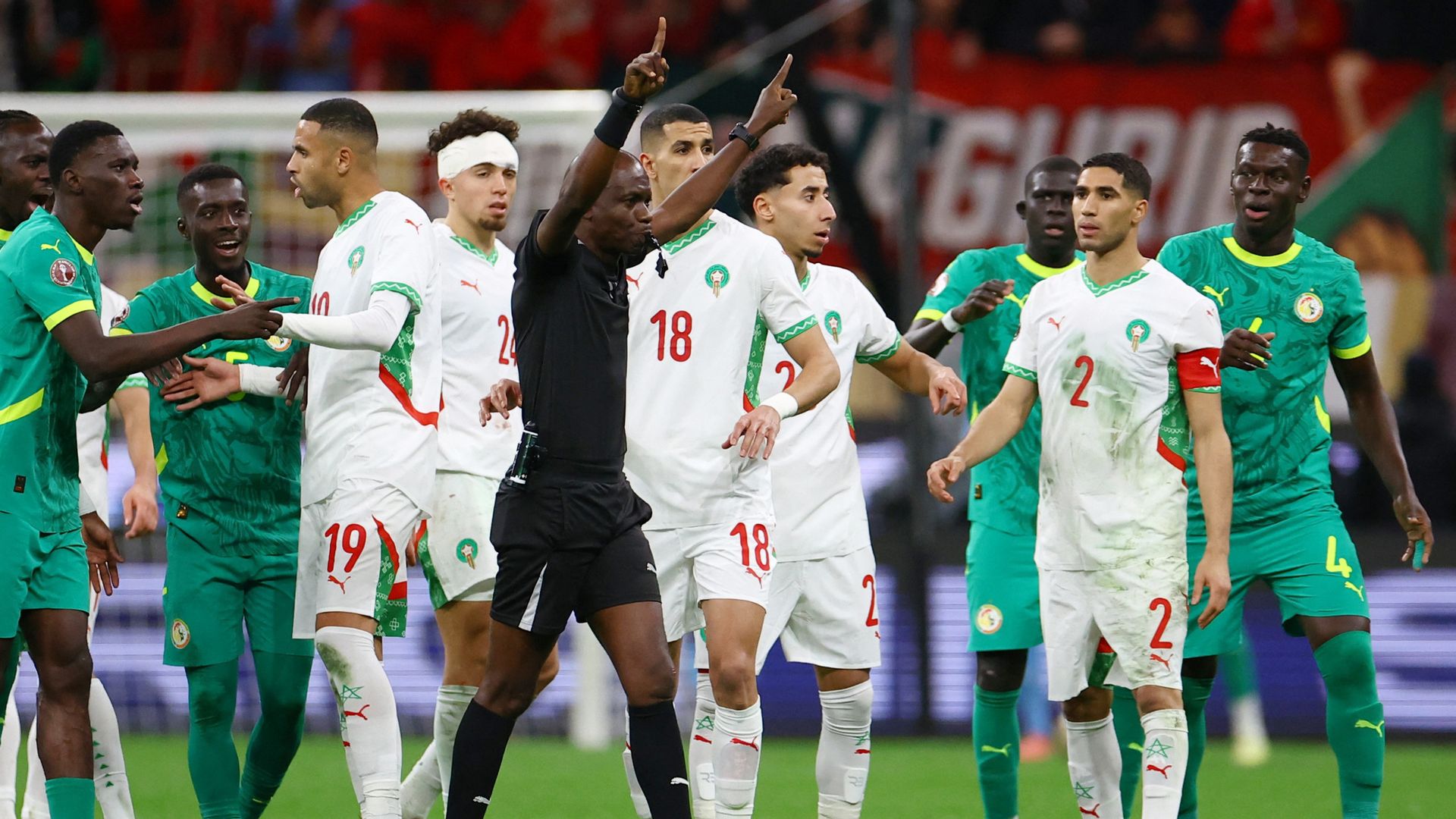
Senegal is screaming "theft." The fans are burning jerseys. The Federation is preparing a mountain of legal paperwork to appeal a ruling they call "unacceptable." They want their trophy back. They want their dignity back.
They should be thankful they lost.
The narrative currently suffocating the airwaves is simple: a bureaucratic technicality stripped a deserving champion of its glory. It’s a story of "villains in suits" versus "heroes in boots." But that narrative is a lie. It’s a comfort blanket for a continental sports structure that has spent decades substituting emotion for infrastructure. The ruling isn't a scandal; it’s the first sign of a heartbeat in African sports governance.
If you care about the long-term viability of the African game, you don't root for the appeal. You root for the precedent.
The Myth of the Unfair Ruling
The outcry rests on the idea that matches are won solely on the pitch. This is a romantic, 1950s view of sport that ignores the reality of modern international competition. Eligibility isn't a "technicality." It is the foundation of the game's integrity.
When a nation fields an ineligible player—whether through negligence, administrative incompetence, or deliberate obfuscation—they have already forfeited the right to the result. To argue otherwise is to suggest that the rules are merely suggestions, provided you play well enough to make people forget them.
I’ve seen this play out in backrooms from Cairo to Casablanca. Federations treat player registration like a "maybe" list. They rely on the chaos of the system to hide inconsistencies in age, nationality, or prior disciplinary records. When they get caught, they play the victim card. They call it "unfair" because they’ve grown accustomed to a lack of accountability.
The ruling isn't a slap in the face to Senegal; it’s a mirror held up to every Federation on the continent. It says: The era of the "shrug and move on" is over.
Why "Moral Victories" Are Killing the Game
People ask: "How can you take a trophy away from players who worked so hard?"
That is the wrong question. The real question is: "How can you allow a Federation to jeopardize the hard work of its players through sheer professional laziness?"
By defending Senegal’s "right" to a tainted trophy, supporters are actually endorsing the incompetence of the administrators. We are prioritizing a temporary high—a parade in Dakar—over the structural necessity of a professionalized sport.
- Logic Check: If we ignore eligibility rules for a champion, we must ignore them for everyone.
- The Result: A race to the bottom where the most deceptive Federation wins.
International sport is a contract. You agree to follow $X$ rules in exchange for $Y$ rewards. Senegal broke $X$. They lose $Y$. It is the most basic equation in mathematics. To call it "unacceptable" is to admit you don't understand how contracts work.
The "Bias" Boogeyman
The inevitable defense is that this wouldn't happen to a European power. "Would they strip France of a World Cup?" the pundits ask.
The answer is: France wouldn't give them a reason to.
The elite tier of global football isn't elite just because of the talent; it’s elite because of the audit trails. In the Premier League or the Bundesliga, the administrative oversight is so suffocating that an ineligible player rarely even makes it to the bench.
In Africa, we treat "administration" as a secondary thought, a place to park political allies who don't know a registration portal from a PDF. When the hammer falls, we cry "bias" or "conspiracy." It’s a convenient distraction from the fact that our own houses aren't in order.
If this ruling feels "harsh," it’s only because we’ve been living in a vacuum of consequences for too long.
The False Economy of the Appeal
Senegal is about to waste hundreds of thousands of dollars on legal fees. They will fly expensive lawyers to Lausanne to argue before the Court of Arbitration for Sport (CAS). They will spend months in a state of grievance.
That money and energy could build three youth academies. It could fund a digitalized tracking system for every player in the Senegalese league. Instead, it will be burnt on the altar of ego.
The Cost of Denial
- Reputational Damage: Every day they fight a clear-cut violation, they look more like amateurs and less like the "Lions of Teranga."
- Stagnation: While the Federation fights for a trophy that’s already gone, they aren't fixing the internal process that caused the error in the first place.
- Cultural Rot: It sends a message to the next generation: If you mess up, don't own it. Blame the system.
Imagine a scenario where the Senegalese Federation walked out the day after the ruling and said: "We failed our players. We made an administrative error, and we accept the consequences. We will overhaul our entire management structure to ensure this never happens again."
That would be a bigger win for African football than ten trophies. It would signal a transition from "big man" politics to institutional excellence. Instead, we get "vows to appeal" and "outrage." It’s boring. It’s predictable. And it’s why the gap between African football and the rest of the world isn't closing as fast as it should.
Stop Asking if it was Fair
The "People Also Ask" sections of the internet are filled with queries like: Was the ruling against Senegal fair? It’s a useless question. "Fair" is subjective. "Legal" is not.
The ruling was legal. It followed the statutes that Senegal themselves signed up for. If the rules are bad, change the rules for the next tournament. But don't expect to break them and then keep the prizes.
We need to stop treating African teams like charity cases that need "protection" from the rules. If you want to be treated like a heavyweight, you have to act like one. Heavyweights don't make registration errors. And if they do, they take the hit on the chin.
The Precision of the Law
Let's look at the mechanics. In sports law, eligibility is often a "strict liability" offense. This means it doesn't matter if you intended to cheat. It doesn't matter if it was a "clerical error."
$$Liability = Breach + Occurrence$$
There is no variable for "but we played really well." There is no variable for "the fans will be sad."
The competitor's article focuses on the "heartbreak." Heartbreak is for movies. International sports is about compliance. If the player was ineligible, the match is a forfeit. Period. Any other outcome would be the real scandal. It would tell every other nation: "The rules are negotiable if you’re famous enough."
The Only Path Forward
Senegal should drop the appeal.
They should hand over the trophy with a level of class that matches their talent on the pitch. They should turn their "outrage" inward and fire the people who didn't check the paperwork.
The status quo in African football is a cycle of talent masked by administrative chaos. This ruling is the first real attempt to break that cycle. If Senegal wins their appeal on a technicality of a technicality, the message is clear: chaos still reigns.
If they lose—or better yet, if they stop fighting—African football finally grows up.
The trophy is gone. Keep the lesson. Stop the whining.
Get back to work.