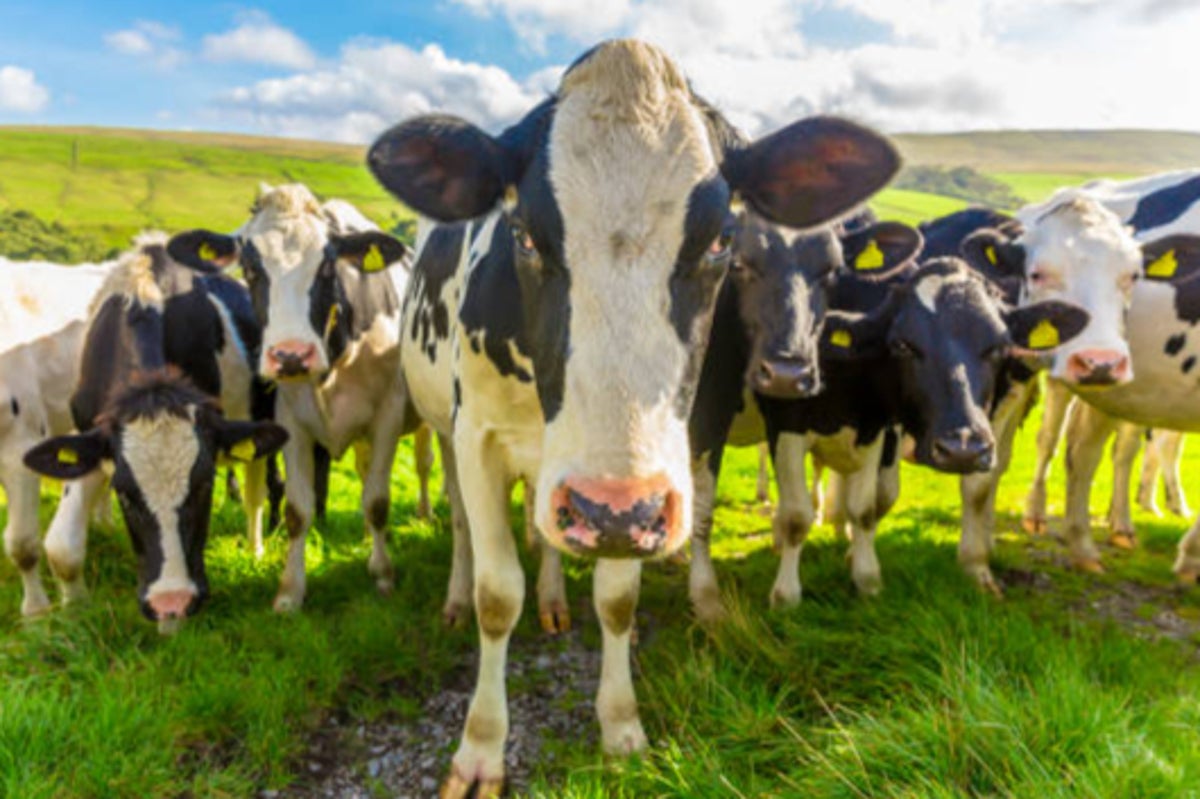
The Kremlin is currently fighting a war on two fronts, but the one involving cattle in the Far East may prove more destabilizing than the one involving tanks in the West. Across the sprawling regions of Khakassia and Irkutsk, a massive outbreak of nodular dermatitis—a highly contagious viral disease—has forced the Russian government to declare a state of emergency. This isn't just a veterinary problem. It is a logistical nightmare that has triggered a wave of rare, public dissent from rural populations who feel the state is stealing their livelihoods under the guise of public health.
The official response has been brutal. To stop the spread, authorities have initiated a "scorched earth" policy, culling tens of thousands of cows, pigs, and sheep. In villages where the cow is the primary source of both nutrition and income, the sight of specialized "liquidation teams" arriving in protective gear has sparked physical confrontations. For a rural Russian family, the loss of a herd isn't a business setback; it's a fast track to poverty that no government subsidy can truly fix.
The Viral Breach and the Failure of Bio-Security
Nodular dermatitis, often called "lumpy skin disease," is a nightmare for livestock. It causes fever, nodules on the skin, and can quickly lead to death or permanent infertility in survivors. While it doesn't jump to humans, its economic impact is total. The virus is primarily spread by biting insects, which makes the vast, marshy Siberian landscape an ideal breeding ground during the warmer months.
However, the current crisis reveals a systemic collapse in Russia's domestic bio-security. For years, the federal veterinary oversight body, Rosselkhoznadzor, has warned about the porous borders with Kazakhstan and Mongolia. Smuggled livestock, moved under the cover of night to avoid taxes and health checks, acted as the primary vector. The state knew the risk was rising. They simply failed to vaccinate the frontier herds in time.
Now, the government is playing a desperate game of catch-up. The emergency measures include a total ban on the movement of meat and dairy products out of affected "red zones." This has effectively severed the supply chain for local markets, sending prices for beef and milk skyrocketing in regional centers. When the supply chain snaps in a country already hit by international sanctions, the pressure on the average citizen becomes unbearable.
The Economics of a Forced Cull
The Russian government claims it is offering compensation to farmers, but the math rarely adds up. In Khakassia, the state promised roughly 150 to 200 rubles per kilogram of live weight. Compare that to the cost of replacing a high-yield dairy cow in 2026, and the gap is glaring. A farmer losing a herd of 50 cattle receives a payout that might cover the purchase of 20 new animals—if they can even find a seller willing to ship into an infected region.
Furthermore, the bureaucracy involved in claiming these funds is legendary. Farmers must provide immaculate documentation in a region where "handshake deals" have been the norm for centuries. If a cow wasn't registered in the federal "Mercury" electronic tracing system, the farmer gets nothing. This has led to a bitter realization: the state's digital transition, intended to modernize agriculture, is now being used as a tool to deny aid to the most vulnerable.
Rural Resistance and the Ghost of 1929
The protests seen in the village of Beliy Yar and surrounding areas are not merely about money. There is a deep, historical resonance to the state seizing livestock. It mirrors the forced collectivization of the late 1920s, a trauma that remains embedded in the DNA of rural Russia.
Today's farmers are recording videos for social media, pleading directly to the Kremlin, bypasssing local governors they no longer trust. In some instances, villagers have formed human chains to prevent veterinary trucks from entering their property. They argue that the "emergency" is being exaggerated to benefit large, state-aligned agricultural conglomerates that want to wipe out small-scale competition. Whether or not this conspiracy theory is true matters less than the fact that a significant portion of the population believes it.
The Silent Threat to the National Meat Supply
While the media focuses on the protests, the long-term industrial impact is arguably more dangerous. Russia has spent the last decade trying to achieve "meat sovereignty," reducing its dependence on imports from South America and Europe. This outbreak threatens to reset that progress by years.
- Genetic Loss: Many of the culled herds include breeding stock specifically adapted to the harsh Siberian climate. You cannot simply import a cow from a temperate climate and expect it to survive a Trans-Baikal winter.
- Feed Chain Collapse: With no cattle to feed, local grain producers are losing their primary buyers, creating a secondary economic shockwave.
- Consumer Panic: Even in non-affected regions, rumors of "infected meat" reaching grocery shelves have caused a sharp decline in beef consumption, hurting the industry nationwide.
The government's heavy-handed approach may stop the virus, but it is killing the industry it is supposed to protect. By focusing entirely on eradication rather than containment and ring-vaccination, they are ensuring that these regions will remain agricultural deserts for the foreseeable future.
A Policy of Fear Over Science
The most damning aspect of the crisis is the lack of transparency. Information regarding the exact number of culled animals is often classified as a "trade secret" or hidden under emergency powers. This lack of data prevents independent veterinarians from assessing whether the culls are even necessary at the current scale.
In some districts, reports have surfaced of healthy animals being slaughtered alongside the sick because it was "more efficient" for the liquidation teams to clear an entire postal code than to test individual animals. This "efficiency" is a hallmark of a regime that values optics and control over the actual welfare of its citizens.
The situation is a grim reminder that in a centralized autocracy, the solution to a crisis is often as damaging as the crisis itself. As the summer heat approaches and the insect population explodes, the virus will likely move further west toward the Ural Mountains. If it reaches the massive feedlots of Central Russia, the current protests in Siberia will look like a minor disagreement.
The Kremlin must decide if it wants to continue treating its farmers as obstacles to be cleared, or as the literal foundation of the country's survival. If they continue with the current strategy, they might successfully kill the virus—but they will also kill the rural economy that feeds the nation.
Monitor the regional meat price indices in Novosibirsk and Krasnoyarsk over the next thirty days; if they climb another 15%, the local unrest will likely transition from village protests to urban food riots.