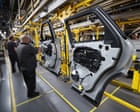
The coffee in the paper cup goes cold long before the shift ends. In the industrial heartlands, where the smell of cutting oil and hot steel hangs heavy in the rafters, men and women who have spent decades bending metal to the exacting standards of British automotive royalty are staring at blank production schedules. They are waiting for a phone call that might never come.
To understand the crisis unfolding across the supply chains of Jaguar Land Rover, you do not look at quarterly earnings reports or balance sheets filled with corporate jargon. You look at Arthur.
(Note: Arthur is a composite character drawn from interviews, trade union reports, and verified testimonies of West Midlands manufacturing veterans, designed to illustrate the human toll of corporate restructuring.)
Arthur has run a mid-sized component fabrication shop in Birmingham for twenty-eight years. His father worked the same stamping presses before him, turning raw sheets of aluminum into structural reinforcements that eventually found their way into the skeletal frame of a Defender or a Range Rover. For generations, this was a quiet contract of mutual survival. JLR built luxury vehicles for global elites, and Arthur’s shop built the hidden sinew that held those vehicles together. Everyone ate. Everyone paid their mortgages.
Then came the pivot.
Corporate boardrooms in Gaydon decided that the future belonged exclusively to high-margin electric luxury, streamlined production lines, and leaner inventories. To achieve profitability targets, the automaker began squeezing its vendor network. Contracts were renegotiated. Payment terms stretched from thirty days to ninety. Volume projections dropped without warning.
Everything is against us, Arthur says, staring down at an invoice that doesn't cover next week's payroll. It is not anger in his voice; it is exhaustion.
This is the hidden cost of the modern corporate transformation. When a legacy titan restructures to chase technological evolution, the shockwaves do not hit the executives in glass-walled offices. They shatter the small, family-owned machine shops, the specialist coaters, the logistics firms with three trucks and a dream. These Tier Two and Tier Three suppliers operate on razor-thin margins. They do not have venture capital backups or multi-million-dollar cash reserves. They have cash flow, and when that dries up, the machinery simply stops.
Consider the physics of industrial manufacturing. It is an ecosystem built on trust and momentum. You cannot pause a stamping press for six months and expect it to spin back up with the flip of a switch. The skilled machinists—men and women who know the exact tolerance of a die-cast alloy by touch alone—retire early or find work in distribution warehouses stacking cardboard boxes. Once that human capital disperses, it is gone forever. You can import microchips from overseas, but you cannot easily recreate a fifty-year-old tradition of metalworking craftsmanship once the supply chain snaps.
JLR’s leadership argues that these painful cuts are necessary to secure the long-term viability of the brand. They are navigating a brutal global transition toward electrification, battling supply chain volatility, semiconductor shortages, and fierce competition from Asian EV manufacturers. In boardrooms, the math makes ruthless sense. Trim the fat. Consolidate suppliers. Protect the core margins.
Yet, the math ignores the faces on the shop floor.
When a major manufacturer demands sudden volume reductions, the supplier who invested a million pounds in specialized robotics last year suddenly finds himself with idle equipment and mounting debt. Banks get nervous. Credit lines tighten. The local pub, where the night shift used to gather for a pint at ten past six, grows a little quieter every month.
We are watching the rewriting of an industrial heritage. For decades, the British automotive supply chain was a dense, interconnected web of specialists who grew up together, solving engineering problems over tea and greasy bacon rolls. It was messy, human, and resilient. The new paradigm favors corporate consolidation—fewer, larger suppliers who can absorb risk and dance to the tune of multinational software and EV platforms.
Arthur turns his coffee cup around in his calloused hands. The machines behind him are running at half capacity. The rhythmic thud of the press is slower now, almost hesitant, like a heartbeat struggling to find a steady rhythm in a changing world. Outside, the rain falls over the loading docks, washing clean the empty parking spaces where delivery lorries used to queue in the early morning dawn.