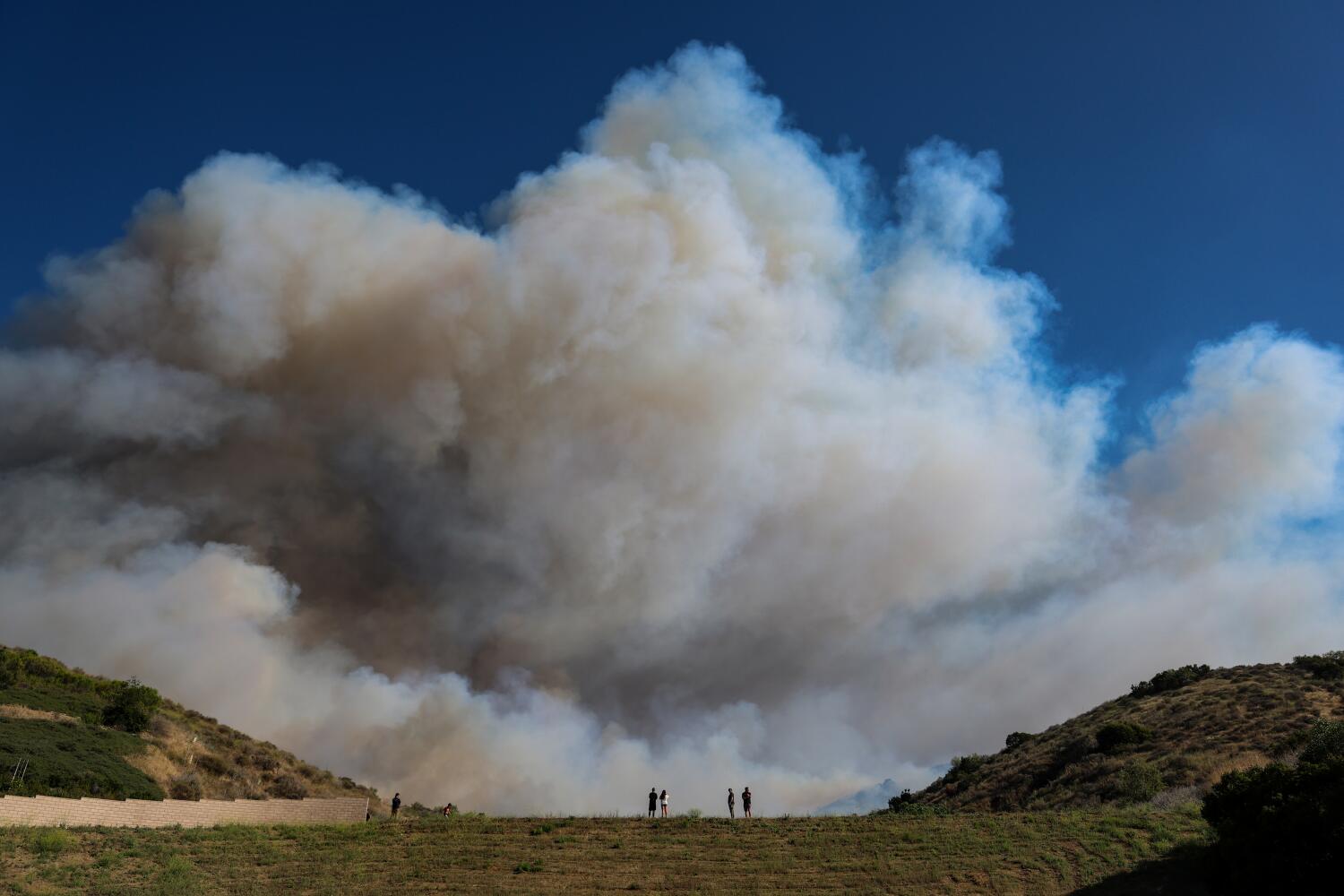
You think you know how fast a wildfire moves until you see dry brush catch an afternoon wind gust. Monday morning started like any other dry spring day in Ventura County. Then, a freak accident happened. An individual clearing land hit a rock with a tractor near the 2600 block of Rudolph Drive.
A tiny spark met bone-dry fuel.
Within minutes, the Sandy Fire was born. By Tuesday morning, it had ripped through 1,386 acres of suburban hillside, triggering mandatory evacuations for over 17,000 residents. The fire didn't care about property lines, suburban planning, or readiness. It just ran.
The immediate danger has changed hourly. Firefighters have scratched out a meager 5% containment line, but the battle is far from over. If you live anywhere near Simi Valley, West Hills, or Chatsworth, you need to understand exactly what pushed this fire so quickly and how to handle the smoke choking the region right now.
The Anatomy of a Wind Driven Inferno
Southern California didn't get a break this season. The fire sparked just before 10 a.m. on Monday, May 18, near Sandy Avenue. It immediately encountered a lethal cocktail of low humidity, high temperatures in the mid-80s, and unforgiving terrain.
Terrain-driven winds are a nightmare for ground crews.
Morning gusts topped 30 mph, pushing flames down canyons and straight toward suburban neighborhoods like Bridle Path. This equestrian community in the southwestern foothills suddenly found itself on the front lines. Helicopters swooped in for aggressive water drops, trying to keep the flames from chewing through multi-million dollar properties.
By mid-afternoon, the fire grew from 10 acres to 500, then to more than 1,300. The rapid rate of spread forced the Ronald Reagan Presidential Library and Museum to shut its doors. Thick, gray smoke blankeetd the city of 125,000, turning the noon sky into an eerie twilight.
The wind shifted late Monday afternoon, switching from a dry northeastern flow to a southwest onshore breeze. That gave ground crews a brief window of relief as cooler, more humid ocean air rolled in overnight. But it also pushed the fire’s footprint toward the southeast, threatening Bell Canyon and prompting a fresh wave of emergency orders.
Real Data on the Sandy Fire
Ground conditions are fluid. Here is exactly where the numbers stand as of Tuesday afternoon, based on data from CAL FIRE and the Ventura County Fire Department.
- Total Acreage Covered: 1,386 acres.
- Containment Level: 5%.
- Personnel Deployed: Over 750 firefighters from multiple agencies, including the Los Angeles Fire Department (LAFD) assisting Ventura County.
- Evacuations: More than 17,000 people under mandatory evacuation orders, with another 3,500 under evacuation warnings.
- Structural Damage: At least one home has been confirmed destroyed or heavily damaged.
The Simi Valley Unified School District canceled all classes and after-school programs on Tuesday. With seven schools sitting directly inside evacuation zones, local officials decided not to gamble with student safety.
The Unseen Danger Choking the Air
Even if the flames aren't directly outside your window, the air you are breathing right now might be dangerous. The South Coast Air Quality Management District (AQMD) has issued an emergency air quality alert. It covers most of Los Angeles County and all of Orange County.
Smoke from the Sandy Fire is drifting deep into the San Fernando Valley.
Wildfire smoke contains fine particle pollution, known as PM2.5. These tiny particles bypass your body's natural filters. They wedge themselves deep into your lungs and enter your bloodstream. If you have asthma, COPD, or a heart condition, this isn't just an inconvenience. It's a medical emergency.
Don't assume you are safe just because you are indoors. Older homes leak air. If you can smell smoke inside, your indoor air quality is actively degrading.
Emergency Checklist for Southern California Residents
Wildfire season isn't a future threat. It's happening outside right now. If you are anywhere near the perimeter, or if you live in a high-risk canyon zone, you need to execute these steps immediately.
Hard Road Closures to Avoid
If you are trying to navigate the area, avoid these locked-down corridors. They are closed to public traffic to give heavy fire rigs room to move:
- Bell Canyon Road in both directions from Overland Drive.
- Katherine Road at the railroad tracks.
- Oak Knolls at Southern Oaks Avenue.
- Crinklaw Lane.
- Santa Susana Pass Road at the railroad tracks and Box Canyon Road.
Protect Your Home Air Quality
- Seal the house: Keep all windows and doors closed. Turn your HVAC system to "recirculate" so you aren't drawing in toxic air from outside.
- Run air purifiers: Put your HEPA filters on the highest setting. If you don't have one, stay in a central room away from windows.
- Mask up: Standard surgical masks or bandanas do absolutely nothing against PM2.5 particles. If you must go outside, wear a tightly fitted N95 mask.
Evacuation Preparedness
If you are under an evacuation warning, don't wait for the order to become mandatory. Pack your vehicle now. Include your "six Ps": people and pets, papers (birth certificates, insurance policies), prescriptions, pictures, personal computers, and plastics (credit cards and cash).
If you have large animals, livestock, or horses, transport them immediately to the Ventura County Fairgrounds at 10 E. Harbor Blvd. in Ventura. Waiting until the last minute makes trailer transport impossible on clogged, smoky roads.
Firefighters are utilizing calmer afternoon winds to build out dirt containment lines with bulldozers and hand crews. They are racing against the clock before temperatures rise again later this week. Stay vigilant, monitor local emergency radio frequencies, and don't hesitate to leave if the air turns black.