Choking. That is the first thing you notice when the peatlands start burning in Sumatra, long before you ever see the orange glow on the horizon. It starts as an invisible tickle at the back of your throat at six in the morning, thickens into a metallic taste on your tongue by noon, and settles into your chest like wet cement by nightfall.
For years, the headlines treating Southeast Asia’s biggest crises have read like dry accounting ledgers. Seven highlights. A bullet point for the haze choking Indonesia. Another bullet point for the latest court motion in Malaysia’s 1MDB financial scandal. A passing nod to border tensions, shifting trade winds, and regional politics. When you read those summaries from a climate-controlled office thousands of miles away, they feel neat, contained, and entirely abstract.
Down on the ground, nothing is contained.
Take a hypothetical mother named Sari living on the outskirts of Pekanbaru, a sprawling city in Indonesia’s Riau province. Picture her standing in her small concrete courtyard at seven in the morning, taping damp towels along the bottom cracks of her wooden front door. Outside, the sky is not blue, nor is it grey; it is a bruised, apocalyptic sepia that blots out the sun and turns midday into twilight. Inside, her six-year-old son coughs—a dry, barking sound that rattles his ribs. Sari is not thinking about carbon metrics, palm oil supply chains, or diplomatic treaties between Jakarta and Kuala Lumpur. She is calculating whether the sixty thousand rupiah in her purse will buy enough N95 masks to last the week, or if she has to choose between clean air and rice.
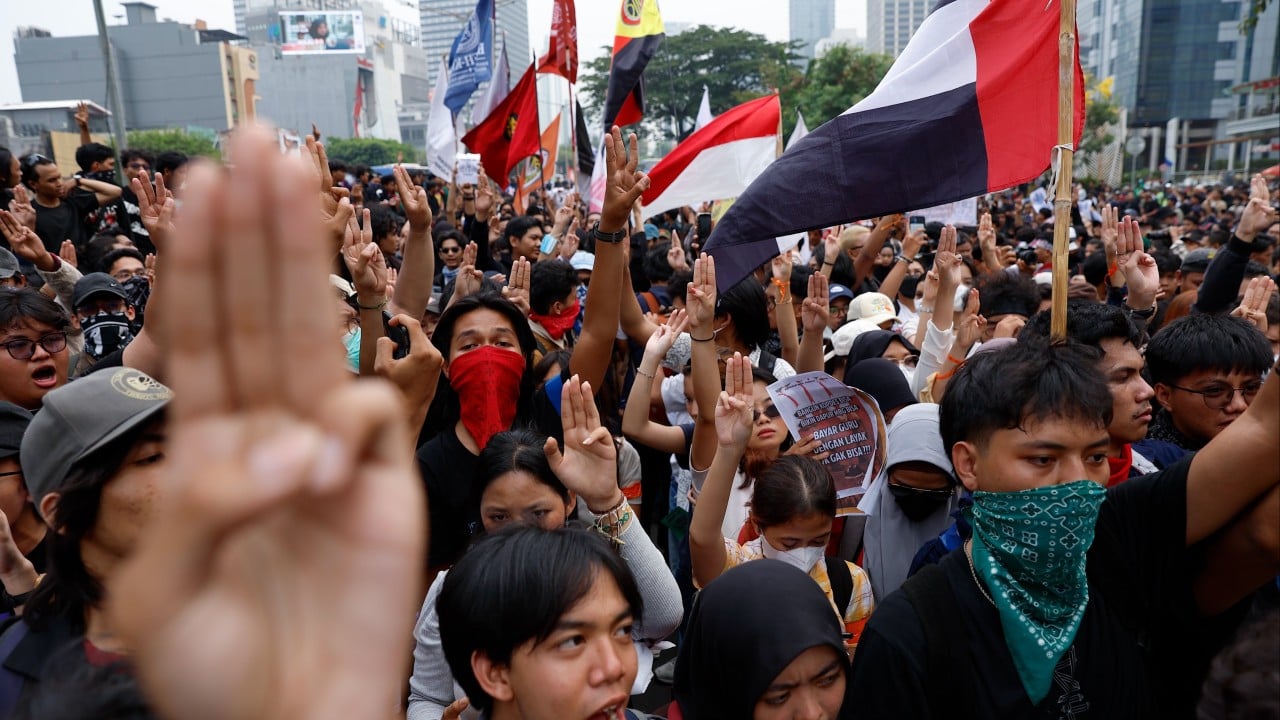
When thousands of Indonesians finally spilled into the streets to protest the haze, they were not marching over an environmental policy debate. They were marching because the air itself had become a weapon.
The Architecture of an Invisible Fire
To understand why those protests erupted with such raw fury, you have to understand how a peatland fire actually works. Most people imagine a forest fire as a wall of flame racing through treetops, something you can douse with water bombers and bulldozers. Peat fires are entirely different beasts.
Think of a peat swamp as an ancient, waterlogged sponge made of partially decayed plants, stacked ten meters deep over thousands of years. When corporations and smallholders drain these swamps to plant lucrative palm oil and pulpwood plantations, that sponge dries out into pure, volatile fuel. Once a spark hits it—often lit deliberately because fire is the cheapest way to clear land—the blaze does not just burn on the surface. It burrows underground. It smolders unseen beneath the soil for months, immune to light rain, belching out a toxic cocktail of carbon monoxide, cyanide, and microscopic particulate matter known as PM2.5.
When the Air Quality Index crosses 300, authorities label it hazardous. During the worst weeks of the haze crisis, sensors in parts of Sumatra and Kalimantan did not just cross 300; they broke past 1,000, climbing off the charts entirely. Breathing that air for a single day is the physiological equivalent of smoking dozens of cigarettes without ever lighting a match. Schools shut down. Airports ground flights. Hospitals fill up with infants and elderly grandparents gasping for oxygen.
The protesters outside government buildings in Jakarta and Palembang carried cardboard signs smeared with soot, demanding criminal accountability for the plantation giants whose concessions burned year after year. Their anger exposed a rot that runs far deeper than seasonal wind patterns: the quiet, systemic failure of enforcement when massive profit collides with public health.
Four Billion Dollars in Daylight
Five hundred kilometers north across the Strait of Malacca, a very different kind of smoke was refusing to clear. In Malaysia, the air was breathable, yet the public mood was suffocating under the weight of an obsession that simply would not die.
1Malaysia Development Berhad. Four words that began as a sovereign wealth fund meant to lift ordinary Malaysians into a high-income future, and ended up becoming the gold standard for modern kleptocracy.
If you want to grasp the scale of the 1MDB scandal without getting lost in offshore shell companies and Swiss banking codes, imagine a neighborhood cooperative where every family puts their life savings into a locked vault to build a local hospital and a new school. Now imagine the vault’s caretaker quietly tunneling through the back wall, loading the cash into armored trucks, and spending it on Van Gogh paintings, a two-hundred-and-fifty-million-dollar superyacht, a fleet of private jets, and a Hollywood movie starring Leonardo DiCaprio—all while telling the neighbors the hospital is right on schedule.
More than $4.5 billion vanished from 1MDB. That is not a rounding error. That is the cost of thousands of rural clinics, decades of university scholarships, and miles of flood-resilient infrastructure stolen directly from the pockets of working taxpayers.
Even years after the initial revelations toppled a sixty-year political dynasty in Kuala Lumpur, the scandal lingered like phantom pain. Every few months, a new court appeal, a fresh asset seizure by the United States Department of Justice, or a controversial pardon debate dragged the trauma back onto the front pages. For a young Malaysian software engineer watching his ringgit lose purchasing power at the grocery store, 1MDB was never ancient history. Every time he paid a tax or watched a public project stall for lack of funds, he was paying off the interest on a heist he never approved.
The Threads Connecting a Restless Region
It is tempting to view Indonesia’s burning forests and Malaysia’s missing billions as separate tragedies belonging to separate nations. Look closer at the broader pulse of Asia during that same stretch of news, however, and a single, unmistakable pattern emerges: ordinary citizens across the continent were running out of patience with the gap between official promises and lived reality.
Consider what else was unfolding across the region simultaneously:
- The Squeeze on Migrant Labor: Across Gulf states and East Asian manufacturing hubs, millions of South and Southeast Asian workers were sending home record remittances while facing wage theft and zero legal protections, propping up national economies that rarely protected them in return.
- The Infrastructure Debt Trap: From coastal ports in Sri Lanka to high-speed rail corridors winding through Laos, ambitious mega-projects promised overnight prosperity while quietly saddling future generations with staggering sovereign debt.
- The Digital Dragnet: Governments from Bangkok to Manila were rapidly adopting facial recognition and cyber-crime laws under the banner of national security, tools that activists quickly realized were just as effective at silencing journalists and student organizers.
- The Shifting Supply Chain: Global manufacturers scrambling to diversify away from single-country reliance were pouring billions into Vietnam and India, creating sudden industrial booms that strained local water tables, power grids, and labor rights overnight.
- The Water Wars of the Mekong: Upstream dam construction was altering the seasonal flood pulses of Southeast Asia’s greatest river, threatening the rice bowls and fisheries that feed sixty million people downstream.
Every single one of these flashpoints shared the same DNA. At the top, elites traded in abstract numbers—hectares cleared, bonds issued, megawatts generated, GDP points gained. At the bottom, human beings absorbed the hidden costs in their lungs, their wallets, and their futures.
Why the Old Playbook Stopped Working
For decades, the unspoken social contract across much of developing Asia relied on a simple trade-off: tolerate a little corruption, overlook a little environmental corner-cutting, and in exchange, the economy grows fast enough to lift your children into the middle class.
That bargain fractured. It fractured because you cannot eat GDP growth when the river runs dry, and you cannot enjoy a rising skyline when your child needs an inhaler just to walk to the bus stop.
I remember standing near the Kuala Lumpur High Court during one of the marathon 1MDB hearings, watching a retired civil servant in a faded batik shirt lean against the metal barricade in the midday heat. He had taken two buses just to stand outside a building he wasn't even allowed to enter. When I asked him why he bothered showing up for a procedural hearing that would barely make the evening bulletin, he looked at me like I had asked why he bothered breathing. "If we stop watching," he said quietly, "they think we forgot."
That sentence captures the exact electricity running from the smoky streets of Pekanbaru to the crowded courtrooms of Putrajaya. The people who hold power in these systems rely entirely on exhaustion. They count on the haze blowing away with the monsoon rains in November so everyone forgets who lit the matches in August. They count on legal proceedings dragging on for seven, eight, ten years until the public grows numb to the numbers and moves on to the next distraction.
The Slow Burn of Accountability
Real change in moments like these rarely arrives with a cinematic bang. It looks like boring, relentless, unglamorous persistence.
In Indonesia, grassroots coalitions of scientists, lawyers, and local villagers began using open-source satellite thermal imaging to map hotspots in real time, cross-referencing them against corporate land registries before the smoke could even cross the Strait of Malacca. When officials claimed they didn't know whose land was burning, activists handed reporters the exact GPS coordinates within hours. The fog of plausible deniability began to lift.
In Malaysia, investigative journalists and civil society watchdogs refused to let the 1MDB narrative dissolve into partisan noise, meticulously tracking every clawed-back dollar from Manhattan real estate back into sovereign recovery accounts. Slowly, painfully, billions began trickling back—not enough to erase the shame, perhaps, but enough to prove that borders no longer offer permanent sanctuary to looted public wealth.
We often consume regional news roundups like fast food—seven quick bites of global chaos swallowed over morning coffee and forgotten by lunch. Yet behind every compressed headline lies a human threshold being crossed. Somewhere in Sumatra, a mother is checking the wind direction before opening her front door. Somewhere in Kuala Lumpur, a taxpayer is watching a courtroom docket to see if the rules still apply to the powerful.
The smoke always clears eventually, leaving behind the ash—and the unmistakable outline of everyone who stood by and let it burn.