Every wire service on earth ran the exact same lazy headline this month.
"Ex-boxer Goran Gogic pleads guilty to drug charge, faces at least 10 years in prison."
It is the oldest, cheapest trick in journalism. Slap "former heavyweight boxer" in the first four words, throw in a tired quote from a prosecutor about "justice delivering a knockout blow," and watch the clicks roll in. You get the easy morality play of the washed-up fighter who traded the sweet science for the underworld.
Here is the problem with that framing. It is a complete distraction.
Goran Gogic retired from professional boxing in 2012 with a 21-4-2 record fighting mostly in Germany. He was a journeyman heavyweight who never held a major world title, never headlined a pay-per-view, and hung up his gloves fourteen years ago. Framing him as a "former athlete gone bad" in 2026 is like describing a cartel boss as a "former high school varsity swimmer." It tells you nothing about how the crime actually worked, who enabled it, and why the global supply chain is wide open to anyone with enough cash and leverage.
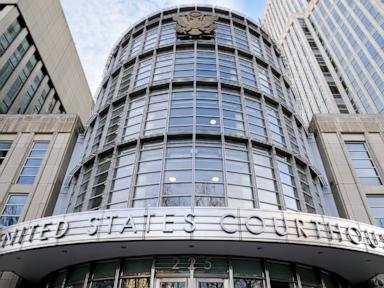
If you look past the boxing gimmick, the Goran Gogic case in the Eastern District of New York is not a sports story. It is a brutal exposure of modern maritime logistics, institutional blindness, and how easily global shipping infrastructure gets hijacked from the inside out.
The $1 Billion Illusion of Port Security
When federal agents boarded the MSC Gayane at the Port of Philadelphia on June 19, 2019, they found nearly 18 metric tons of cocaine—roughly 17,956 kilograms—hidden inside seven shipping containers. Street value exceeded $1 billion. It remains one of the largest cocaine seizures in United States history.
Mainstream coverage treats that seizure as a triumph of law enforcement. Look closer at the mechanics, and you realize it was practically an accident—and a terrifying indictment of how little control shipping giants actually have over their own vessels.
Consider what had to happen for that cocaine to reach Philadelphia:
- Open-ocean transfers: Speedboats pulled alongside a massive commercial container ship off the coast of South America under the cover of night.
- Crane operations at sea: Crew members used the ship's own cranes to hoist tons of bricks aboard while the vessel was underway.
- Container breach and reseal: Corrupt mariners broke factory seals on legitimate cargo containers, packed the drugs inside among commercial goods, and applied counterfeit seals that passed initial visual inspection.
- Internal collusion: Eight crew members on the MSC Gayane eventually pleaded guilty to conspiracy. They were not rogue deckhands acting alone; they were an organized logistics cell operating inside a vessel owned by an investment fund managed by JPMorgan Chase and operated by Mediterranean Shipping Company, the largest container line on the planet.
Gogic was not swinging a left hook at customs officers. According to federal indictments and his November 2026 guilty plea to violating the Maritime Drug Law Enforcement Act, his job was pure supply-chain management. He coordinated between Colombian cartel suppliers, corrupt crew members on commercial freighters, and European port workers in Rotterdam, Antwerp, and Hamburg who could extract the product before customs scanners ever touched it.
Calling him an "ex-boxer" obscures his actual skill set. The Balkan syndicates—specifically the Montenegrin networks that dominate European wholesale cocaine distribution—do not hire muscle to run $1 billion maritime routes. They hire project managers who understand port schedules, crew rotations, and bill-of-lading vulnerabilities.
Why the "10-Year Minimum" Headline Misses the Real Legal War
Read the standard wire copy and you will see the phrase "faces at least 10 years in prison" repeated like gospel. Technically, under the Maritime Drug Law Enforcement Act, 10 years is the statutory mandatory minimum.
In reality, 10 years was never on the table. Not for a second.
Federal sentencing guidelines do not care about your boxing record. They care about drug weight, leadership role, and obstruction of justice. When you admit responsibility for trafficking 20 tons of cocaine, your base offense level maxes out the federal sentencing chart before the judge even opens the file.
More importantly, look at what happened in Brooklyn federal court over the past two years. This case did not drag on from Gogic's 2022 arrest at Miami International Airport until late 2026 because prosecutors were struggling to prove he moved cocaine. It dragged on because Gogic's camp tried to burn down the judicial process from the inside.
- Witness intimidation from behind bars: In January 2024, investigators uncovered a contraband cell phone passed to a cooperating witness inside the Metropolitan Detention Center in Brooklyn. Searches of Gogic's own cell turned up protected discovery documents and a photograph of a cooperating witness's child.
- The $100,000 juror bribe: Exactly one year before his guilty plea, just as opening statements were set to begin, federal authorities exposed a plot to pay a sitting juror $100,000 for a not-guilty verdict. Three men eventually pleaded guilty to the bribery scheme, forcing the judge to dismiss the entire jury panel on the spot.
- The actual math of the plea deal: When Gogic finally stood before U.S. Magistrate Judge Lara K. Eshkenazi on November 18, 2026, he did not get a sweetheart deal. He agreed to a $1 million forfeiture and accepted a formal obstruction-of-justice enhancement. Ahead of his February 16 sentencing, prosecutors are demanding 23 years in federal prison, while his own defense team—led by veteran attorney Alan Futerfas—is arguing for 20 years.
Even if Gogic gets the defense's best-case scenario of 20 years, he is 47 years old. Counting time served since 2022, he walks out in his mid-sixties into immediate deportation to Montenegro. Reporting that he "faces at least 10 years" is accurate only in the way saying a hurricane "brings at least a light breeze" is accurate.
Dismantling the Myths Around Maritime Drug Smuggling
Every time a massive container seizure hits the front page, politicians and pundits ask the same predictable questions. None of them survive contact with how global trade actually functions.
"Why doesn't Customs just scan every container coming into U.S. ports?"
Because doing so would collapse the American economy in 72 hours.
The United States imports over 30 million shipping containers every year across dozens of coastal ports. High-energy X-ray and gamma-ray portals take time, space, and specialized labor to operate and interpret. If U.S. Customs and Border Protection physically inspected or scanned 100% of inbound cargo, port dwell times would explode from days to months. Grocery shelves would empty, manufacturing assembly lines would halt, and freight costs would triple.
Traffickers know this. They rely on the mathematical certainty that less than 5% of global container traffic undergoes non-intrusive imaging. The MSC Gayane was not even supposed to offload its cocaine in Philadelphia; Philadelphia was a transit stop on the way to Rotterdam and Antwerp. The traffickers gambled that a vessel making a brief port call in the U.S. would pass through on automated risk-scoring algorithms without triggering a physical hold. They lost that bet only because intelligence agencies had already penetrated their communications.
"Didn't seizing 20 tons cripple the cartel's supply chain?"
Not even close. For wholesale cocaine producers in Colombia and distribution syndicates in Europe, a 20-ton loss is an operational write-off, not an existential crisis.
At the farm gate in Colombia, a kilogram of pure cocaine costs roughly $1,500 to $2,000 to produce. Even accounting for transit fees, bribes to port workers, and cut-outs paid to maritime crews, the sunk cost on 20 metric tons is a tiny fraction of its $1 billion European street valuation. Wholesale syndicates price a 20% to 30% interdiction rate directly into their margins. When the MSC Gayane went down in 2019, wholesale prices in Antwerp and Rotterdam barely flinched for more than three weeks. Other ships were already at sea.
"Does arresting a coordinator like Gogic stop the Balkan networks?"
Arresting a logistics coordinator disrupts a specific cell for six months until a lieutenant steps into the role. Balkan organized crime groups do not operate like rigid, top-down Italian mafia families where taking out the boss paralyzes the organization. They operate as decentralized, entrepreneurial joint ventures.
A Montenegrin coordinator puts up capital and port connections; a Colombian supplier fronts the product; a Croatian or Serbian shipping specialist recruits the crew. If one broker gets caught at Miami International Airport, the remaining partners simply route the next shipment through Ecuadorian banana exports or Brazilian bulk carriers instead of container lines transiting the U.S. East Coast.
What Shipping Companies and Regulators Refuse to Fix
I have watched maritime security consultants and compliance officers spend hundreds of millions of dollars on blockchain tracking, tamper-evident smart seals, and AI cargo-manifest screening over the last decade. Almost all of it misses the point.
Technology cannot solve a human-access vulnerability. You can put a GPS tracker and a cryptographic seal on a container in Callao, Peru, and it will tell you the exact second the door opens. It will not stop four crew members with bolt cutters, a welding torch, and counterfeit seals from loading 500 duffle bags into that box while the ship is 200 miles offshore in international waters.
If the shipping industry and federal regulators actually wanted to shut down the Gogic playbook, they would stop buying software and start changing maritime labor practices:
- End concentrated nationality crewing on high-risk routes: Syndicates recruit entire crews from the same tight-knit coastal towns in Montenegro, Croatia, and the Philippines because shared hometown ties guarantee silence—and give the cartel leverage over the sailors' families back home. Randomizing crew assignments across major South American-to-European corridors destroys the trust networks smugglers need to operate on board.
- Hold vessel owners strictly liable for crew-facilitated contraband: When the MSC Gayane was seized, federal authorities temporarily seized the vessel and forced MSC to pay $50 million in penalties and security upgrades before releasing it. That is a rounding error for a shipping giant that made tens of billions during the post-pandemic freight boom. Until maritime insurers and beneficial owners—including Wall Street funds—face automatic vessel forfeiture for crew-level smuggling, security remains an acceptable cost of doing business.
- Audit port-worker access with the same rigor as airport tarmacs: In major European hubs like Antwerp and Rotterdam, dockworkers and crane operators have routinely been bribed tens of thousands of euros per shift to look the other way or move flagged containers to unmonitored stacks. Biometric tracking of every human who touches a container crane is cheap, proven, and fiercely resisted by port unions.
The Uncomfortable Truth About This Case
To be fair to the prosecutors in Brooklyn, taking Gogic off the board matters. Anyone willing to circulate photographs of a witness's child inside a federal detention center and funnel $100,000 toward bribing an American juror belongs in a maximum-security cell for decades. The Eastern District of New York dismantled a ruthless operator who treated the U.S. justice system like just another corruptible port authority.
Just do not confuse a successful prosecution with a solved problem.
While headlines focus on a 47-year-old ex-heavyweight trading his boxing gloves for prison blues, the exact vulnerabilities that put $1 billion of cocaine onto the MSC Gayane remain wide open across the world's oceans. The ships are still sailing, the crews are still underpaid, and the containers are still arriving faster than anyone will ever inspect them.
Goran Gogic was never a boxer who went bad—he was a middleman who got caught in a business that is still booming without him.