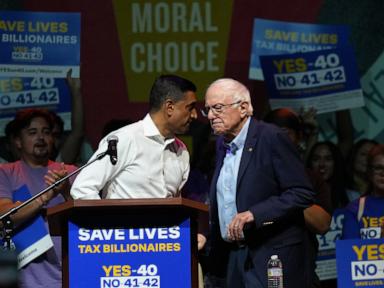
The divergence between progressive electoral victories and the collapse of California’s proposed wealth tax exposes a fundamental friction in modern fiscal policy: ideological alignment among voters does not override capital mobility or institutional risk aversion. While progressive candidates and down-ballot initiatives secured majorities across key California jurisdictions, the targeted billionaire tax mechanism stalled due to structural defects in its design, legal vulnerability under the Dormant Commerce Clause, and the asymmetric elasticity of ultra-high-net-worth tax bases.
Understanding why a left-leaning electorate simultaneously empowers progressive lawmakers and rejects or abandons a wealth tax requires separating political sentiment from tax mechanics. Electoral wins reflect broad dissatisfaction with housing costs, inequality, and public service deficits. Wealth tax proposals, conversely, fail when they collide with the operational realities of state-level revenue collection, cross-border asset valuation, and liquidity constraints. For an alternative look, read: this related article.
The Illusion of Ideological Monoliths in State Fiscal Policy
A common analytical error in political commentary treats voter preference as a uniform ideological block. When progressive candidates win seats, observers assume a mandate for aggressive redistributive taxation. In practice, electorate behavior operates across two distinct decision frameworks: expressive voting and protective voting.
Expressive voting drives candidate selection. Voters support candidates who articulate shared values regarding economic fairness, labor rights, and social safety nets. Protective voting governs direct fiscal measures and legislative pressure around taxation. Even progressive-leaning constituencies exhibit loss aversion when tax proposals threaten local economic engines, venture capital ecosystems, or state budget stability. Related reporting on this matter has been shared by Business Insider.
California’s fiscal architecture amplifies this split. Under Proposition 13, property tax growth is tightly capped, forcing the state to rely heavily on personal income taxes. The top 1% of earners routinely generate between 40% and 50% of California’s total personal income tax revenue. This extreme concentration creates a structural vulnerability known as revenue volatility. When capital gains surge, the state experiences massive surpluses; when equity markets contract, deficits appear immediately.
Progressive lawmakers who won office inherited a fiscal system already hyper-dependent on its wealthiest residents. Advancing a wealth tax on top of the nation’s highest marginal income tax rate—13.3%, rising to 14.4% for wage earners following the removal of the State Disability Insurance cap—crosses a threshold where the marginal revenue gain risks triggering a contraction in the existing income tax base.
Deconstructing the Wealth Tax Mechanism
Unlike income taxes, which levy a percentage on realized cash flows, a wealth tax assesses an annual fee on net worth—total assets minus liabilities. Executing this mechanism at the state level introduces three distinct operational bottlenecks that separate theoretical revenue projections from actual collections.
1. The Valuation Problem for Illiquid Equity
The vast majority of billionaire wealth in California does not sit in cash or publicly traded equities. It resides in private, illiquid holdings—founder shares in pre-IPO technology firms, private equity stakes, venture capital carry, and commercial real estate.
Determining the fair market value of an untraded private company every twelve months requires either invasive, expensive administrative audits or reliance on taxpayer-submitted appraisals. Both paths create friction:
- Administrative friction: State tax boards lack the specialized forensic accounting capacity to value thousands of complex, multi-tiered private entities annually without protracted litigation.
- Liquidity friction: A founder holding 20% of a private company valued at $5 billion owes a substantial annual tax bill despite generating zero liquid cash from that asset. Paying the tax forces the liquidation of shares in secondary markets, which can depress company valuations, dilute control, or violate shareholder agreements.
2. The Dormant Commerce Clause and Extraterritorial Reach
California’s proposed wealth tax frameworks attempted to prevent capital flight by including "exit tax" or trailing-nexus provisions. These clauses sought to continue taxing individuals for several years after they legally changed their domicile to another state, phasing out the tax obligation gradually.
This design collides directly with the U.S. Constitution’s Dormant Commerce Clause and the Due Process Clause of the Fourteenth Amendment. Under established Supreme Court precedent, a state may only tax value that has a direct, substantial nexus to the state during the tax period. Attempting to levy a property-style tax on the global net worth of a non-resident—simply because they previously lived in California—invites immediate federal constitutional challenges. Even if the state eventually prevailed in court, years of injunctions would freeze revenue collection, rendering the tax useless for immediate budget needs.
3. Asymmetric Capital Mobility
Labor is sticky; capital is fluid. A software engineer, nurse, or small business owner faces high transaction costs when relocating—selling a home, disrupting family networks, and finding new employment. A billionaire faces near-zero friction. Ultra-high-net-worth individuals already maintain multiple residences, utilize family offices to manage legal domicile, and hold assets in decentralized corporate structures.
Establishing domicile outside California requires strict adherence to residency rules enforced by the Franchise Tax Board, such as spending fewer than 183 days in the state and shifting primary social, medical, and financial ties to jurisdictions like Texas, Florida, Nevada, or Washington. When the expected cost of a wealth tax exceeds the transaction cost of establishing out-of-state residency, rational economic actors relocate. Because California’s budget relies on the income taxes these individuals pay prior to relocation, losing even a small cohort of billionaires produces a net fiscal loss.
The Strategic Disconnect Between Progressive Wins and Legislative Execution
Progressive victories in state legislatures and municipal races often rely on grassroots mobilization, labor union endorsements, and targeted messaging around corporate accountability. However, translating electoral power into enacted tax policy requires navigating an entirely different institutional apparatus.
Executive Veto Power and Fiscal Pragmatism
Even when progressive caucuses expand their footprint in the Assembly or Senate, statewide executive leadership operates under different incentives. A governor must balance the entire state budget, maintain credit ratings, and answer to moderate swing voters across the state. Executive leadership recognizes that a wealth tax failing to clear legal hurdles or triggering high-profile departures creates political liability without delivering usable funds for public programs. Consequently, executive resistance—whether through explicit veto threats or quiet legislative maneuvering—acts as a hard circuit breaker on wealth tax bills.
The Opportunity Cost of Political Capital
Legislative sessions operate under strict time and attention constraints. Advancing a controversial wealth tax consumes immense political capital, triggering well-funded opposition campaigns from business coalitions, tech founders, and chamber of commerce groups. Progressive lawmakers who secured mandates on housing affordability, healthcare expansion, or climate infrastructure face a strategic choice: expend finite political capital on a legally precarious wealth tax, or direct that capital toward achievable regulatory reforms, bond measures, or targeted corporate tax adjustments that survive judicial review.
Competition Within the Progressive Coalition
The progressive movement is not monolithic on tax design. While one faction prioritizes wealth redistribution as a moral and structural necessity, another faction prioritizes revenue stability for public sector unions, education funding, and social services. Public sector stakeholders understand that volatile or legally contested revenue streams cannot sustainably fund ongoing operational expenses like teacher salaries or Medi-Cal reimbursements. When a wealth tax threatens to destabilize the existing progressive income tax base, pragmatic elements within the progressive coalition quietly withdraw support.
The Economic Feedback Loops Missed by Surface Analysis
Standard political reporting frames the setback as a simple tug-of-war between progressive activists and wealthy donors. This framing misses the underlying economic feedback loops that dictate state-level fiscal outcomes.
The Laffer Curve at the Sub-National Level
While the Laffer Curve is frequently misapplied at the federal level—where emigration requires renouncing citizenship and paying a federal exit tax—its mechanics operate with high precision at the state level. Because the United States is a free-trade and free-movement zone, state borders impose no tariffs or currency controls. Therefore, the elasticity of taxable income with respect to state tax rates is dramatically higher than at the national level. California’s top marginal rate already sits near the revenue-maximizing peak. Layering an annual wealth tax onto that structure pushes the effective tax rate on capital returns well past the inflection point, causing the tax base to shrink faster than the rate increases.
Venture Capital Formation and Downstream Revenue
California’s economic engine relies on a specific lifecycle: venture capital funds early-stage startups, startups scale and reach liquidity events (IPOs or acquisitions), and those liquidity events generate massive capital gains tax windfalls for the state.
A wealth tax disrupts this pipeline at the formation stage. Angel investors and venture partners evaluate after-tax risk-adjusted returns. If holding illiquid startup equity incurs an annual wealth tax liability before the company generates revenue or reaches an exit, the cost of capital rises. Founders incorporate and headquarter new ventures in jurisdictions without wealth tax exposure. The state does not merely lose the immediate wealth tax revenue; it forfeits the future capital gains taxes from the next generation of high-growth enterprises.
Comparative Mechanics: Federal vs. State Wealth Taxation
To understand why state-level proposals consistently falter, contrast the structural capabilities of a sovereign national government against those of a U.S. state.
- Jurisdictional Reach: The federal government taxes citizens on worldwide income and assets regardless of physical residence. A state can only tax residents or assets physically sourced within its borders.
- Exit Friction: Escaping federal taxation requires expatriation, surrendering a U.S. passport, and paying an immediate mark-to-market exit tax under Internal Revenue Code Section 877A. Escaping state taxation requires buying a home in another state and tracking travel days.
- Monetary Sovereignty: The federal government issues its own currency and can absorb revenue fluctuations through debt issuance. California must balance its budget annually and relies on municipal bond markets that penalize fiscal instability.
- Constitutional Constraints: Congress possesses broad taxing power under the Sixteenth Amendment. State legislatures are hemmed in by the Dormant Commerce Clause, the Privileges and Immunities Clause, and state-specific constitutional voter-approval thresholds (such as California’s Proposition 13 and Proposition 26 requirements for tax increases).
Attempting to execute a federal-style wealth tax within the legal and economic boundaries of a single state creates an inherent structural mismatch.
Tactical Alternatives for Revenue Generation
If progressive policymakers aim to extract greater fiscal contributions from ultra-high-net-worth individuals without triggering constitutional paralysis or capital flight, the structural solution lies in reforming realized transaction taxes rather than taxing unrealized net worth.
Closing Step-Up in Basis Loopholes at the State Level
Currently, when an asset passes to an heir upon death, its cost basis resets to fair market value, permanently erasing decades of unrealized capital gains from taxation. Modifying state estate or inheritance tax frameworks—or treating death as a realization event for capital gains above a high threshold (e.g., $50 million)—captures accumulated wealth at a single, verifiable liquidity point without requiring annual valuations of private businesses.
Targeted Real Estate Transfer Taxes
Unlike digital assets, intellectual property, or corporate equity, real estate is physically immobile. High-tier mansion taxes or progressive real estate transfer taxes on commercial and residential transactions above $10 million target wealthy asset holders using an asset class that cannot relocate to Nevada or Texas. While high transfer taxes can reduce transaction volume, they avoid Dormant Commerce Clause challenges and eliminate valuation disputes because the tax triggers only upon an arm's-length sale.
Conforming State Tax Code to Eliminate Carried Interest Arbitrage
Private equity and venture capital partners frequently structure compensation as carried interest, allowing labor income to be taxed at preferential long-term capital gains rates at the federal level. While California already taxes capital gains as ordinary income, tightening sourcing rules to ensure that management fees and performance allocations generated by California-based investment operations remain taxable in-state—even if a partner relocates—protects the existing tax base using established corporate apportionment formulas.
Strategic Forecast and Policy Trajectory
The failure of California’s billionaire tax proposal is not a temporary political stumble; it is a permanent structural ceiling on sub-national wealth taxation in the United States. As long as capital moves freely across state lines and federal courts enforce strict nexus requirements, no single state can unilaterally administer an annual net-worth tax without eroding its own income tax foundation.
Progressive majorities in California will continue to hold legislative power, but their fiscal strategy must pivot from wealth-stock taxation to flow-and-transfer taxation. Expect future legislative sessions to abandon annual net-worth assessments entirely. Instead, legislative energy will consolidate around three actionable levers: increasing corporate tax rates on large multi-state enterprises using single-sales-factor apportionment, expanding targeted transfer taxes on high-value immobile property, and closing estate-level capital gains loopholes. Policymakers who align their revenue mechanisms with constitutional nexus rules and asset immobility will secure durable funding; those who pursue state-level wealth taxes will continue to lose to capital flight and federal injunctions.