Two hours before the call to prayer breaks over Riyadh, a diplomat checks the weight of a carry-on bag and realizes how little of a life fits inside thirty-five pounds.
On paper, the order is clinical. Non-emergency personnel and eligible family members are authorized or directed to depart Saudi Arabia as Houthi drone and missile strikes rattle the region. Cable tickers shorten the entire drama to a single headline: U.S. orders some diplomats out of Saudi Arabia amid Houthi attacks. A reader scrolling past on a phone sees a bureaucratic phrase—authorized departure or ordered departure—and moves on to the weather or a box score.
Leaving.
That one word carries an entire architecture of weight that a wire brief never captures. When Washington pulls back diplomatic staff in the Gulf, it is not admitting defeat, nor is it casually abandoning an ally. It is making a cold, agonizing calculation about risk, deterrence, and human lives standing inside the blast radius of modern asymmetric warfare.
To understand what an embassy drawdown actually means, you have to strip away the jargon and look at what happens in the quiet hours when a family is told they have days—sometimes hours—to step out of a posting they spent two years building.
The Quiet Machinery Behind an Evacuation Order
People who have never lived inside a diplomatic mission tend to picture embassies as grand marble halls where ambassadors sip tea and draft treaties. In reality, a large mission like the one in Riyadh or a consulate in Jeddah is a small city of career officers, consular specialists, defense attachés, contractors, and spouses trying to keep schools, visas, trade talks, and intelligence briefings running while the desert air grows heavier with threat assessments.
Let’s step into a hypothetical scenario to make the mechanics tangible. Imagine Hannah, a mid-level political officer in Riyadh with a seven-year-old son who has just started making friends at the compound school, and her husband, a public health contractor whose assignment runs on a different contract clock. They are not fictional in spirit—thousands of foreign service families live variations of this exact split—though Hannah and her family are an illustrative composite drawn from real diplomatic patterns.
When an alert comes down from Washington or the regional security officer’s office, the shift is rarely theatrical. There are no sirens wailing through the compound corridors. Instead, there is a secure email, a mandatory town hall, and a spreadsheet. Suddenly, Hannah’s household is divided by a line drawn in ink: who is "essential" to keep the mission functioning, and who is "non-essential" or an eligible family member whose presence adds vulnerability without adding operational necessity.
Consider what happens next: a spouse or child boards an early flight out of King Khalid International Airport while the officer stays behind. Families split across continents. Pets have to be coordinated through customs rules that do not care about regional missile trajectories. Leases sit half-finished. A child asks why they cannot finish the school semester, and no adult in the room can promise when—or if—they will return to the same house.
I have stood in overseas posts during heightened threat postures when the air felt electric with every passing aircraft overhead, when your phone buzzes at 3:00 a.m. with a shelter-in-place notice and the hum of the compound’s air conditioning suddenly sounds louder than your own breathing. You learn quickly that fear in a diplomatic compound rarely looks like panic. It looks like checking water jugs, packing a go-bag with passports and prescription medications, and smiling at your kids so they do not feel the knot in your stomach.
Why Houthi Attacks Change the Math in the Gulf
Why would cross-border strikes associated with Yemen’s Houthi movement force a superpower to thin out its diplomatic footprint in Saudi Arabia?
Think of a modern air-defense network like a giant umbrella made of overlapping threads. Radar stations scan the horizon, interceptor batteries wait on alert, and early-warning systems track incoming threats. It is an extraordinary shield—expensive, sophisticated, and remarkably effective when it catches a target. Yet cheap, long-range drones and ballistic or cruise missiles have a brutal advantage in cost and volume. Even when defenses intercept the vast majority of incoming projectiles, a single drone slipping through a seam, or falling debris from an interception over a populated district, can kill or destroy critical infrastructure.
Historically, Gulf security crises centered on conventional state-on-state flashpoints or large-scale ground escalations. Over the past decade, however, non-state actors armed with increasingly capable drones and missiles have stretched the geography of risk across the Red Sea and the Arabian Peninsula. Saudi oil facilities, ports, desalination plants, and urban centers have all sat within range at various points during heightened escalations.
Let’s use a simple metaphor—and be clear that it is a metaphor—to see why diplomats are often the first to step back. A chess player does not sacrifice a rook to block a pawn unless the board leaves no choice, yet a smart player will move vulnerable pieces off an exposed file before the strike lands. Diplomats are not soldiers; they are not stationed in Riyadh to fight a kinetic battle. Keeping extra personnel and dependents in harm’s way gives an adversary leverage—the psychological victory of forcing caution or the tragic risk of mass casualties—without advancing the mission’s core security work.
At the same time, leaving some staff behind sends a deliberate signal. A total evacuation looks like a rout. A targeted departure of non-essential personnel and family members says something much more nuanced: We are reducing exposure, not abandoning the post. The embassy doors stay open. Core political, military, and consular channels keep humming.
The Invisible Stakes Beyond the Embassy Walls
If the human cost inside the compound is easy to miss from ten thousand miles away, the strategic stakes outside the gates are even easier to overlook.
Saudi Arabia sits at the crossroads of global energy markets, regional diplomacy, and Red Sea shipping lanes. When security deteriorates in the Gulf, the ripples do not stop at the Saudi border. Shipping insurers raise premiums. Tanker routes shift or slow down. Energy traders price in geopolitical risk before a single barrel is actually lost. Even when physical supply holds steady, the fear of disruption moves markets and tests alliances.
Diplomacy is the lubricant that keeps tense relationships from seizing up during moments like these. When a crisis flares, ambassadors and policy officers are the ones translating between capitals, clarifying red lines, coordinating intelligence, and preventing miscalculations that could spiral into a wider regional war. Pulling out non-essential staff trims the tail of the operation so the remaining core can focus on crisis management—yet every reduction carries friction. Fewer hands mean longer hours, narrower bandwidth, and harder choices about which meetings happen and which projects get shelved.
There is also a trust dynamic that every veteran diplomat worries about. Partners in the region watch closely whenever Washington adjusts its posture. Is the departure a sensible, routine precaution grounded in real threat intelligence? Yes, usually that is exactly what it is. Still, in a neighborhood where rumors travel faster than cables and every shift in American presence is scrutinized for hidden meaning, Washington has to work twice as hard to reassure allies that stepping back a few paces is not the same as walking away.
And let’s be honest about the uncertainty of it all. Nobody—not the intelligence analyst reading satellite and signals data, not the security officer briefing the staff, not the parent zipping a suitcase at midnight—has a crystal ball. Threat assessments are probabilities, not prophecies. Sometimes a departure order is followed within days by a wave of attacks that proves the caution right. Other times, tensions cool, flights resume, and families look back at a packed bag wondering if the storm passed just to the side. That ambiguity is exhausting. It asks people to live with high stakes and incomplete answers at the exact same moment.
What Staying—and Going—Really Costs
There is a strange loneliness that settles over a diplomatic post right after a drawdown begins.
Corridors that felt crowded at morning staff meetings suddenly have empty desks. Cafeterias quiet down. Colleagues who spent weekends together trading books, complaining about the heat, and figuring out how to navigate a foreign city say quick, tight goodbyes at the security gate because prolonged goodbyes only make leaving harder.
Those who leave carry the guilt of stepping off the line while friends remain behind under drone alerts. Those who stay carry the weight of holding the fort while worrying about loved ones thousands of miles away—or feeling the sudden quiet of an empty house back on the compound.
A headline can tell you that the United States ordered some diplomats out of Saudi Arabia amid Houthi attacks. It can give you the date, the tone of the official statement, and the names of the officials who spoke to reporters.
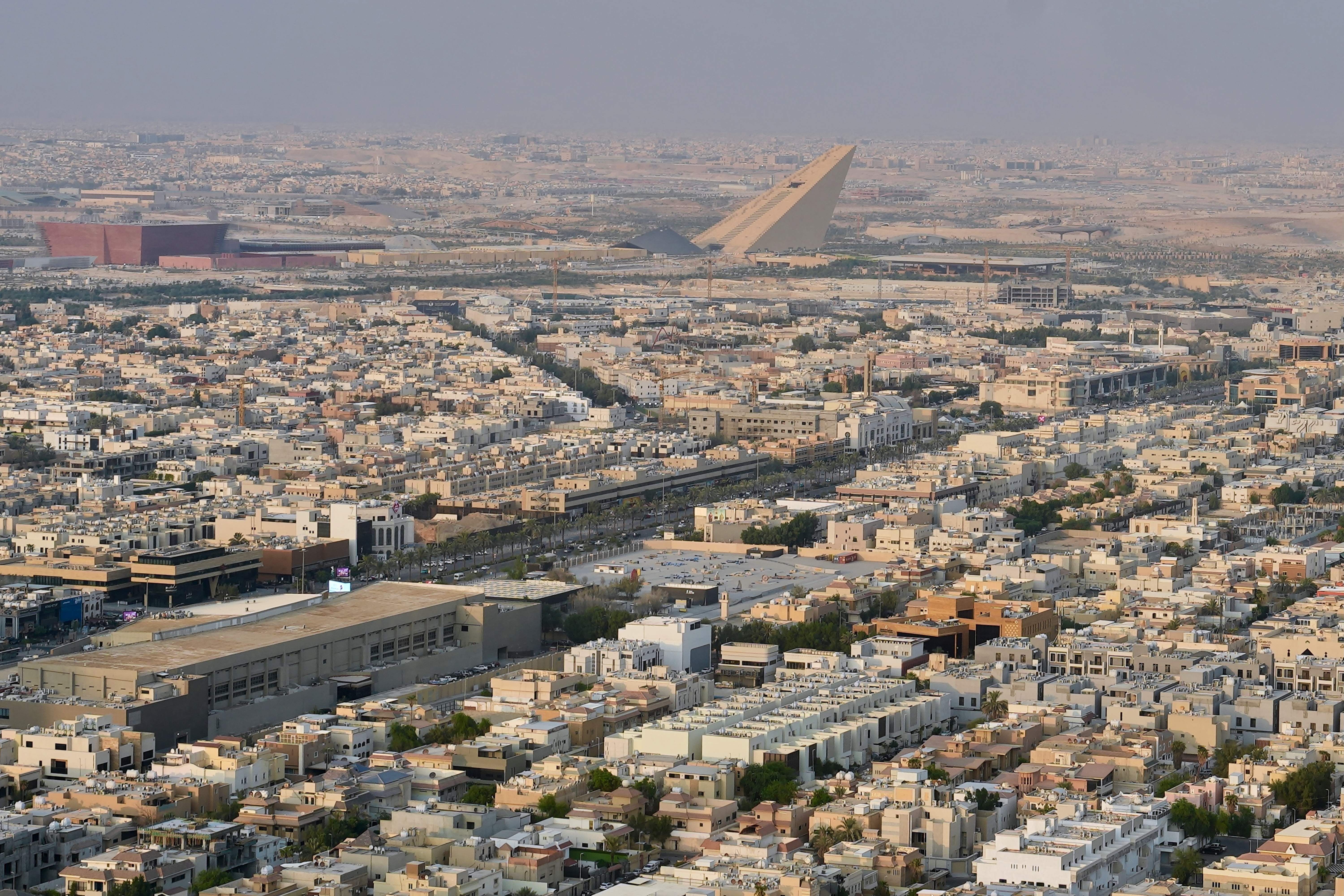
It cannot tell you what it feels like to look out a window at a desert horizon at dusk, knowing that distance is both a shield and a fracture—and that peace in a volatile region is rarely kept by loud speeches, but by ordinary people choosing to stay at their posts when the sky turns uncertain.