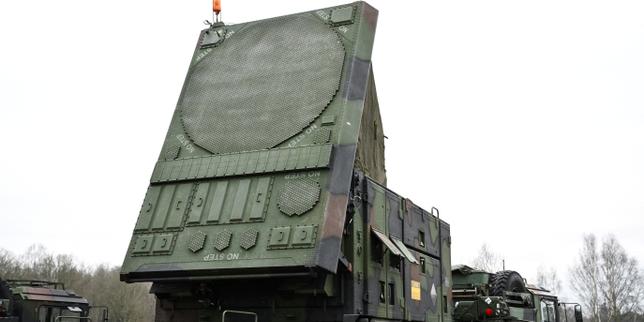
The headlines are cheering the deployment like it is a masterstroke of European solidarity. Sweden ships a Patriot air defense battery to Poland to secure supply corridors into Ukraine, and the security establishment breathes a collective sigh of relief. NATO is holding the line. Logistics are protected. Deterrence is reinforced.
It is a comforting narrative. It is also a dangerous illusion.
Deploying a single, exquisitely expensive, highly fragile surface-to-air missile battery to Poland does not solve the fundamental logistical rot plaguing the Ukrainian theater. It merely puts a band-aid on an amputated limb while pretending the patient is ready to run a marathon. Anyone who has spent more than five minutes looking at the math of modern attritional warfare knows that moving high-end interceptors around Europe like chess pieces on a polished board is missing the entire point.
Let us look at the mechanics of what is actually happening.
The Arithmetic of Attrition Always Wins
The Patriot system is an engineering marvel. It is also an economic disaster waiting to happen when pitted against low-cost, high-volume aerial threats. Each PAC-3 interceptor costs millions of dollars. When you position that battery in Poland to guard transit hubs feeding materiel across the border, you are playing a defensive game with asymmetric economics.
The lazy consensus in defense journalism assumes that defensive shields create permanent security bubbles. They do not. They create targets. Every time a Patriot battery lights up its radar, it paints a bullseye that adversaries study, map, and counter with mass saturation tactics.
Moving Swedish hardware into Polish territory does not expand Western industrial capacity. It redistributes existing scarcity. Sweden borrows from its own thin operational readiness to hand a temporary insurance policy to a neighbor, pretending that shifting deck chairs on the alliance ship constitutes structural reinvigoration.
We are not producing interceptors fast enough to sustain this game. Western defense primes are bottlenecked by specialized supply chains, proprietary energetic materials, and decades of underinvestment in high-volume munitions manufacturing. Sending a Patriot battery to Poland does not add a single new missile to the cumulative stockpile. It simply changes the zip code of where the vulnerability lives.
The Logistics Fallacy
The stated goal of this deployment is securing Ukrainian logistical lines. But the real bottleneck inside Ukraine is not the airspace over southeastern Poland. The bottleneck is the sheer, brutal physics of transferring thousands of tons of heavy armor, artillery shells, and electronic components across fractured rail gauges, congested border crossings, and heavily monitored interior transit networks.
Air defense cannot pave a bombed-out bridge. Air defense cannot widen a bottlenecked railway switchyard. Air defense cannot replace the truck drivers, mechanics, and supply officers who are burning out under relentless operational strain.
By focusing political capital and media bandwidth on high-profile military hardware transfers like Patriot batteries, Western capitals signal that they are taking action while dodging the unglamorous, agonizingly slow work of industrial mobilization. It is theater. It is a signal meant to reassure domestic audiences that something visible is being done, while the underlying structural decay of our supply depth continues unchecked.
Let us be precise about what this deployment achieves: zero strategic depth. It is a tactical tactical posture masquerading as a grand strategy.
The Cost of Strategic Complacency
When policymakers convince themselves that defensive tokenism equals deterrence, bad things happen. It fosters a culture of strategic complacency. It encourages leaders to believe that technology can substitute for mass, that a handful of sophisticated systems can outweigh a deep industrial base, and that deterrence can be maintained on the cheap.
History is littered with the wreckage of armies that relied on exquisite quality to offset catastrophic deficiencies in quantity and sustainment. The German panzer forces in 1943 were technologically superior to almost everything arrayed against them, but they were crushed under the sheer, brutal weight of Allied logistics and mass production.
Today, Europe is sleepwalking into the exact same trap. We build Ferrari-grade air defense systems while our artillery shell production lines sputter and our transport networks strain under the weight of basic sustainment.
Sweden sending Patriot to Poland is not a turning point. It is a symptom of a continent that refuses to accept the brutal economic and industrial realities of long-term competition.
Stop looking at the shiny hardware. Look at the balance sheets of the munitions factories. That is where wars are actually won or lost. And right now, those ledgers are flashing red.