The air inside the briefing room always smells of stale coffee, damp wool, and the distinct, metallic tang of pure anxiety. It is a tight space. Too tight for the sheer volume of history that gets shoved through its doors. On any given afternoon, a dozen reporters might be scrolling through their phones, half-watching the clock, waiting for a standard update.
Then the notification hits.
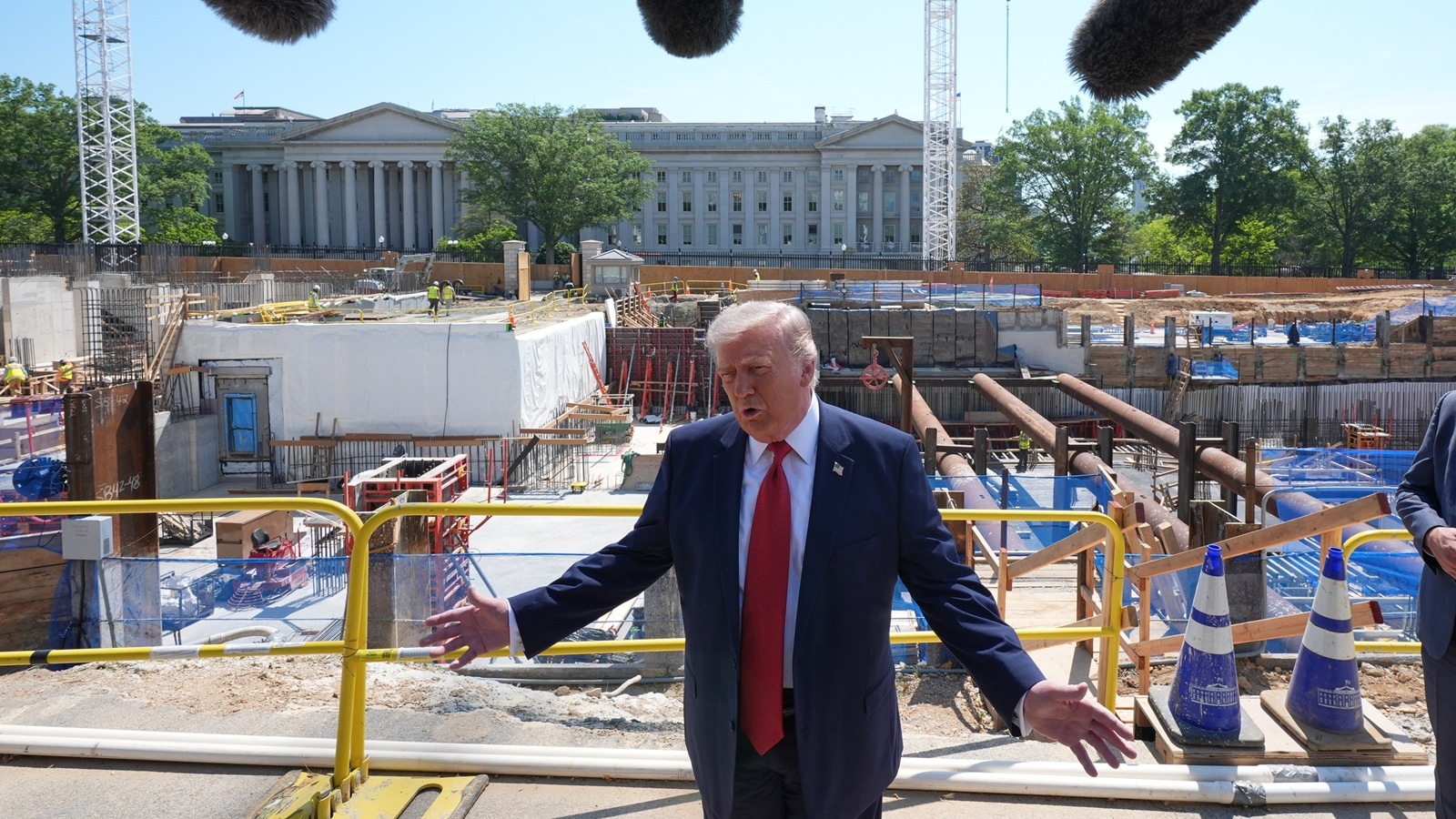
It does not arrive with a fanfare. It comes as a sudden, sharp vibration in twenty pockets simultaneously. A flash briefing. An unscheduled appearance. No topic listed. When Donald Trump calls an immediate press conference, the room changes instantly. The casual chatter dies. Tripods scrape against the floor as camera operators scramble for position. The collective intake of breath is audible. Everyone in that room knows they are about to step into a completely unpredictable arena.
To understand the mechanics of modern political theater, you have to look past the podium. Look instead at the faces of the people holding the microphones. They are veterans of a very specific kind of psychological warfare. They know that what is about to happen will not follow a script. It will not be a measured presentation of policy or a structured rollout of data. It will be an experience.
The heavy door swings open.
When Trump steps up to the microphones, the energy in the room compresses. He does not wait for silence; his presence demands it, or rather, his presence fills whatever noise is already there. For the next hour, reality bends. To watch it live is to witness a masterclass in narrative redirection, a performance that leaves even the most seasoned journalists feeling as though they have just awakened from a fever dream.
He begins speaking.
The structure of a standard political speech is linear. It follows a predictable path from problem to solution, from past achievement to future promise. This is different. This is a stream-of-consciousness collage. He touches on the economy, pivots to a personal grievance from three years ago, launches into an attack on a local official, and then, without pausing for breath, praises the beauty of a specific model of helicopter.
It is dizzying.
Imagine a listener trying to take notes in real-time. (For the sake of clarity, let us call her Sarah, a composite of every exhausted political correspondent who has ever tried to find the lead paragraph in a ninety-minute monologue.) Sarah’s pen hovers over her pad. She writes down a sentence about tariff policy. Before she can period that sentence, the topic has shifted to the ratings of a rival television network. If she follows the network comment, she misses the sudden, massive pronouncement about international diplomacy that follows it.
This is not accidental chaos. It is a highly effective ecosystem of distraction.
By the time the Q&A session begins, the traditional rules of engagement have completely dissolved. A reporter stands up, tries to tether the conversation back to the original point of inquiry, and asks a direct, factual question. The response is rarely a direct answer. Instead, it is a counter-attack, a rhetorical judo move that turns the question back onto the questioner. The room begins to feel less like a press briefing and more like a high-stakes psychological drama where the landscape shifts beneath your feet every thirty seconds.
The invisible stakes here are immense.
We live in an era that prizes certainty. We want our news delivered in neat, digestible modules. We want a headline that tells us exactly what to think, followed by three bullet points explaining why. But a sudden press conference of this nature defies modularization. It cannot be easily summarized. If a news outlet focuses only on the policy announcements, they miss the sheer, chaotic theater that defined the event. If they focus only on the theater, they fail to report the actual policy shifts buried within the rhetoric.
It is a trap with no easy escape.
Consider the psychological toll on the public watching from home. You turn on the television expecting a standard update on national affairs. Instead, you are plunged into an intense, highly charged environment where the line between official state business and personal grievance is completely erased. It feels surreal. It feels, quite literally, like a dream where the rules of gravity no longer apply. You watch an official leader of the free world air a grievance against a celebrity, then immediately threaten a foreign superpower, all in the same casual, conversational tone.
The mind struggles to process the shifts in scale.
How did we get here? This phenomenon did not emerge in a vacuum. It is the logical conclusion of a media environment that has spent decades prioritizing entertainment value over substance. For years, the political apparatus discovered that conflict drives viewership, and viewership drives revenue. The sudden, unpredictable press conference is simply the purest expression of that reality. It is breaking news elevated to an art form, where the act of breaking the news is more important than the news itself.
The real danger is not the misinformation; it is the exhaustion.
When everything is an emergency, nothing is. When every press conference is a sudden, history-making event filled with sound and fury, the human brain eventually protects itself by tuning out. The constant state of hyper-vigilance becomes unsustainable. People stop looking at the podium. They stop checking the notifications. They simply close the tab and walk away.
But walking away is a luxury we cannot afford.
The sun begins to dip below the windows of the briefing room, casting long, distorted shadows across the crowded floor. The cameras are still rolling, their red lights glowing like tiny, unblinking eyes. The monologue continues, a relentless tide of words that seems to have no natural end.
Sarah looks down at her notepad. The pages are full of fragmented sentences, half-finished thoughts, and crossed-out words. It is a perfect map of the hour she has just lived through—a record of a storm that left everyone in its path breathless, confused, and utterly unsure of what happens when the cameras finally turn off.