Toronto is experiencing another stretch of unseasonable warmth with daytime highs climbing into the mid-teens, driven by persistent upper-level atmospheric ridges pumping mild southern air across the Great Lakes basin. While local commuters welcome the reprieve from heavy winter coats and icy sidewalks, these recurring temperature spikes create severe operational friction for municipal infrastructure, urban ecology, and regional energy grids.
The standard local weather report treats a mid-teen November or late-autumn afternoon as a pleasant novelty. Broadcasts show footage of residents walking along the waterfront without scarves or sitting on restaurant patios. That framing misses the real story. When a northern metropolis built around predictable freeze-thaw cycles repeatedly lurches between sub-zero nights and 15-degree afternoons, the physical foundation of the city absorbs tremendous mechanical stress.
The Atmospheric Mechanics Behind the Warmth
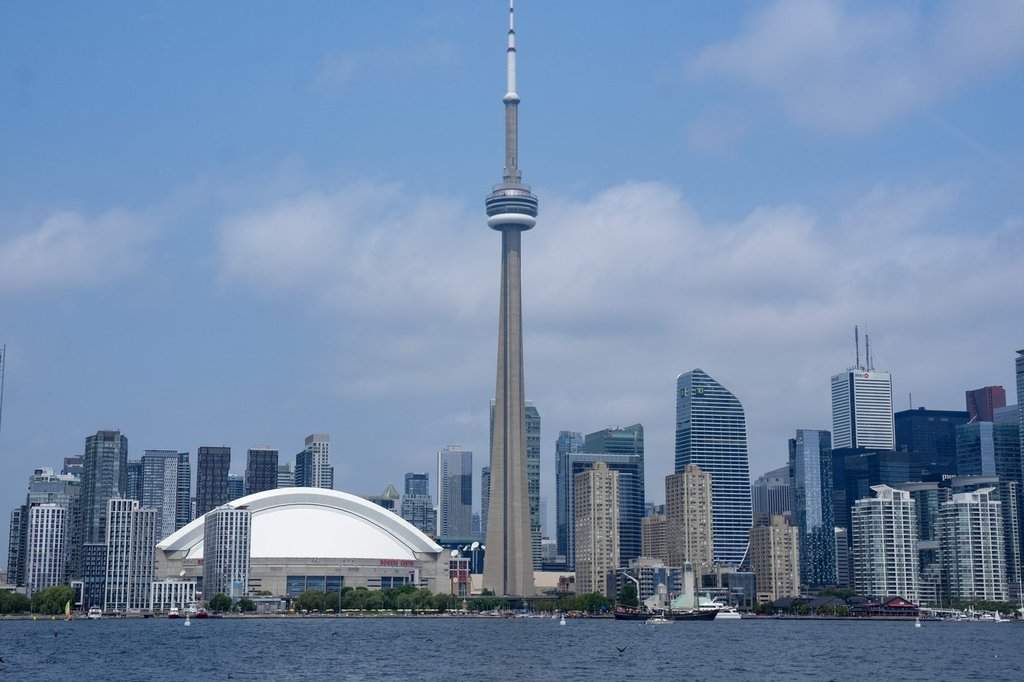
To understand why Toronto keeps getting hit with these mid-teen surges, you have to look several kilometers above the CN Tower. Weather at ground level is dictated by the behavior of the jet stream, a fast-flowing river of air high in the atmosphere that separates cold polar air to the north from warmer subtropical air to the south.
Normally, as autumn deepens into winter, the jet stream dips southward over Ontario, allowing Arctic air masses to settle over the Great Lakes. During these anomalous warm stretches, that pattern stalls. A high-pressure ridge builds over the eastern half of North America, acting like an atmospheric dam. It forces the jet stream far to the north and opens a direct corridor from the Gulf of Mexico straight into Southern Ontario.
Warm air flows north unimpeded.
This setup is compounded by Lake Ontario itself. Large bodies of water absorb heat slowly during the summer and release it just as slowly during the autumn and early winter. When warm southern air moves over a lake that has not yet shed its summer thermal energy, the lake fails to cool the air mass down. Instead, it acts as a massive thermal buffer, keeping overnight lows elevated and allowing daytime temperatures to spike well above seasonal norms whenever cloud cover breaks.
Meteorologists call this a blocking pattern. Because the high-pressure ridge refuses to budge eastward, Toronto does not just get a single warm afternoon. It gets a multi-day stretch where daytime highs sit 8 to 12 degrees Celsius above historical averages.
Why Mid-Teen Temperatures Destroy Toronto Roads
Ask any civil engineer working in Southern Ontario what keeps them awake at night, and they will not say deep freezes. A steady, uninterrupted deep freeze is actually easy on infrastructure. Once the ground freezes solid and stays frozen, asphalt and concrete remain stable.
The real enemy is the freeze-thaw cycle.
Mid-teen daytime temperatures followed by near-freezing or sub-zero nights create the exact conditions required to tear Toronto's road network apart. During a 15-degree afternoon, melting snow and surface water seep deep into microscopic cracks in the asphalt. When the sun sets and temperatures plummet overnight, that trapped water freezes.
Water expands by roughly nine percent when it turns to ice.
That expansion exerts immense outward pressure from inside the pavement, widening tiny fissures into structural fractures. When heavy commuter traffic and municipal transit vehicles roll over that compromised asphalt the next morning, the weakened surface collapses inward. A pothole is born.
In a typical winter, Toronto deals with major freeze-thaw swings primarily in late February and March. When mid-teen stretches happen repeatedly in late autumn and early winter, the city experiences months of cumulative pavement fatigue before January even arrives. Repair crews are forced into reactive patching using temporary cold-mix asphalt, which lacks the durability of hot-mix asphalt available only during warmer construction months. Every warm streak accelerates the degradation of major arteries like the Gardiner Expressway, the Don Valley Parkway, and hundreds of kilometers of residential side streets.
The Hidden Toll on Urban Trees and Parks
The city's urban forest suffers quietly during these warm spells. Toronto prides itself on its tree canopy, which covers nearly thirty percent of the city and provides critical cooling during summer heatwaves. Those trees rely on precise environmental cues to survive the Canadian winter.
Deciduous trees enter dormancy in response to two primary triggers: shortening daylight hours and steadily declining temperatures. This process allows the tree to draw nutrients back into its roots, shed its leaves, and harden its cellular structures against freezing temperatures.
When a multi-day stretch of mid-teen weather arrives after trees have already begun shutting down for the year, it sends conflicting biological signals. The warmth tricks sensitive species—particularly non-native ornamentals and younger saplings planted along city boulevards—into believing spring has arrived early.
Sap begins to flow upward again. Buds swell. In some cases, shrubs and trees actually begin pushing out new growth.
When the high-pressure ridge finally collapses and seasonal cold snaps back into place, that newly active tissue has zero frost tolerance. The sudden freeze ruptures plant cells, killing buds and causing severe bark splitting known as frost cracking. A tree might survive a single false spring, but repeated mid-teen warm spells followed by sharp freezes weaken its immune system, leaving the canopy vulnerable to invasive pests and fungal diseases the following summer.
Agricultural Ripples Beyond the City Limits
Just outside the Greater Toronto Area, the consequences are financial rather than aesthetic. Growers in the Niagara Peninsula and Holland Marsh depend on predictable autumn cooling to harden off fruit trees, grapevines, and winter cover crops.
Consider a hypothetical example of an apple orchard in Ontario during a prolonged November warm stretch. If daytime highs linger around 15 degrees Celsius for a week straight, trees fail to accumulate the necessary chill hours required for proper spring blossom synchronization. Worse, if a sudden Arctic front drops temperatures from 15 degrees to minus 10 degrees within twenty-four hours, the rapid thermal shock can damage the vascular tissue of the trees, reducing crop yields for the next harvest before winter has officially started.
Energy Grids and Municipal Budget Whiplash
From a purely financial standpoint, warm weather in November or December looks like a gift to taxpayers and homeowners. Natural gas furnaces run less frequently. Municipal snow-clearing budgets remain untouched because precipitation falls as cold rain rather than heavy wet snow that requires fleets of plows and thousands of tonnes of road salt.
That short-term savings masks a deeper budgeting problem for city administrators and utility operators.
Energy providers manage supply and demand based on historical degree-day models. When temperatures sit in the mid-teens, natural gas demand drops sharply, leaving utilities managing excess storage capacity and shifting load forecasts. At the same time, commercial buildings in downtown Toronto—especially older glass-curtain office towers—struggle to regulate indoor climates.
Large commercial HVAC systems are seasonal beasts. Building managers typically switch central plants from cooling mode to heating mode in mid-October. When outdoor temperatures hit 15 or 16 degrees under bright autumn sun, solar heat gain through south-facing windows turns upper floors into greenhouses. Because the chillers have already been drained and winterized for the season, buildings cannot mechanically cool those spaces, forcing operators to pump unconditioned outside air through ventilation shafts and wasting energy in the process.
The Snow-Clearing Standby Trap
The City of Toronto contracts out the vast majority of its winter road maintenance through multi-year agreements worth hundreds of millions of dollars. Those contracts are structured around standby fees and operational readiness.
Even when temperatures hit the mid-teens and not a single snowflake falls, the city still pays contractors to keep equipment fueled, drivers on standby, and salt domes stocked. The municipality saves money on salt volume and overtime hours during a warm stretch, yet fixed readiness costs remain locked in. Meanwhile, the money saved on plowing is rapidly cannibalized by emergency pothole repairs, catch-basin clearing, and stormwater management.
Stormwater Systems and Flooding Risks
Rain in the mid-teens behaves very differently from snow, and Toronto's aging underground infrastructure feels the difference immediately.
Snow acts as a natural reservoir. It sits on lawns, parks, and rooftops for weeks or months, releasing water gradually during the spring melt. When a warm weather system brings heavy rain instead of snow, millions of liters of water hit hard urban surfaces all at once.
During late autumn, that rain falls onto streets covered in fallen leaves.
If a warm stretch coincides with peak leaf drop, rain washes dense mats of wet foliage directly into street-level storm grates. Those grates clog within minutes. Instead of draining into the stormwater system, water pools across intersections, floods underpasses, and backs up into basements in low-lying neighborhoods. City crews must pivot from winter preparation to emergency drain clearing, stretching public works departments thin across competing seasonal demands.
The Psychological Trap of Unseasonable Warmth
Perhaps the most overlooked consequence of mid-teen weather streaks is how they warp public perception of climate variability.
Extreme heatwaves in July generate headlines about heat exhaustion, stressed power grids, and public health alerts. Blizzards in January trigger emergency declarations and visible disruption. A 15-degree afternoon in late autumn feels entirely benign. People go for runs in shorts, walk their dogs along Lake Ontario, and remark on how lucky they are to avoid the cold.
Because the immediate sensory experience is pleasant, residents rarely connect that warmth to the broken axle they suffer in a February pothole, the dead boulevard tree outside their house in May, or the municipal tax hikes required to repair failing stormwater mains.
Weather comfort does not equal environmental stability.
Navigating the New Seasonal Reality
Toronto cannot engineer away the jet stream, nor can it stop high-pressure ridges from parking over the Great Lakes. What the city and its residents can do is stop treating mid-teen autumn and winter streaks as harmless anomalies and start adjusting operational habits to match volatile temperature swings.
For municipal planners, that means rethinking construction timelines and material specifications. Asphalt mixtures used on Toronto roads need higher polymer modification to withstand wider temperature ranges without cracking. Urban forestry teams must prioritize hardy, native tree species capable of tolerating erratic dormancy cues over sensitive ornamental varieties.
For homeowners and property managers, the adjustments are immediate and practical:
- Keep gutters and street grates clear. Never assume autumn leaf cleanup is finished just because the calendar says November. A single warm rainstorm over clogged drains can push water straight toward a home's foundation.
- Delay winterizing irrigation systems carefully, but never skip it. A week of 15-degree weather is tempting for late lawn care, yet an overnight drop below freezing will burst exposed exterior pipes just as easily in December as in January.
- Inspect roof flashing and caulking during warm windows. Sealants adhere properly only when ambient temperatures stay above 5 to 10 degrees Celsius. A mid-teen stretch is the last reliable opportunity to seal small exterior gaps before deep winter locks in.
- Monitor tire pressure relentlessly. Every 5-degree drop in temperature reduces tire pressure by roughly one PSI. When Toronto swings from 15 degrees on Tuesday afternoon to minus 2 on Thursday morning, underinflated tires compromise braking distance on slick morning roads and increase blowout risks when hitting newly formed potholes.
Toronto's mid-teen temperature stretches offer a brief, welcome break from the heavy gloom of a Great Lakes winter, but the city pays for every single one of those warm afternoons in cracked asphalt, stressed trees, and strained infrastructure long after the cold returns.