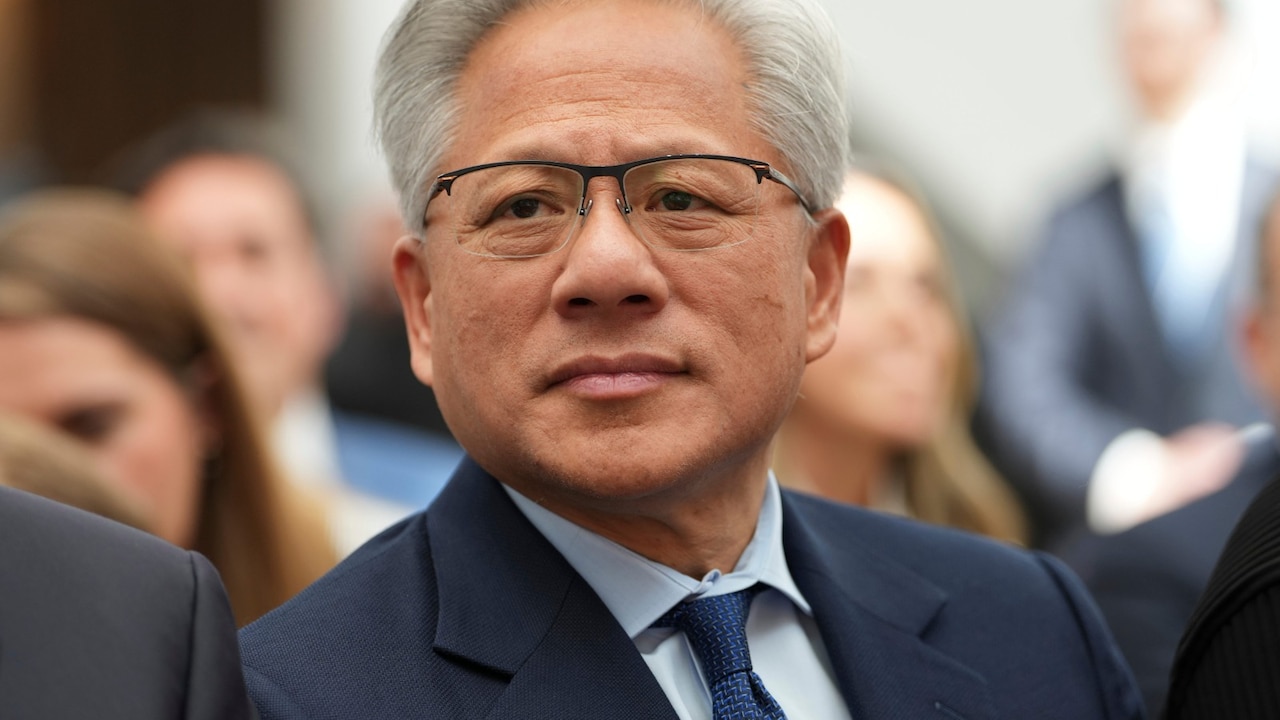
The lazy consensus in Silicon Valley and Washington goes something like this. Donald Trump swept back into the White House, rolled back regulatory choke points, slashed corporate friction, and single-handedly rescued Nvidia CEO Jensen Huang from an impending antitrust and export-control execution.
That narrative makes for great cable news. It is also completely backwards.
If you actually look at semiconductor supply chains, capital expenditure flows, and sovereign compute treaties, Donald Trump did not save Jensen Huang. Jensen Huang engineered a geopolitical chokehold so tight that any American president—Trump, Biden, or anyone else—had no choice but to protect Nvidia’s balance sheet to preserve American national security.
Political commentators love a savior story because politics is easy to understand. Silicon architecture is hard. When pundits claim executive policy rescued Nvidia from export bans or Department of Justice probes, they ignore the fundamental reality of modern industrial power. Politicians do not rescue monopolies that control the foundational compute layer of the modern economy. Politicians negotiate with them.
The Myth of the Political Lifeline
To understand why the "Trump saved Jensen" thesis falls apart, you have to look at what actually threatened Nvidia before the political winds shifted. Wall Street analysts spent months wringing their hands over two primary threats: tightening export restrictions to China and domestic antitrust scrutiny over Nvidia’s stranglehold on AI accelerators.
The standard media framing suggests that a deregulatory White House stepped in like a cavalry charge to clear those roadblocks. That framing misunderstands both how export controls work and where Nvidia’s real revenue originates.
First, look at the numbers. China once accounted for roughly 20 to 25 percent of Nvidia’s data center revenue. When export controls tightened under the Bureau of Industry and Security (BIS), pundits predicted a catastrophic earnings cliff. Instead, Nvidia’s data center revenue exploded. Why? Because hyperscalers—Microsoft, Alphabet, Meta, and Amazon—along with sovereign nations in the Middle East and Europe bought every single Hopper and Blackwell GPU the company could manufacture.
Nvidia did not need a presidential pardon to replace lost Chinese demand. Supply, not demand, was the only constraint on Nvidia’s growth. You cannot "save" a company that is already sold out twelve months into the future.
Second, consider the tariff paradox. A protectionist trade agenda centered on aggressive tariffs across Asian manufacturing hubs actually threatens a fabless semiconductor designer like Nvidia. Nvidia does not own fabrication plants. Every single high-end GPU die is etched by Taiwan Semiconductor Manufacturing Company (TSMC) in Taiwan, packaged using Chip-on-Wafer-on-Substrate (CoWoS) technology, and assembled into server racks across Mexico and Asia.
When you impose blanket tariffs on imported electronics and components, you raise input costs for the exact infrastructure American tech giants are spending hundreds of billions of dollars to build. Calling that a "rescue" requires ignoring basic supply chain accounting.
The Moat Is Software, Not Executive Orders
I have watched enterprise software and hardware companies burn tens of millions of dollars trying to rip out Nvidia infrastructure to save on capital expenditures. Every single one of those migration projects stalled. Not because of Washington politics, but because of CUDA.
If you want to understand why Jensen Huang is untouchable, stop reading political polls and start reading developer documentation.
Compute Unified Device Architecture (CUDA) is Nvidia’s proprietary parallel computing platform and programming model. Launched in 2006, it spent nearly two decades quietly embedding itself into university research labs, enterprise codebases, and machine learning frameworks.
- The Hardware Trap: Competitors like AMD with its Instinct MI300 series or custom silicon like Google’s Tensor Processing Units (TPUs) and Amazon’s Trainium chips routinely match or beat Nvidia on raw theoretical floating-point operations per second (FLOPS) per dollar.
- The Software Reality: Raw FLOPS mean nothing if your engineers spend six months rewriting kernels just to get a model to train without crashing. PyTorch, TensorFlow, and virtually every major foundation model repository are optimized out of the box for CUDA.
- The Networking Lock-In: With the acquisition of Mellanox Technologies in 2020, Huang secured InfiniBand and high-speed Ethernet interconnects. When you cluster 100,000 GPUs together, the network is the computer. A 1 percent drop in interconnect efficiency costs millions in wasted compute cycles.
No president signed an executive order forcing Meta or xAI to buy Nvidia racks. They bought them because switching costs are measured in lost time-to-market, and in frontier AI development, a six-month delay is a death sentence.
Sovereign AI Changed the Power Dynamic
The sharpest move Jensen Huang made had nothing to do with lobbying K Street. It was inventing the concept of "Sovereign AI."
Around 2023, Huang began pitching heads of state directly. His message was blunt: every nation must own its own intelligence infrastructure, trained on its own language, culture, and data, hosted on domestic soil. You cannot outsource your national intelligence to a handful of American cloud providers.
Suddenly, Nvidia was no longer a vendor selling graphics cards to Silicon Valley. Nvidia became an arms dealer selling national sovereignty to France, Japan, India, Saudi Arabia, and the United Arab Emirates.
Think about what this did to Washington’s calculations. When a foreign government commits tens of billions of dollars to build domestic AI data centers using Nvidia architecture, those GPUs become diplomatic currency. The White House quickly realized that blocking or hobbling Nvidia does not stop global AI proliferation—it merely hands market share to Huawei’s Ascend chips and accelerates foreign independence from American tech standards.
Trump did not rescue Huang from geopolitical irrelevance. Huang made Nvidia’s hardware the literal medium of exchange in American foreign policy. When sovereign wealth funds in the Gulf or industrial conglomerates in Tokyo want access to frontier compute, the negotiation runs through Santa Clara first and Washington second.
What People Get Wrong About Antitrust and Nvidia
When you look up discussions around Nvidia and government intervention, the dominant question is always some variation of: "Would federal regulators have broken up Nvidia without a change in administration?"
That question rests on a flawed premise. You cannot break up a company whose dominance comes from architectural integration rather than illegal tying.
Under Section 2 of the Sherman Antitrust Act, holding a monopoly is entirely legal in the United States. Violating the law requires anticompetitive conduct—predatory pricing, exclusive dealing contracts that foreclose competition, or bundling unrelated products to crush rivals.
Critics pointed to Nvidia’s allocation practices, alleging the company penalized customers who also bought chips from AMD or Intel. Even if the Department of Justice had pursued a full-scale enforcement action, antitrust litigation moves at glacial speed. Look at United States v. Microsoft in the late 1990s or the modern DOJ cases against Google. By the time a federal judge issues a structural remedy—usually three to five years after filing—the underlying hardware cycle has turned over three times.
Nvidia operates on an annual architecture cadence: Hopper, Blackwell, Rubin. A four-year antitrust lawsuit against Nvidia is like trying to arrest a bullet train with a parking ticket. By the time the case reaches discovery, the product at the center of the complaint is already obsolete.
The Brutal Truth About Custom Silicon
Another common misconception is that Big Tech’s internal chip programs—Google’s TPUs, Microsoft’s Maia, Amazon’s Trainium—were poised to dethrone Nvidia until a friendlier regulatory climate gave Huang room to breathe.
Again, look at the capital allocation. Hyperscalers build custom ASICs (Application-Specific Integrated Circuits) for two reasons: to handle predictable, high-volume inference workloads at lower power draw, and to gain pricing negotiation room against Nvidia.
They do not build ASICs to replace Nvidia at the frontier of model training. ASICs are rigid by design. They are hardwired to execute specific mathematical operations efficiently. When transformer architectures shift—say, moving from dense models to Mixture-of-Experts (MoE) or test-time compute scaling—an ASIC designed two years ago loses efficiency overnight. A programmable GPU running updated CUDA libraries adapts in weeks.
As computer architect David Patterson and his peers have long documented in domain-specific architecture research, specialization trades flexibility for efficiency. Until AI model architectures stop evolving every six months, programmable GPUs remain the mandatory tax every AI lab must pay.
The Vulnerability Nobody Talks About
Admitting that Jensen Huang holds the cards does not mean Nvidia is invincible. Every empire has a structural weakness, and Nvidia’s vulnerability has nothing to do with who sits in the Oval Office.
The real threat to Nvidia is hyperscaler capex exhaustion.
Right now, four companies—Microsoft, Alphabet, Meta, and Amazon—represent roughly 40 to 45 percent of Nvidia’s total revenue. They are spending upwards of $200 billion annually on data center infrastructure, betting that AI software revenues will eventually justify the hardware outlay.
If enterprise AI adoption hits a monetization wall—if CFOs decide that paying $30 per user per month for AI copilots does not generate measurable productivity returns—those four hyperscalers will slam the brakes on data center construction simultaneously.
When your customer concentration is that high, no politician can save you. Subsidies cannot replace $100 billion in private capital expenditure. Deregulation cannot force enterprises to buy software they do not need. Furthermore, Nvidia’s single point of physical failure remains TSMC’s advanced packaging capacity in Taiwan. A blockade, an earthquake, or a power grid failure in Hsinchu halts Nvidia’s revenue stream instantly, regardless of who holds executive power in Washington.
How Operators Should Actually Read Tech Policy
If you are building a company, managing an engineering budget, or allocating capital in the technology sector, treating political cycles as the primary driver of hardware winners is a fast way to lose money.
- Follow the Capex, Not the Press Conferences. Ignore what politicians promise about domestic manufacturing or deregulation. Watch the quarterly capital expenditure guidance on Microsoft, Meta, and Alphabet earnings calls. That single line item dictates the health of the entire AI supply chain.
- Treat Export Controls as Market Distortion, Not Containment. Every restriction on high-end silicon creates an immediate gray market and forces targeted nations to subsidize domestic alternatives. Build your supply chain assumptions around permanent fragmentation, not temporary exemptions.
- Audit Your Software Lock-In. If your engineering team relies exclusively on proprietary vendor libraries, your margins belong to that vendor. Abstract your compute layer early using open standards like OpenAI’s Triton or vendor-agnostic compilers, even if you still run on Nvidia hardware today.
Jensen Huang did not wait in a hallway hoping a president would rescue his company. He spent thirty years building a full-stack monopoly across silicon, networking, and system software while Washington was still trying to figure out how social media algorithms worked.
Presidents come and go every four years. Compute architectures compound over decades. Stop confusing the people who sign the bills with the man who owns the factory floor.