The clock on the wall in a small apartment in Haifa doesn’t just mark the hours; it counts the vibrations of the floor. For Miriam, a retired teacher, the sound of a distant jet isn’t a feat of engineering. It is a question. Will the siren follow? Across the border in Isfahan, a young engineer named Reza looks at his phone, watching the currency exchange rate flicker like a dying pulse. He isn't thinking about grand strategy. He is thinking about the price of eggs and whether the sky will turn red before he finishes his shift.
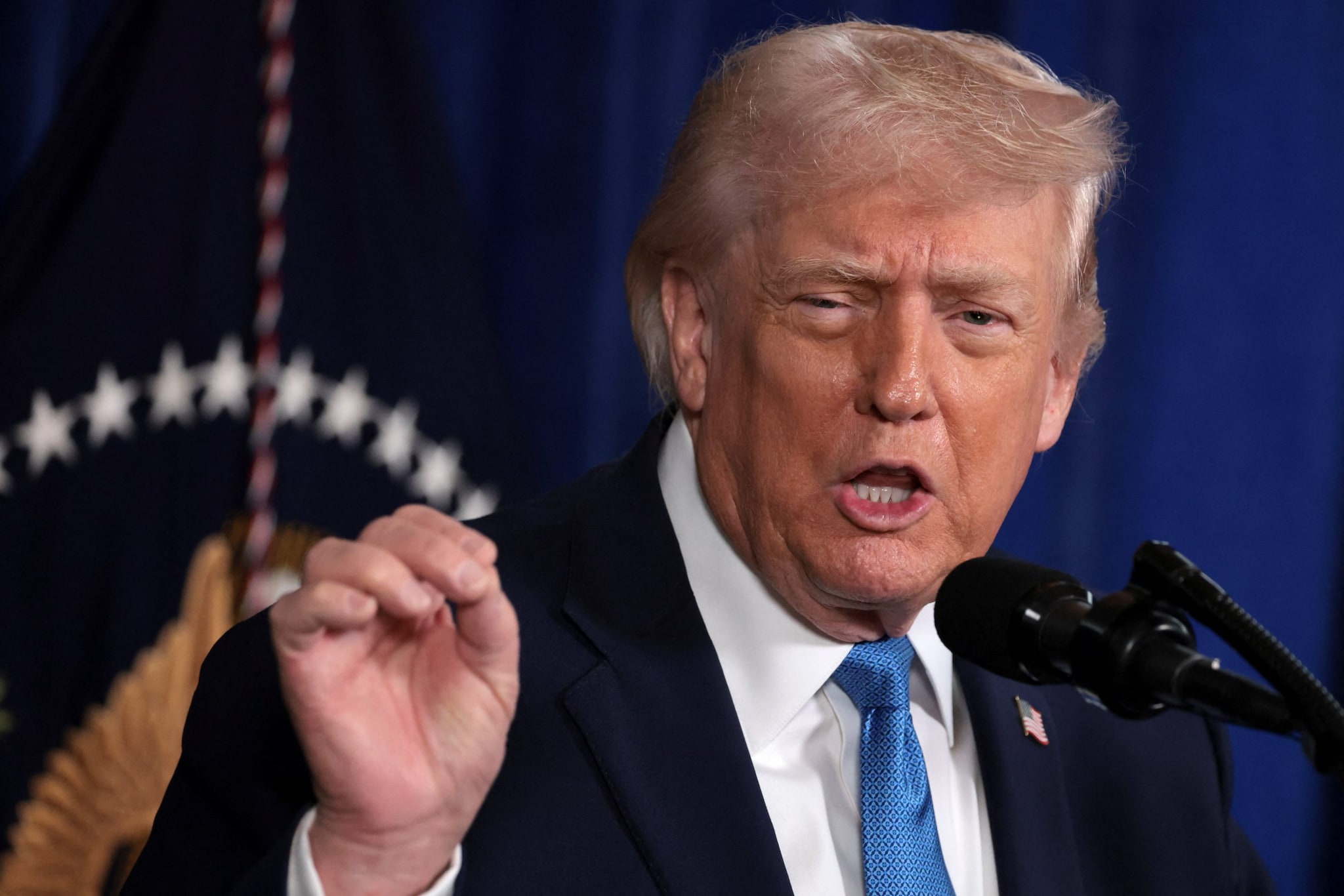
When Donald Trump speaks about a conflict lasting four weeks or more, he is tossing a pebble into a very deep, very dark well. To a politician, "four weeks" is a talking point—a digestible timeframe that sounds decisive, contained, and manageable. To the people living under the flight paths, four weeks is an eternity of sleepless nights. It is twenty-eight days of wondering if the infrastructure of their modern lives will evaporate before the next full moon.
The math of modern warfare has changed, and our leaders are still using an old abacus.
The Illusion of the Short Fuse
We have been conditioned to think of war as a series of lightning strikes. We see the grainy infrared footage, the precision of a missile finding a vent, the clean statistics of "surgical strikes." This is a lie we tell ourselves to make the violence palatable. The reality of a sustained four-week exchange between Iran and Israel, with the United States hovering as the heavy-handed ghost in the room, is not a movie. It is a systematic dismantling of the 21st century.
Consider the hypothetical—yet grounded in very real military doctrine—scenario of day fourteen. By this point, the initial "shock and awe" has faded. The air defense interceptors, those multi-million dollar sentinels like the Iron Dome or the Arrow system, are starting to run thin.
The supply chains for the tiny components that make these systems work are not local. They are global. They rely on steady shipping lanes and calm political waters. When a conflict stretches into its second or third week, it stops being a contest of who has the better jet. It becomes a contest of who can keep their lights on while their power plants are targeted by swarms of low-cost drones.
The Digital Ghost in the Machine
The invisible stakes of this timeline are often buried under headlines about troop movements. In a four-week window, the battle isn't just fought in the air. It is fought in the servers.
Imagine Reza trying to withdraw cash to buy supplies. The screen stays black. A cyber-offensive, designed to paralyze the opponent's resolve, has wiped the banking ledger. Simultaneously, in Tel Aviv, the GPS signals start to drift. The delivery apps stop working. The logistics of food distribution crumble because the digital map of the world has been intentionally blurred.
This is the "gray zone" of a month-long war. It is a slow-motion car crash where the victims are the systems we take for granted. We treat the internet like oxygen, but in a sustained regional conflict, it becomes a weapon or a luxury. When Trump mentions a duration of a month or more, he is implicitly acknowledging that this wouldn't be a single "tit-for-tat" exchange. It would be a grind. A month of kinetic and digital attrition that would reset the development of the region by decades.
The Weight of the American Shadow
The United States is never just an observer in this theater. It is the weight that tips the scale. For the American voter, "four weeks" sounds like a blip in a news cycle. But the logistical reality is staggering.
To support a conflict of that duration, the U.S. doesn't just send words. It sends carrier strike groups. It sends endless C-17 transport planes filled with munitions. It sends young men and women into the Persian Gulf to sit in steel hulls, waiting for a radar blip that might be a bird or might be a supersonic anti-ship missile.
The cost of a month-long engagement isn't just measured in the billions of dollars drawn from the Treasury. It is measured in the "opportunity cost" of peace. Every Tomahawk missile launched is a school not built, a road not paved, or a technological breakthrough not funded. We have become used to these numbers. We hear "two billion" and it registers as nothing. But when that money is spent on destruction over the course of thirty days, the vacuum it leaves in the global economy is felt at every gas pump in Ohio and every grain silo in Iowa.
The Psychology of the Long Wait
There is a specific kind of trauma that comes from a war that lasts just long enough to feel permanent, but not long enough to reach a resolution.
In the first week, there is adrenaline. People huddle together. There is a sense of national purpose. By the third week, the adrenaline is gone. It is replaced by a grinding, soul-crushing exhaustion. The kids are out of school. The grocery stores have empty shelves. The water pressure is low because the pumping stations are running on backup generators that are running out of diesel.
This is the human element that gets lost in the geopolitical shuffle. We talk about "deterrence" and "proportionality." We don't talk about the mother in Tehran who is trying to explain to her five-year-old why they have to sleep in the basement again. We don't talk about the father in Haifa who is looking at his bank account and wondering if his life's work has just vanished into a cloud of smoke.
The tragedy of the "four-week" estimate is that it assumes the world stays the same after the smoke clears. It doesn't. A month of high-intensity conflict between these powers would rewrite the rules of the Middle East. It would create a new generation of orphans, a new wave of refugees, and a deeper, more jagged scar of resentment that no peace treaty could ever fully heal.
The Invisible Red Lines
We often hear about "red lines"—the boundaries that, if crossed, lead to escalation. In a prolonged conflict, those lines move. They become blurred by the fog of war. What started as a strike on a military base on day one becomes a strike on a "dual-use" civilian port on day twenty.
The logic of escalation is a one-way street. Once you have lost a friend, a home, or a sense of safety, your appetite for "proportionality" vanishes. You want it to end, and often, the only way people think it can end is by hitting harder. This is the spiral. This is the danger of a timeline that stretches beyond a few days. The longer the fire burns, the more fuel it demands.
The technology we use to fight these wars is more precise than ever, yet our ability to control the outcomes seems to be diminishing. We can put a camera on a drone and watch a target from thousands of miles away, but we cannot see the ripples of anger and instability that target’s destruction creates in a local community. We are experts at the "how" of war, but we are increasingly illiterate in the "after."
The Cost of Being Right
In the corridors of power, being "right" is the ultimate currency. If a leader predicts a four-week war and it happens, they claim foresight. But what is the value of that foresight to the person whose business is now a pile of charred rubble?
We have to stop looking at these conflicts as chess matches played by grandmasters. They are more like house fires in a crowded neighborhood. You might start a fire in one kitchen to stop a pest, but the wind doesn't care about your intentions. The sparks jump. The curtains catch. Soon, the entire block is breathing ash.
The "four weeks" Trump speaks of isn't just a duration. It is a warning of a world where the guardrails have been removed. It is a glimpse into a reality where the most sophisticated nations on earth decide that the only way forward is through the systematic destruction of their neighbor’s capacity to exist in the modern age.
Miriam in Haifa and Reza in Isfahan have more in common than they are allowed to admit. They both want to wake up and see a sky that is empty of everything but clouds. They both want their phones to ring with the voice of a loved one, not an emergency alert. They both know that whether the war lasts four weeks or four years, the person who wins is rarely the person who survives.
The true cost of a thirty-day war isn't found in the ruins of the buildings, but in the silence of the people who realized, too late, that the world they knew was much more fragile than they were told. It is the realization that once the gears of a regional war start turning, no one—not even the men who started them—really knows how to make them stop.
The twenty-eight days aren't a timeline. They are a transformation. By the end of that month, the maps might look the same, but the people living on them will be strangers to the ones who began it. They will be looking at the rubble of their certainty, wondering how a "short" conflict managed to take away everything they had ever built.