Dust does not merely settle in the central west of Queensland. It accumulates. It settles on the hinges of old cattle truck doors, crusts over the eyes of wind-battered fence posts, and coats the memory of men who have spent fifty years watching the horizon shift from pale gold to bruised violet.
Arthur knows that dust. He has tasted it in his teeth during muster seasons when the air turned thick and copper-tinted, choking out the sun. But nothing in Arthur's seventy-four years prepared him for the kind of emptiness that arrived last week on a sprawling property near Ilfracombe.
Not a drought. Not a bushfire that leaves behind the sweet, sickening scent of charred wool and blackened bone.
Just... absence.
Five thousand five hundred sheep. Gone.
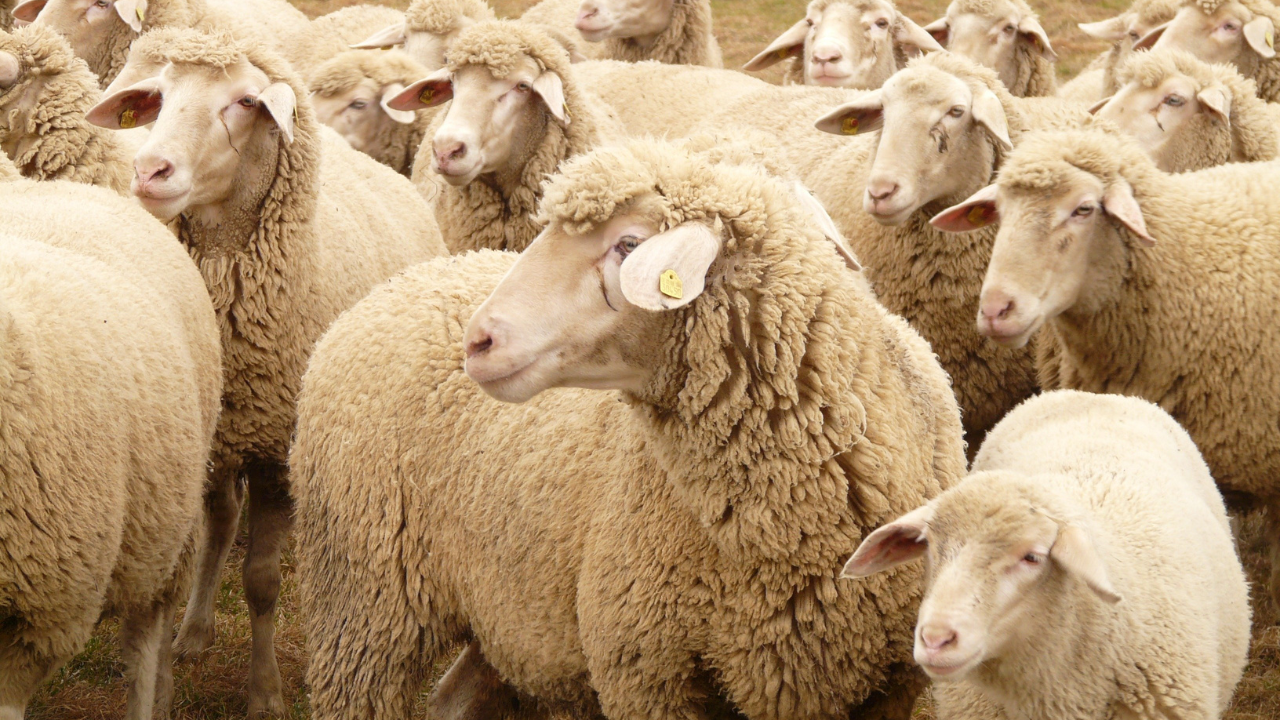
Try to picture that number. A single Merino sheep is not a whisper; it is a solid, wool-heavy presence, smelling of lanolin and dry grass. Multiply that by five thousand five hundred. It is a living, breathing sea of white fleeces that would stretch across miles of saltbush and gidgee scrub. To move that many animals requires more than a casual whim. It requires planning, heavy machinery, semi-trailers shifting through the dead of night, and an eerie, calculated silence that mocks the sprawling isolation of the Australian bush.
This is not a story about rustling in the classic sense. We are far past the days of movie outlaws cutting a single fence wire to sling a yearling over a saddle. Modern agricultural crime has evolved into a cold, logistical enterprise. It is industrial-scale theft executed on land so vast that the neighbors are miles away and the local police station might cover a district the size of a European nation.
Consider the mechanics of it. To make five thousand five hundred sheep vanish into the red dirt requires massive B-double cattle trucks rumbling down lonely bitumen highways under the cover of a moonless sky. It demands stolen or forged National Livestock Identification System tags, corrupted paperwork, and an intimate knowledge of paddock rotations. It requires buyers who don’t ask questions, operating in a clandestine network where cheap livestock is a temptation too sweet to resist for corrupt middle-men.
When the muster count came up short, the realization did not hit like a lightning bolt. It crept in slowly, a sickening knot in the pit of the station manager's stomach.
In the outback, scale distorts reality. A paddock can be the size of a small city. You do not notice five thousand sheep missing on Tuesday morning because you cannot see five thousand sheep at once unless they are packed tight into the yards. You notice when the water troughs stay full longer than they should. You notice when the sheep camps on the ridge look unnaturally quiet. You notice when the math, calculated down to the last dry ewe and the season's drop of lambs, simply refuses to balance.
The financial bleed is staggering. Estimates place the value of the missing flock in the millions, a devastating blow to operators already wrestling with unpredictable rainfall, shifting commodity prices, and the relentless creep of wild dogs. But money is only the surface scar. The deeper wound is the erosion of trust.
Outback communities are built on an unspoken contract of mutual reliance. When your bore pump fails forty miles from the homestead, you call a neighbor, and they come. When you need an extra pair of hands for marking day, people show up before dawn with boots caked in dust and thermos flasks of tea.
When a theft of this magnitude happens—one of the largest livestock heists in modern Australian history—that foundational trust fractures. Suddenly, the neighboring station manager isn't just a mate you wave to across the grid; he is a question mark. Every dust plume on the horizon becomes suspect. Every stranger hauling a stock crate down the Landsborough Highway is viewed through narrowed eyes.
Law enforcement agencies, including rural crime investigators, are now sifting through the wreckage of this massive operation. They are combing through transport logs, tracking digital ear-tag databases, and knocking on saleyard doors hundreds of miles away. But tracking stolen livestock across a continent is like looking for a specific drop of water in an artesian basin. By the time paperwork is flagged and anomalies are discovered, the wool has been shorn, the meat has entered processing chains, and the animals have been laundered through a sophisticated web of false ownership.
Arthur stands at the boundary gate of his own property, squinting against the late afternoon glare. He leans against the weathered timber post, his hand calloused and scarred from decades of working stubborn gates and snarled wire. He looks out over the endless flatness where the earth meets the sky in an unyielding, unbroken line.
The wind picks up, carrying the dry, sharp scent of eucalyptus and baked earth. Somewhere in the distance, a wedge-tailed eagle circles lazily on a thermal, hunting for movement in the scrub.
The theft in Ilfracombe is an extreme anomaly, a chilling reminder of the vulnerabilities hiding beneath the vast, romanticized canvas of the bush. But for the people who live out here, watching the sun bleed into the dust, it is something more intimate. It is the realization that the old boundaries—the sheer distance and isolation that once served as a natural shield—are no longer enough to protect the life they have built from the dark ingenuity of the modern world.