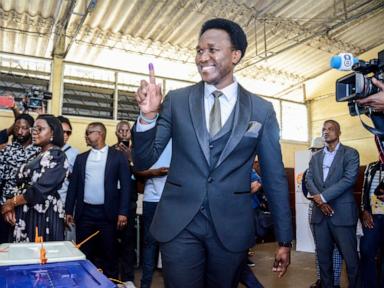
When Venancio Mondlane stepped into the spotlight as Mozambique’s most disruptive opposition figure, the script was already written. Not by him, of course. By a political playbook that keeps repeating itself from Maputo to Kampala to Dakar.
You’ve probably seen the headlines about Mozambique's Mondlane becoming the latest opposition leader to go on trial in Africa. If you only read the surface-level news reports, it looks like an isolated legal battle following a messy, disputed election. Look closer. It’s actually part of a much broader regional trend where courtrooms have replaced ballot boxes as the primary arena for settling political scores.
Let’s cut straight to what’s happening. Following Mozambique’s October 2024 general election—where the long-ruling Frelimo party claimed victory amidst widespread accusations of fraud and brutal street protests—Mondlane refused to back down. He challenged the official tally, mobilized massive demonstrations that paralyzed major cities, and briefly fled the country citing threats to his life before returning to face the music. Now, he’s facing criminal charges tied to the post-election unrest, including allegations of inciting violence and attempting to subvert constitutional order.
Sound familiar? It should.
The Courtroom as a Political Battlefield
Across sub-Saharan Africa, incumbents have gotten remarkably efficient at using the judiciary to neutralize challengers. Years ago, authoritarian-leaning governments relied almost exclusively on overt military crackdowns or indefinite detention without charge. Those tactics still happen, honestly, they never fully went away. Yet they carry a massive diplomatic price tag. Western donors get uneasy. Regional blocs issue sternly worded statements. Sanctions start hovering on the horizon.
Putting an opposition leader on trial is cleaner. It wears the costume of the rule of law.
When a government charges a rival with treason, terrorism, or inciting public disorder, it shifts the narrative. Suddenly, the state isn't crushing dissent; it's "upholding public safety" and "letting the courts decide." Meanwhile, the opposition leader is bogged down in endless legal hearings, stripped of campaign funds, barred from traveling, and kept away from rallies. Even if they're eventually acquitted years later, the political momentum is dead. The election cycle has already moved on.
In Mozambique, the stakes couldn't be higher. Frelimo has governed the country without interruption since independence from Portugal in 1975. For nearly five decades, the party and the state have basically fused into a single entity. Mondlane, running as an independent backed by the Podemos party, tapped into a massive wave of youth frustration over unemployment, corruption, and stagnant living standards. When the Constitutional Council confirmed Frelimo’s Daniel Chapo as president despite independent observers flagging serious irregularities, the streets erupted.
The state’s response followed a predictable two-step rhythm. First came the security forces, resulting in hundreds of deaths documented by local civil society groups like the Centre for Democracy and Human Rights (CDD). Second came the prosecutors.
How Venancio Mondlane’s Case Compares to Regional Precedents
To understand why Mondlane’s trial matters beyond Mozambique’s borders, you have to look at how similar prosecutions have played out across the continent over the last decade. The charges change slightly depending on the local penal code, but the political mechanics remain identical.
Take Uganda’s Kizza Besigye. Over two decades, the veteran opposition leader was arrested dozens of times and charged with everything from treason to rape to inciting violence. None of the treason convictions stuck, yet the constant legal warfare kept him perpetually on the defensive. More recently, Bobi Wine faced military court charges and relentless legal harassment after challenging Yoweri Museveni’s long rule.
Look at Senegal before its 2024 political turnaround. Ousmane Sonko, the firebrand opposition leader who galvanized young voters, was hit with a string of lawsuits—defamation, corrupting youth, and insurrection. Those charges got him disqualified from running in the presidential race and landed him in prison, sparking deadly protests. Sonko only walked free and became Prime Minister because outgoing President Macky Sall’s attempt to delay the election triggered a massive institutional backlash that forced an amnesty law.
Then there’s Zambia. Before Hakainde Hichilema won the presidency in 2021, he spent months in a maximum-security prison on treason charges simply because his motorcade failed to yield to President Edgar Lungu’s convoy. Think about that. A traffic dispute turned into a capital offense.
Even in countries with stronger democratic reputations, the pattern holds. In Benin, Reckya Madougou—a prominent opposition figure—was sentenced to 20 years in prison on terrorism financing charges right after being barred from the 2021 presidential election. In Tunisia, Rached Ghannouchi and dozens of other critics of President Kais Saied have been swept up in conspiracy trials.
Why Governments Rely on Lawfare Over Raw Force
Political scientists call this "lawfare"—the strategic use of legal systems to damage or delegitimize an opponent. If you’re wondering why ruling parties keep reaching for this specific tool, the answer comes down to survival math.
First, it fragments the opposition. When a charismatic leader like Mondlane is tied up in court or forced into exile, the movement loses its focal point. Lieutenants start arguing over strategy. Some want to negotiate with the ruling party for parliamentary seats; others want to keep protesting in the streets. The state doesn't even have to crush the party if the party tears itself apart over how to respond to the trial.
Second, it exhausts resources. Opposition movements in countries like Mozambique already operate on shoestring budgets. State media ignores them, business elites are terrified of funding them because government contracts might dry up, and international funding is tightly restricted. Dragging a leader through high-profile criminal proceedings drains whatever money and legal talent the movement has left.
Third, it creates a chilling effect. Ordinary citizens watching Mondlane face severe criminal penalties get the message loud and clear. If a high-profile presidential candidate with international visibility isn't safe from prosecution, what happens to a local organizer in Nampula or Beira? People stay home. Protests shrink.
What Most Coverage Misses About Mozambique’s Crisis
A lot of international reporting frames Mozambique’s crisis purely as a personality clash between Mondlane and the Frelimo establishment. That’s a mistake. You can’t understand this trial without looking at the economic pressure cooker underneath it.
Mozambique sits on massive offshore natural gas reserves in the northern Cabo Delgado province—projects worth tens of billions of dollars involving energy giants like TotalEnergies and ExxonMobil. For years, politicians promised that gas revenues would transform the country. Instead, ordinary Mozambicans have seen skyrocketing food prices, a brutal insurgency in the north, and a small political elite growing visibly wealthier while basic services crumble.
Mondlane didn't create that anger. He simply gave it a microphone.
That’s why putting him on trial is such a massive gamble for President Daniel Chapo’s administration. Unlike older opposition figures from the Renamo party—who fought a civil war against Frelimo and eventually settled into a predictable pattern of elite power-sharing negotiations—Mondlane represents a younger, urban, digitally connected demographic. They don't care about liberation-era history. They care about jobs and accountability.
If the courts hand Mondlane a harsh sentence, it won't extinguish that frustration. It might actually turn him into a martyr, deepening the legitimacy crisis for a government already struggling to convince international investors that Mozambique is stable enough for multi-billion-dollar energy projects.
The Structural Flaw in African Judiciaries
Here’s the uncomfortable truth that rarely gets said out loud in diplomatic circles. Lawfare only works because executive branches across much of Africa still hold tight control over judicial appointments, court budgets, and prosecutorial offices.
On paper, Mozambique’s constitution guarantees an independent judiciary. In practice, judges and prosecutors operate within a political ecosystem dominated by a single party for half a century. Going against the executive branch on a high-stakes political case requires extraordinary personal courage—and often carries career-ending consequences.
You see the exact same structural bottleneck in Zimbabwe, Tanzania, and Cameroon. Until constitutional reforms genuinely separate judicial funding and appointments from the presidency, opposition leaders will continue to walk into courtrooms knowing the verdict was largely decided before the first witness took the stand.
How to Read the Next Phase of Mondlane’s Trial
If you're following how this unfolds over the coming months, ignore the daily courtroom theatrics and watch three specific indicators instead.
- Bail and travel restrictions. Watch whether the court allows Mondlane to address public gatherings or travel internationally. Governments often use restrictive bail conditions as a de facto house arrest, neutralizing a politician without the bad optics of putting them behind bars.
- Backchannel negotiations. In southern Africa, high-profile trials frequently run parallel to quiet diplomatic talks. Keep an eye on mediation efforts from the Southern African Development Community (SADC) or religious leaders. Sometimes, charges are quietly dropped or suspended in exchange for the opposition recognizing election results and joining a national dialogue.
- Street mobilization capacity. Notice whether Mondlane’s supporters still turn out when he appears in court. If crowds dwindle, the state’s strategy of attrition is working. If demonstrations reignite every time a hearing is scheduled, the government has a tiger by the tail.
Venancio Mondlane’s trial isn't an anomaly, and it won't be the last one we see this year. Across the continent, a generation of young voters is pushing harder than ever against entrenched political dynasties, and those dynasties are fighting back with every legal weapon in their arsenal. Follow the court dockets closely—they tell you far more about the real state of democracy in Africa than any election campaign ever will.