The dust in southern Lebanon has a specific smell. It is a mix of pulverized limestone, ancient olive wood, and the sharp, metallic tang of things that were never meant to be broken. For a mother in Marjayoun, the news of a ceasefire doesn't arrive as a push notification or a headline on a glowing screen. It arrives as a sudden, deafening absence of sound. The silence is so heavy it makes your ears ring.
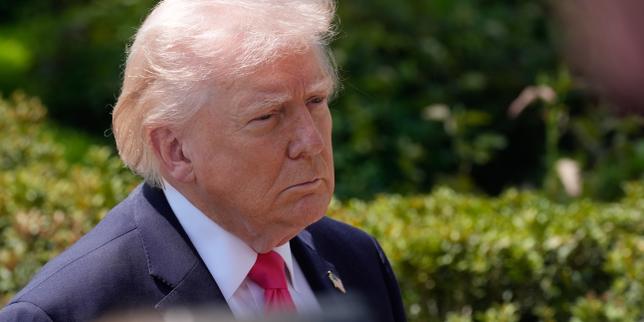
For months, the sky has been a source of terror. Now, a name is being whispered across the airwaves from Washington to Beirut, carrying a weight that could either anchor a lasting peace or serve as the tripwire for the next catastrophe. Donald Trump has signaled that any ceasefire worth the paper it is written on must include Hezbollah.
This isn't just a matter of diplomatic semantics. It is the difference between a pause and a resolution.
Consider a hypothetical shopkeeper named Elias. For weeks, Elias has lived in a basement, counting the seconds between the whistle and the thud. To Elias, "de-escalation" is an abstract term used by men in silk ties three thousand miles away. What he needs to know is whether the men with the launchers in the valley behind his house are part of the deal. If they aren't, the deal doesn't exist. It is a ghost. A hollow promise.
The complexity of the Lebanese border is a labyrinth of historical grievances and modern weaponry. In the past, agreements often skirted around the elephant in the room. They spoke of "state actors" and "sovereign borders," conveniently ignoring the shadow state that holds the keys to the arsenal. By explicitly stating that Hezbollah must be part of the framework, the rhetoric shifts from idealistic to pragmatic. It acknowledges a hard, uncomfortable truth: you cannot stop a fire by only negotiating with the water.
The air in the Levant is thick with skepticism. We have seen these cycles before. We have seen the handshakes in rose gardens followed by the heartbreak in the rubble. Trust is a currency that has been devalued to zero in the border towns of the south. When a leader asserts that a non-state actor—a group designated as a terrorist organization by some and a resistance movement by others—is a central pillar of a peace deal, it creates a friction that is felt in every capital in the Middle East.
Some argue this is a dangerous validation. They fear that bringing Hezbollah into the formal fold of a ceasefire gives them a seat at a table they have spent decades trying to overturn. But ask the people whose windows have been blown out four times in two years. They aren't interested in the purity of the table. They are interested in the stability of the floor beneath their feet.
The stakes are invisible until they are gone. We talk about "geopolitical stability" as if it’s a line on a graph, but it is actually the ability of a child to walk to school without looking at the clouds. It is the ability of a farmer to harvest his tobacco crop without wondering if the hillside is mined.
The logic being pushed now is one of absolute inclusion. If the ceasefire is a net, it cannot have a hole the size of an entire militia. The insistence on including Hezbollah is an attempt to sew that hole shut. It is a recognition that the Lebanese army, while a symbol of the state, does not hold the monopoly on force in the rugged terrain of the south.
Imagine the technicality of such a move. It requires a choreography that would make a grandmaster dizzy. You have the Israeli security requirements on one side, demanding a buffer zone that feels like a scar across the land. You have the Lebanese government, desperate to reclaim its sovereignty but hamstrung by its own internal fractures. And then you have the party of God itself, entrenched, battle-hardened, and fundamentally woven into the social fabric of the Shia heartlands.
The shift in tone from the incoming American administration suggests a move toward "transactional peace." It isn't about shared values or long-term friendship. It is about the cold, hard math of what it takes to make the shooting stop. If the math requires acknowledging the primary combatant on the ground, then that is the path taken.
It is a gamble.
If you bring a shadow into the light, do you diminish its power or do you give it a permanent shape? There are no easy answers in Lebanon. There are only less-bloody ones. The fear among the displaced—the thousands huddled in schools in Beirut or sleeping in cars in the mountains—is that "inclusion" is just another word for "stalling." They worry that while the politicians argue over the wording of a clause, the drones are still hunting.
The reality of a ceasefire "including Hezbollah" means monitoring. It means enforcement. It means a level of international oversight that has failed repeatedly since 2006. For this to be different, the consequences of a breach must be more terrifying than the benefits of a provocation.
Logic dictates that Hezbollah, currently under immense pressure and having lost significant leadership, might see a ceasefire as a necessary breath of air. But in the psychology of the region, a breath of air is often used to scream louder. The human element here is the exhaustion. A collective, bone-deep fatigue has settled over the Mediterranean coast.
People are tired of being the world's favorite tragedy.
When the news broke about the American stance, the reaction in the markets was a flicker of hope, but the reaction on the streets of Tyre was a shrug. Hope is a dangerous thing to have in Lebanon. It’s better to have bread. It’s better to have a roof.
The narrative of "total victory" or "total resistance" is being traded for a narrative of "total inclusion." It is a messy, ugly, and deeply flawed approach, but it is grounded in the reality of the dirt and the stone. You cannot ignore the man with the gun and expect the gun to disappear. performance of diplomacy often ignores the visceral reality of the front line, but this specific insistence forces the front line into the boardroom.
The invisible stakes are the lives of the millions who don't care about the ideology of the missiles, only the trajectory. They are the people who have become experts at identifying the caliber of an explosion by the way the floor vibrates. To them, the mention of Hezbollah in a peace deal isn't a political scandal; it's a desperate hope for a finality that has eluded them for forty years.
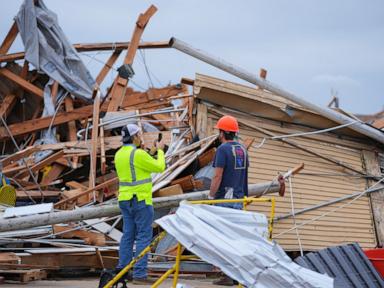
As the sun sets over the ruins of a village near the Blue Line, the light catches the shattered glass in the road, making it look like a trail of diamonds. A ceasefire that includes everyone is a trail back home. A ceasefire that leaves one side out is just a countdown to the next funeral.
The words spoken in Florida or Washington ripple across the sea, losing their polish and becoming raw survival by the time they reach the tents of the refugees. The world watches the headlines, but the people of the south watch the horizon. They are waiting to see if the silence will finally hold, or if it is just the indrawn breath before the next scream.
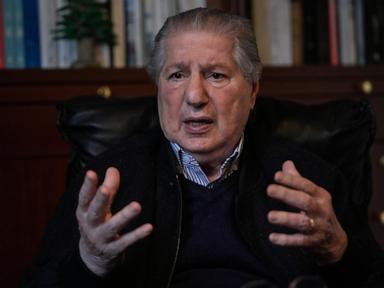
In a small room in Sidon, an old man turns off his radio. He doesn't look happy, and he doesn't look sad. He just looks like a man who has heard a thousand promises and is waiting for the one that doesn't break.
The weight of the word is heavy. The cost of being wrong is written in the craters of the earth.