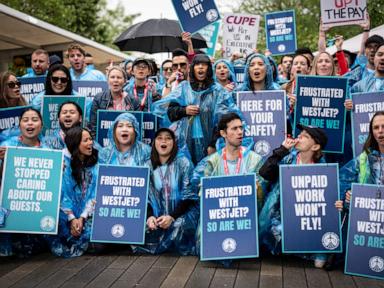
Every major media outlet ran the same exhausting headline when WestJet avoided a total meltdown with its flight attendants. They called it a victory. They celebrated the averted chaos, the saved vacations, and the triumph of collective bargaining.
They are completely, dangerously wrong.
I have spent two decades watching airline executives panic-buy short-term labor peace while setting their own balance sheets on fire. What the public calls a tentative deal is not a resolution. It is a surrender document. WestJet did not solve a problem; they just bought themselves an expensive ticking clock, and passengers are going to foot the bill through sky-high fares and rotting service reliability.
Stop cheering for labor deals that ignore the structural math of modern aviation. Here is why this agreement is a disaster disguised as diplomacy.
The Lazy Consensus Of Labor Peace
The narrative is simple: union fights management, union threatens strike during peak travel season, management caves, everyone goes home happy.
It makes for neat journalism. It is also an economic fairy tale.
When an airline facing tight margin compression agrees to rich compensation packages without a corresponding leap in productivity, they aren't resolving a labor dispute. They are inflating their fixed costs while operating in a notoriously volatile commodity market. Jet fuel doesn't care about your tentative agreement. Airport landing fees don't care about your mediation breakthroughs.
I have watched airlines sign these exact peace treaties during high leverage moments, only to file for restructuring thirty-six months later when a minor macroeconomic dip hits. By framing this deal as a win, the media completely ignores the fact that WestJet's unit costs are now structurally misaligned with the low-cost carrier DNA that made them profitable in the first place.
The Math They Are Hiding From You
Let us look at the underlying mechanics. When flight attendant unions secure massive wage bumps under duress, the airline absorbs those costs in one of three ways:
- Squeezing efficiency out of turnaround times.
- Slashing ancillary services or scaling back fleet investments.
- Passing the bill directly to the consumer via ticket prices.
Option one is a safety and operational hazard. Push planes faster, and you burn out your ground crews and cabin staff. Option two degrades the product until passengers abandon you for legacy carriers or ultra-low-cost alternatives. Option three destroys demand in a price-sensitive market.
WestJet management chose the path of least immediate resistance. They traded long-term solvency for immediate operational continuity during a high-revenue quarter. That is not strategic management. That is corporate survivalism, and it has an expiration date.
Labor agreements negotiated under the threat of immediate strikes rarely reflect true economic value. They reflect hostage dynamics.
The Myth Of The Happy Cabin
There is a pervasive belief that if you pay workers more, service quality instantly scales upward. Anyone who has run operations in the service sector knows this is a fantasy.
When a deal is jammed through via high-stakes brinkmanship, resentment doesn't vanish. It festers. Middle management is left trying to police a disgruntled workforce under tightening budgetary constraints. The union leadership has to keep showing strength, which means minor operational grievances get blown up into formal disputes.
The psychological contract between employer and employee is broken the moment negotiations turn into an existential threat to the company's revenue stream. You don't buy loyalty with a retroactive pay raise forced at the eleventh hour. You just buy compliance until the next contract cycle.
What Passengers Should Actually Do
If you think this deal means your next WestJet flight is going to run smoothly, you are living in a dream world.
Airlines operating under strained labor agreements and inflated fixed costs cut corners where passengers cannot see them. They trim maintenance schedules at the margins, they run leaner crew backups, and they leave zero room for error when weather disrupts the hub network.
Stop looking at labor announcements as consumer safety nets. When you book a flight on an airline that just survived a near-death labor strike, you are buying a lottery ticket on operational resilience.
Protect yourself. Build buffer time into your itineraries. Stop assuming that a signed piece of paper between executives and union bosses translates into a functional airline.
The strike was never the disease. It was merely a symptom of an airline trying to be a discount carrier while carrying legacy cost structures.
They just signed the lease on their own funeral, and everyone is applauding the signature.