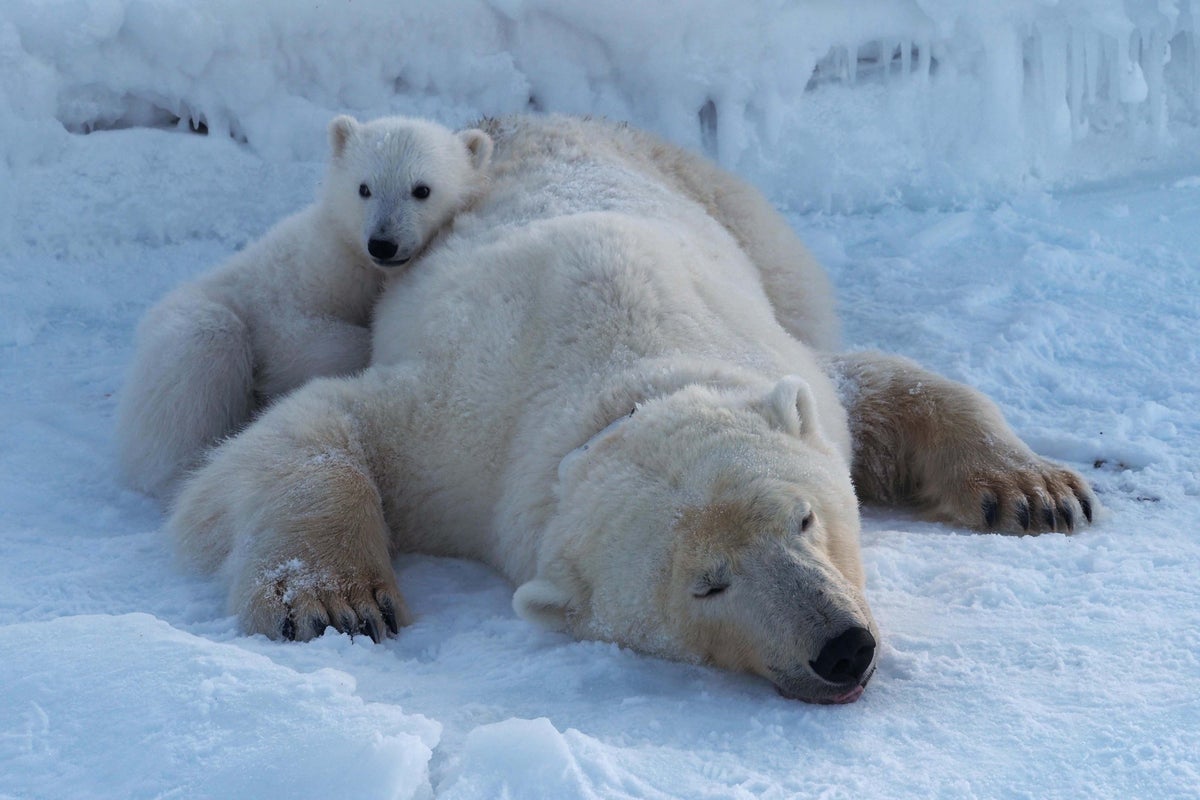
The High Arctic is no longer a sanctuary from global pathogens. For the first time in Europe, scientists have confirmed that highly pathogenic avian influenza killed a polar bear in the remote Svalbard archipelago. This isn't just an isolated tragedy or a fluke. It is a stark signal that the virus has firmly breached one of the most isolated ecosystems on Earth.
Svalbard sits roughly halfway between mainland Norway and the North Pole. It is a landscape defined by extreme cold, sea ice, and vast wildlife colonies. But the discovery of a dead one-year-old male polar bear alongside a deceased adult walrus in Raudfjorden confirms that the catastrophic global bird flu outbreak has carved out a permanent foothold in the deep north.
Testing by the Norwegian Veterinary Institute revealed that both animals were infected with the H5N5 strain of the virus. Brain samples confirmed the infection, making it highly probable that the virus caused their deaths. The implications for Arctic conservation are massive, and honestly, pretty terrifying.
The Grim Discovery in Raudfjorden
The crisis came to light when tourist guides navigating the icy waters of northern Spitsbergen spotted the carcasses and noticed something deeply troubling: two other living polar bears in the area were showing severe neurological symptoms, specifically lameness and paralysis in their hind legs.
The guides immediately contacted the Norwegian Polar Institute. Given the remote location, the Governor of Svalbard and the Norwegian Food Safety Authority scrambled to dispatch a team for field sampling. While the team couldn't locate the sick, limping bears from the air, they successfully sampled the dead bear and walrus.
The results came back negative for rabies, but positive for the highly pathogenic H5N5 avian influenza. The fact that the virus was found directly in the brain tissue explains the horrific neurological failure witnessed by the guides. This virus doesn't just cause respiratory issues; it attacks the nervous system of mammals, leading to seizures, paralysis, and death.
Why the H5N5 Strain Is Different
While most global attention has focused on the notorious H5N1 strain, the culprit in Svalbard is H5N5. This particular variant has been quietly circulating among birds in northern Europe and the Arctic for a few years. It was previously detected in Svalbard's glaucous gulls, Arctic foxes, and even a single walrus back in 2023.
The problem with these highly pathogenic strains is their ability to mutate as they leap from birds to mammals. Genetic sequencing of the H5N5 strain found in Arctic marine life has previously highlighted mutations like E627K in the viral polymerase basic protein 2. Don't worry about the jargon—what that basically means is the virus is adapting to replicate much better at the lower body temperatures found in mammalian upper respiratory tracts.
It is a terrifying bit of viral evolution. The virus is actively tuning itself to jump species.
How Apex Predators Turn Into Victims
You might wonder how a polar bear, an apex predator of the ice, catches a bird virus. The answer lies in their diet and changing environment.
Polar bears are opportunistic scavengers. As climate change rapidly melts the Arctic sea ice, bears are forced ashore for longer periods. They spend more time around dense seabird nesting colonies, where bird flu spreads like wildfire. When a goose, gull, or kittiwake dies of the virus, a hungry polar bear won't hesitate to eat the carcass.
The same applies to walruses. They congregate in tight, packed colonies on beaches when sea ice is scarce. A single infected animal can easily pass the virus through close contact or shared space. Polar bears also hunt and scavenge dead seals and walruses. If a walrus is packed with the virus, the bear eating it receives a massive viral load.
This isn't the absolute first time a polar bear has died from bird flu globally—Alaska reported a case involving the H5N1 strain in late 2023 near Utqiagvik. But the Svalbard discovery marks the official arrival of this deadly threat to European Arctic wildlife, proving the virus is utilizing multiple strains to assault both poles.
The Global Scale of the Wildlife Crisis
It is easy to look at a news report from a frozen archipelago 1,000 kilometers from the North Pole and think it doesn't affect the rest of the world. That's a huge mistake. The Arctic acts as a massive global mixing bowl for migratory birds.
Birds from Africa, Europe, and Asia fly north to breed in the dense, crowded cliffs of Svalbard during the summer. They swap viruses, the strains mutate, and then those birds fly back south, carrying new, potentially more dangerous variants across global flyways.
According to the World Organisation for Animal Health, between early 2025 and March 2026 alone, over 140 million animals died or were culled due to avian influenza across nearly 70 nations. We've seen mass die-offs of elephant seals in Antarctica, sea lions in South America, and farmed mink in Europe. The virus is systematically moving through the mammalian family tree.
Understanding the Risk to Humans
Whenever a virus jumps to a major mammal, the immediate question is always: are we next?
Right now, public health agencies, including the Norwegian Veterinary Institute, maintain that the risk to the general public is very low. Avian influenza strains still lack the specific genetic architecture required to transmit efficiently from human to human. Almost all human cases recorded globally have occurred in people with intense, prolonged exposure to infected poultry or dairy cattle.
But low risk doesn't mean zero risk. Every time the virus infects a mammal—whether it is a dairy cow in Texas or a polar bear in Svalbard—it gets a fresh roll of the evolutionary dice. The threat isn't that you'll catch it from a polar bear; the threat is that the virus will eventually figure out the genetic code for seamless mammalian transmission.
Concrete Steps for Arctic Travelers and Researchers
If you are an expedition leader, researcher, or tourist heading to the Arctic, the reality of wildlife encounters has fundamentally changed. You can't just worry about bear safety protocols anymore; you have to worry about biosecurity.
- Maintain strict distance: Never approach dead or visibly sick wildlife. If you see a polar bear, walrus, or fox showing signs of neurological distress—like head tremors, circling, or hind-leg paralysis—steer clear immediately.
- Report observations: Note the exact GPS coordinates and notify local authorities like the Governor of Svalbard right away. Early detection is our only real tool for tracking the spread.
- Disinfect gear: If you accidentally walk near a bird colony or wildlife carcass site, scrub and disinfect your boots and outerwear before moving to a new location or boarding an expedition vessel. Do not carry the virus from one pristine fjord to another.
The discovery in Svalbard ruins the myth that the Arctic's extreme isolation can protect its fragile ecosystems from global ecological disasters. We are watching a catastrophic shift in real-time. Conservation strategies can no longer just focus on hunting quotas and melting ice; they must aggressively adapt to monitor and combat the silent spread of global disease.