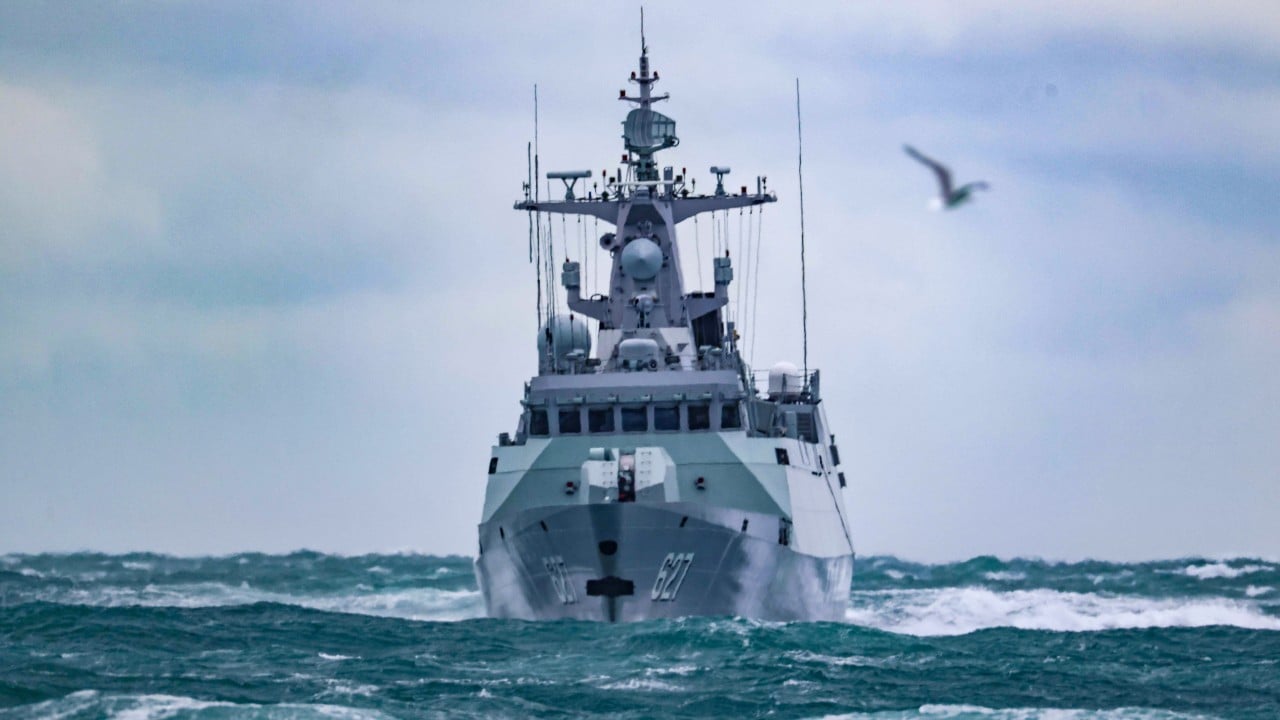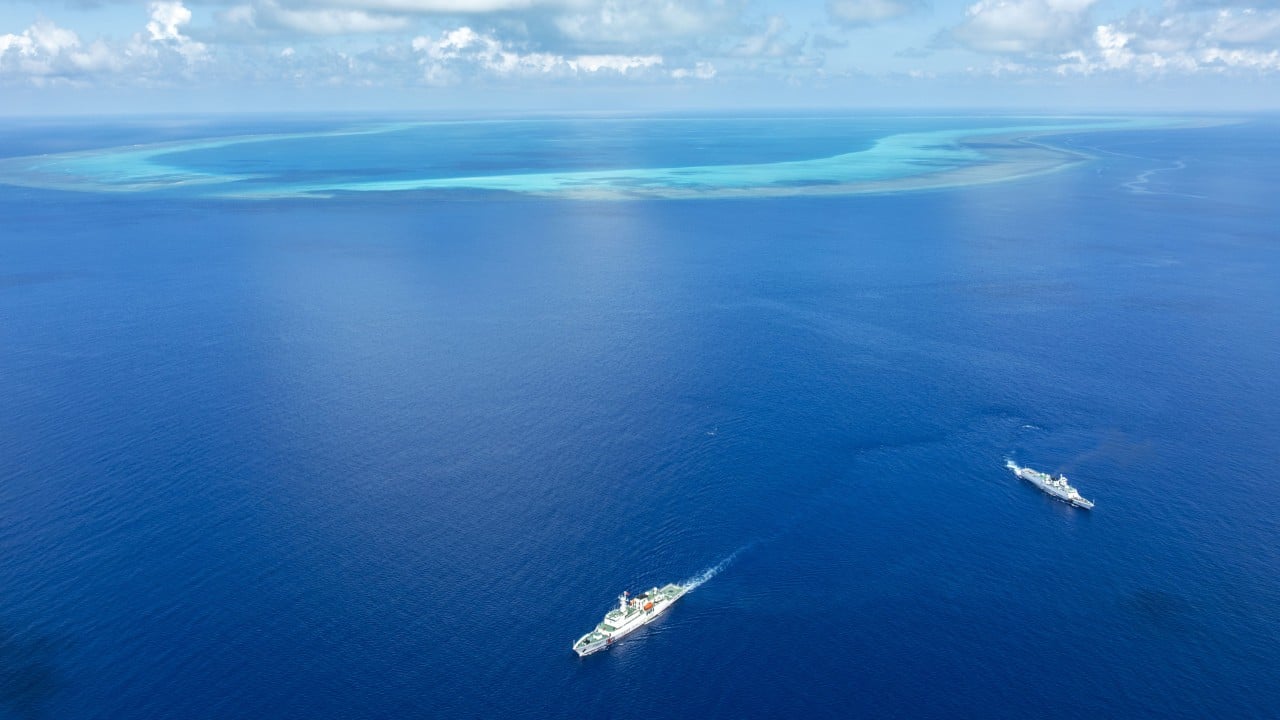
Indonesia has effectively traded a portion of its maritime legal orthodoxy for Chinese industrial capital, altering a thirty-year doctrine of non-claimant neutrality in the South China Sea. By embedding the phrase "joint development in areas of overlapping claims" into the November 2024 Beijing-Jakarta joint statement—and reiterating those cooperation frameworks during the November 2026 Shenzhen bilateral talks—Jakarta transitioned from enforcing a strict United Nations Convention on the Law of the Sea (UNCLOS) boundary to managing an asymmetric economic dependency. Standard commentary frames this shift as either a diplomatic blunder by an inexperienced foreign ministry or a benign pursuit of regional peace. Both interpretations miss the structural reality: Indonesia’s maritime posture is now governed by a capital-allocation equation in which domestic industrial down-streaming, infrastructure financing, and fiscal targets outweigh the long-term legal costs of legitimizing Beijing’s nine-dash line.
The Mechanics of Asymmetric Dependency
To understand why Jakarta compromised on language it spent decades rejecting, one must isolate the financial inputs driving Indonesian macroeconomic policy. Between 2013 and 2024, bilateral trade between China and Indonesia expanded by 170% to reach roughly $130 billion annually, cementing Beijing as Jakarta’s largest trading partner and a primary source of foreign direct investment. Unlike Western capital, which arrives encumbered by environmental, social, and governance (ESG) compliance hurdles and lengthy due-diligence timelines, Chinese state-backed capital deploys rapidly into high-capex, low-margin physical assets: nickel smelters in Sulawesi, high-speed rail corridors in Java, and energy transition infrastructure.
This capital flow creates a structural bind that operates through three distinct mechanisms:
- Sunk-Cost Lock-In: Once Chinese entities finance, build, and supply the proprietary processing technology for Indonesia’s mineral down-streaming sector, Jakarta loses the ability to substitute capital providers without halting industrial output. Economic growth targets—specifically President Prabowo Subianto’s mandate to accelerate GDP expansion toward 8%—depend directly on uninterrupted Chinese capital expenditure and off-take agreements.
- The Fiscal Substitution Effect: State-owned enterprises (SOEs) in Indonesia carry heavy debt loads from a decade of infrastructure expansion. Chinese joint ventures allow Jakarta to offload capital risk off the sovereign balance sheet while maintaining state equity stakes, making Beijing an indispensable partner for domestic fiscal stability.
- Asymmetric Escalation Dominance: In any bilateral dispute, the party with higher tolerance for economic disruption dictates the terms. A freeze in Chinese industrial investment or commodity imports would trigger immediate currency pressure on the rupiah and stall domestic job creation. Conversely, maritime friction in the North Natuna Sea imposes negligible macroeconomic cost on Beijing.
Under these conditions, Indonesia’s foreign policy apparatus faces a rigid constraint. Maintaining pure legal orthodoxy under UNCLOS requires tolerating persistent friction with China, which threatens the exact capital inflows required to fund domestic political stability.
Deconstructing the Legal Concession
For decades, Indonesia’s strategic advantage rested on a precise legal distinction: Jakarta was not a claimant state in the South China Sea disputes. Under UNCLOS, Indonesia possesses an indisputable 200-nautical-mile Exclusive Economic Zone (EEZ) extending north from the Natuna Islands. Because China’s nine-dash line (
Economic Interdependence and Maritime Sovereignty in the North Natuna Sea
news, business
Indonesia’s maritime posture in the South China Sea is governed by a structural asymmetry between capital dependency and territorial integrity. While Jakarta officially rejects Beijing’s Nine-Dash Line—rebranded as the Ten-Dash Line—under the 1982 United Nations Convention on the Law of the Sea (UNCLOS), its operational response is constrained by deep bilateral economic integration. China is Indonesia’s largest trading partner and a primary source of foreign direct investment, particularly in downstream mineral processing and national infrastructure. This creates a strategic friction where escalating naval confrontation in the North Natuna Sea directly threatens domestic industrial targets. To manage this risk, Jakarta executes a dual-track strategy of compartmentalized deterrence: maintaining legal non-recognition and coast guard patrols at sea while insulating commercial agreements on land.
The Structural Asymmetry of Bilateral Ties
Standard geopolitical commentary often frames Indonesia’s foreign policy as a binary choice between alignment with Washington and submission to Beijing. This framing misunderstands Jakarta’s core doctrine of bebas aktif (independent and active) and ignores the domestic political economy driving decision-making in the presidential palace.
The relationship between Jakarta and Beijing is defined by asymmetric interdependence. While Indonesia represents a valuable market and resource base for China, Chinese capital and industrial supply chains are indispensable to Indonesia’s core macroeconomic objectives.
Capital Concentration in Strategic Sectors
Indonesia’s industrial policy relies heavily on resource nationalism, specifically the mandatory domestic processing of raw minerals before export—a policy known as hilirisasi (downstreaming). Executing this transition requires massive capital expenditure, high-pressure acid leach (HPAL) technology, and captive refining capacity that Western investors have largely declined to fund due to environmental, social, and governance (ESG) constraints.
Chinese state-owned enterprises and private conglomerates filled this capital vacuum. The operational reality of this dependency manifests across three primary vectors:
- Nickel and Battery Supply Chains: Chinese firms control the majority of smelting capacity in industrial parks such as Morowali (Central Sulawesi) and Weda Bay (North Maluku). Disrupting bilateral relations jeopardizes the foreign direct investment required to transform Indonesia into a global hub for electric vehicle (EV) battery manufacturing.
- Infrastructure Financing: Flagship connectivity projects, most notably the Jakarta-Bandung High-Speed Rail (Whoosh) and various port developments under the Global Maritime Fulcrum initiative, rely on Chinese engineering, procurement, and construction (EPC) contracts alongside policy bank financing.
- Trade Balance Absorption: China serves as the primary buyer for Indonesian commodities, including coal, palm oil, and processed ferronickel. Any informal economic coercion—such as customs delays or phytosanitary restrictions imposed by Beijing—would immediately contract Indonesia’s trade surplus and destabilize the rupiah.
This economic architecture creates a high opportunity cost for kinetic or diplomatic escalation. When Chinese Coast Guard (CCG) vessels enter Indonesia’s Exclusive Economic Zone (EEZ) off the Natuna Islands, Jakarta calculates the response not merely as a naval incident, but as a variable affecting domestic GDP growth and industrial employment.
Deconstructing the North Natuna Sea Friction
To understand why Indonesia avoids direct military confrontation despite repeated maritime incursions, one must separate legal claims from operational realities. Indonesia does not consider itself a claimant state in the broader South China Sea territorial disputes over the Spratly or Paracel Islands. Instead, the friction occurs where Beijing’s expansive "historic rights" claim overlaps with the northern reaches of Indonesia’s UNCLOS-mandated 200-nautical-mile EEZ extending from the Natuna Regency.
The Mechanics of Gray-Zone Incursions
Beijing avoids deploying the People’s Liberation Army Navy (PLAN) to challenge Indonesian sovereignty directly, as doing so would trigger an unambiguous military crisis and unite ASEAN against China. Instead, Beijing utilizes gray-zone tactics designed to normalize presence without crossing the threshold of armed conflict:
- Distant-Water Fishing Fleets: Chinese fishing vessels operate in the resource-rich waters of the North Natuna Sea, asserting de facto administrative jurisdiction through economic extraction.
- Coast Guard Escorts: Massive CCG cutters—often larger and better armed than Indonesian naval corvettes—accompany fishing fleets. Their presence deters Indonesian law enforcement from arresting illegal fishers without firing a shot.
- Hydrographic Survey Vessels: Chinese research ships periodically map the seabed in Indonesia’s EEZ, gathering bathymetric data essential for submarine operations while testing Jakarta’s monitoring capabilities.
The Indonesian Institutional Bottleneck
Indonesia’s maritime response is further complicated by internal bureaucratic fragmentation. Historically, maritime domain awareness and enforcement were divided among multiple agencies with overlapping mandates and incompatible communication systems:
- The Indonesian Navy (TNI-AL)
- The Maritime Security Agency (Bakamla)
- The Ministry of Marine Affairs and Fisheries (KKP)
- The Marine Police (Polairud)
This institutional friction frequently delayed tactical responses to CCG incursions. While recent legislative reforms have designated Bakamla as the nucleus of a unified coast guard, the agency still faces severe hull deficits and endurance limitations compared to the CCG’s fleet of 10,000-ton cutters. Deploying TNI-AL warships to shadow CCG vessels escalates the military profile of an incident, whereas deploying under-resourced Bakamla vessels limits Jakarta’s physical leverage at sea.
The Doctrine of Compartmentalized Deterrence
Faced with severe economic dependency and asymmetrical maritime power, Jakarta has neither capitulated to Beijing’s claims nor adopted the confrontational posture seen in Manila. Instead, Indonesian policymakers execute compartmentalized deterrence—a strategy that isolates maritime security disputes into a tightly controlled administrative lane while preventing spillover into bilateral trade and investment.
Component 1: Uncompromising Legalism
Jakarta refuses to enter bilateral negotiations with Beijing regarding maritime delimitation in the North Natuna Sea. Under international law, negotiations require two overlapping, legally valid claims. By arguing that China’s Nine-Dash Line has zero legal standing under UNCLOS—a position reinforced by the 2016 Permanent Court of Arbitration ruling—Jakarta denies Beijing the diplomatic recognition it seeks. In 2017, Indonesia formally renamed the northern sector of its EEZ the "North Natuna Sea" on national maps, an administrative act designed to solidify nomenclature without firing a missile.
Component 2: Calibrated Presence and Shadowing
When CCG vessels enter the North Natuna EEZ, Jakarta avoids kinetic engagement or aggressive vessel-ramming tactics. Instead, Bakamla and TNI-AL units execute persistent shadowing operations. They issue radio challenges asserting UNCLOS jurisdiction, document the incursion for diplomatic protests, and maintain physical proximity until the Chinese vessels withdraw. This approach fulfills domestic political requirements—demonstrating to the Indonesian public that the government is defending sovereignty—while keeping the escalation ladder below the threshold that would trigger Chinese economic retaliation.
Component 3: Asymmetric Economic Hedging
Recognizing that over-reliance on Chinese capital creates a strategic vulnerability, Jakarta actively courts alternative investors to dilute Beijing’s market share without expelling Chinese firms:
- Supply Chain Diversification: Indonesia has sought free trade agreements and critical mineral partnerships with the United States, the European Union, South Korea, and Japan to reduce its dependence on Chinese smelters and off-takers.
- Defense Modernization Diversification: Jakarta systematically avoids purchasing major Chinese weapons systems. Instead, it procures fighter jets, frigates, and submarines from France, Italy, the United States, and South Korea, ensuring its military hardware and maintenance chains remain completely independent of Beijing.
- Multilateral Security Exercises: While avoiding formal military alliances, Indonesia conducts regular joint exercises, such as Super Garuda Shield, with the United States, Australia, and Japan. These drills signal to Beijing that excessive coercion in the North Natuna Sea could push Jakarta closer to Western security frameworks.
Strategic Limitations and Vulnerability Vectors
Compartmentalized deterrence is an effective crisis-management mechanism, but it is not a permanent solution. The strategy relies on assumptions that face growing structural stress.
First, energy exploration creates a hard tripwire. The Tuna gas block, located near the maritime boundary with Vietnam inside the North Natuna Sea, sits squarely within Beijing’s claimed dash line. When energy firms conduct drilling operations in this sector, CCG vessels routinely shadow the rigs and demand a halt to activities. Unlike fishing disputes, offshore hydrocarbon extraction involves massive sunk capital and fixed infrastructure. If Beijing physically blocks rig operations, Jakarta cannot rely on passive shadowing; it will be forced to either deploy naval force to protect commercial assets or accept the de facto veto of Beijing over Indonesia’s sovereign resources.
Second, domestic political transition alters risk tolerance. A presidential administration focused heavily on legacy infrastructure and rapid GDP growth will naturally prioritize protecting Chinese capital inflows, biasing policy toward quiet diplomacy in the Natuna Sea. Conversely, an administration facing domestic economic headwinds or rising nationalist sentiment may weaponize maritime sovereignty to shore up political legitimacy, disrupting the careful compartmentalization that keeps trade insulated from security friction.
Third, coercive leverage compounds over time. As Chinese firms become deeply embedded in Indonesia’s downstream nickel, bauxite, and copper sectors, the cost of decoupling rises exponentially. Economic interdependence is rarely static; without aggressive regulatory caps on single-country investment concentration, Jakarta risks crossing a threshold where the domestic economic fallout of a diplomatic freeze becomes politically intolerable, effectively neutralizing its maritime deterrent.
Executing Strategic Autonomy
To prevent economic ties from eroding maritime sovereignty over the next decade, Jakarta must shift from reactive crisis management to structural risk mitigation. Policymakers must execute three concrete operational adjustments:
- Enforce Equity Caps in Critical Minerals: Mandate joint-venture structures that limit single-nation ownership in downstream smelting and processing facilities to below 40 percent, compelling technology transfer and forcing capital diversification toward South Korean, European, and Japanese partners.
- Accelerate Coast Guard Hull Acquisition: Reallocate defense procurement budgets to rapidly expand Bakamla’s fleet of offshore patrol vessels equipped with long-endurance capabilities, ensuring Jakarta can maintain continuous, non-military presence in the North Natuna Sea without relying on naval warships.
- Establish Joint Resource Extraction Frameworks: Fast-track bilateral maritime boundary settlements and joint hydrocarbon development agreements with neighboring ASEAN states, specifically Vietnam and Malaysia, to create a unified legal and commercial front along the southern perimeter of the South China Sea.