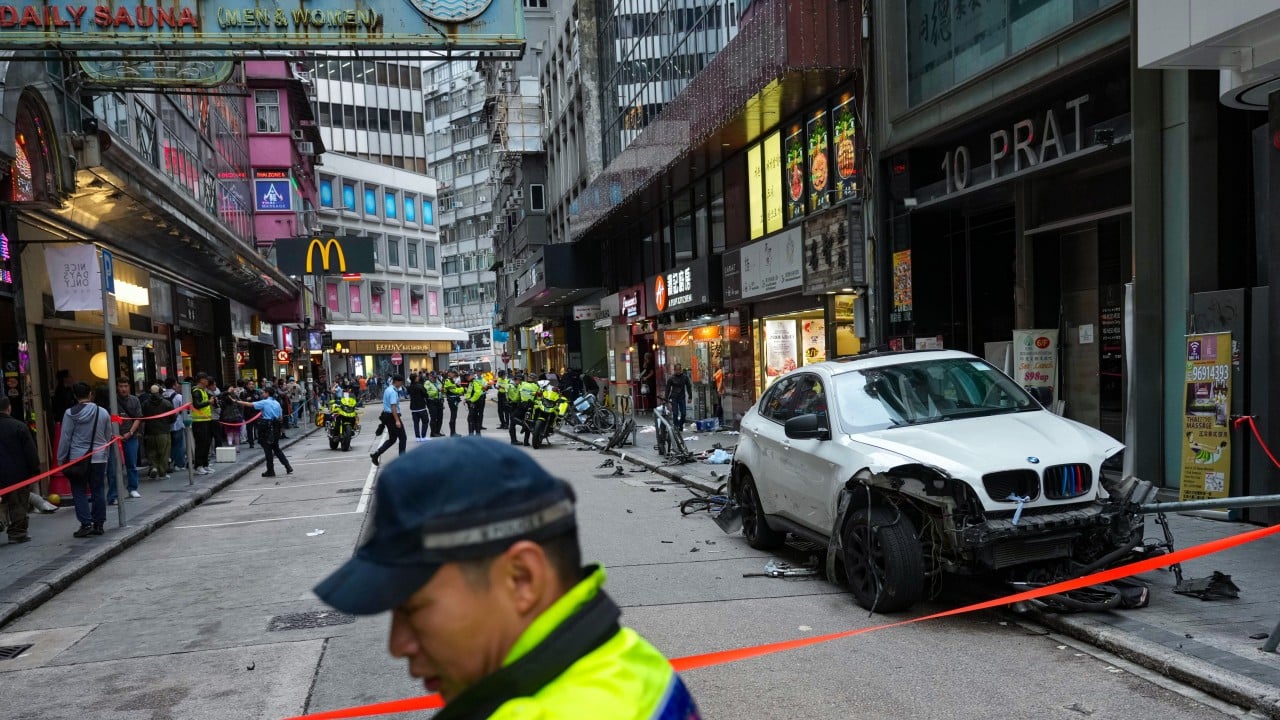
One person is dead. Three others are in the hospital. And before the glass even stops settling on the pavement in Tsim Sha Tsui, Hong Kong police already have a driver in handcuffs.
If you've ever walked down Nathan Road or cut across Canton Road during a busy shift, you know how tight the margins are between two tons of moving steel and a crowd of pedestrians. When a crash turns fatal in one of the most densely packed commercial districts on earth, the public reaction is immediate—and the legal fallout is even faster.
Most news reports give you the bare skeleton of a Tsim Sha Tsui crash. They tell you a man was arrested, one pedestrian died, and three people were injured. Then they move on to the next headline. They rarely explain what happens inside those first critical hours of a Hong Kong police investigation, why arrests happen almost automatically at the scene, or what the road layout in Kowloon has to do with these tragedies.
Let's break down what actually goes down when a fatal collision hits Tsim Sha Tsui, what charges the arrested driver faces under Hong Kong law, and how you can protect yourself as a pedestrian in high-density urban corridors.
The Anatomy of a Tsim Sha Tsui Traffic Investigation
When a crash kills a pedestrian and injures three others in Tsim Sha Tsui, the response isn't handled by standard beat cops. The Special Investigation Team of Traffic, Kowloon West takes over the scene immediately.
You'll see the area cordoned off with blue-and-white tape within minutes. Why? Because physical evidence on asphalt disappears fast. Tire skid marks, debris fields, shattered headlight fragments, and blood spatter tell investigators the exact angle of impact and the vehicle's approximate speed before the driver ever hit the brakes.
Here is what happens behind that police cordon during the first few hours:
- Immediate breathalyzer and drug screening. Under the Road Traffic Ordinance (Cap. 374), officers conduct on-site screening breath tests on any driver involved in a fatal or serious injury collision. Refusing the test is a criminal offense on its own, carrying penalties just as severe as failing it.
- Dashcam and CCTV harvesting. Tsim Sha Tsui has one of the highest concentrations of commercial security cameras and vehicle dashcams in Asia. Investigators canvas nearby storefronts, hotel entrances, and passing taxis to pull footage before it gets overwritten.
- Vehicle impoundment and mechanical inspection. The car isn't just towed to a regular lot. It goes straight to the Kowloon Bay Vehicle Examination Centre, where government motor vehicle examiners strip down the braking system, steering column, and tire treads to rule out mechanical failure.
- Witness separation. Police separate the three surviving injured victims (once medically cleared to speak) and any bystanders so their accounts don't bleed into one another.
It's a methodical, aggressive process. And it explains why an arrest happens so quickly.
Why Police Arrest Drivers Immediately After Fatal Crashes
People outside Hong Kong often assume an arrest means the police have already proved the driver was drunk, speeding, or texting. That's not how it works here.
In Hong Kong, being arrested at the scene of a fatal traffic accident—typically on suspicion of dangerous driving causing death—is standard procedural practice when a fatality occurs and initial evidence points to driver error. An arrest gives the Hong Kong Police Force the legal authority to detain the suspect for questioning, demand formal evidentiary breath or blood samples at a station or hospital, and seize personal items like mobile phones to check for distracted driving logs.
Think about it from an investigative standpoint. If officers simply handed out a summons and let a driver walk home after a fatal crash in Tsim Sha Tsui, crucial digital evidence on a smartphone could be wiped before morning.
Once arrested, the driver can be held for up to 48 hours before police must either lay formal charges and bring the suspect before a magistrate, or release them on police bail pending further investigation. Because forensic crash reconstruction and toxicology reports take weeks—sometimes months—most suspects are released on bail with strict conditions, including surrendering their travel documents and reporting regularly to a police station.
Dangerous Driving Causing Death vs. Careless Driving
Not every fatal collision results in the same prosecution, and the distinction in Hong Kong's legal system is massive. Understanding the gap between these two charges explains why prosecutors spend months analyzing every millimeter of a Tsim Sha Tsui crash scene.
Careless driving applies when a motorist drives without due care and attention, or without reasonable consideration for other people using the road. Maybe a driver misjudged a blind spot while turning off Peking Road, or looked away for a split second in slow-moving traffic. It's a serious offense, carrying a maximum penalty of six months' imprisonment and a fine, alongside mandatory driving disqualification if someone dies.
Dangerous driving causing death is an entirely different beast. Under Section 36 of the Road Traffic Ordinance, the prosecution has to prove that the way the person drove fell far below what would be expected of a competent and careful driver—and that it would be obvious to a competent driver that driving in that way was dangerous.
Examples that push a Tsim Sha Tsui crash into the "dangerous driving" bracket include:
- Running a red light at a busy pedestrian crossing.
- Excessive speeding down stretches like Salisbury Road or Chatham Road South.
- Driving under the influence of alcohol or dangerous drugs.
- Mounting the pavement due to loss of vehicle control or distracted phone use.
If convicted of dangerous driving causing death in the District Court or High Court, the maximum sentence is 10 years in prison, a hefty fine, and a mandatory driving disqualification of at least five years for a first offense. If aggravating factors exist—like driving with a blood alcohol concentration way over the legal limit—the court can increase that maximum penalty by half, pushing potential prison time up to 15 years.
And what about the three injured pedestrians? Each serious injury adds separate counts of dangerous driving causing grievous bodily harm, which carries up to seven years' imprisonment per count.
Why Tsim Sha Tsui Streets Are Unforgiving
Anyone who has spent real time navigating Kowloon knows Tsim Sha Tsui isn't built like a modern suburban grid. It's a dense network of narrow one-way lanes, multi-lane arterial roads, heavy tourist foot traffic, and relentless commercial delivery vehicles.
Look at the friction points that make this district uniquely hazardous:
- Mixed-use congestion. Double-decker buses, red minibuses, luxury tour coaches, delivery vans, and private cars all fight for the same tight lanes around Haiphong Road, Carnarvon Road, and Granville Road.
- Distracted foot traffic. Thousands of visitors walk through Tsim Sha Tsui staring at Google Maps on their phones, stepping off curbs without checking for vehicles turning on green arrows.
- Unpredictable jaywalking. Even with metal guardrails lining major junctions along Nathan Road, pedestrians routinely squeeze through gaps or dart across unmarked side streets to catch a bus or beat the rain.
- Delivery bottlenecks. Commercial vans frequently double-park near retail storefronts, forcing moving traffic to swerve across lane markings and blocking sightlines for drivers approaching crosswalks.
When you combine a two-ton vehicle moving at even 40 or 50 kilometers per hour with zero buffer zone between the curb and the sidewalk, a single mistake becomes irreversible.
What Happens to the Victims and Families Next
When a headline says one pedestrian died and three were injured, the public rarely hears about the grueling legal and financial road that follows for the survivors.
In Hong Kong, criminal proceedings and civil compensation are completely separate tracks. The Department of Justice prosecutes the arrested driver to punish the criminal offense against the state. That criminal trial does not automatically put money in the pockets of the injured pedestrians or the deceased victim's family.
To recover medical expenses, lost income, or bereavement damages, victims and families must file a separate civil claim for negligence against the driver and the vehicle's third-party motor insurer.
Under Hong Kong's Motor Vehicles Insurance (Third Party Risks) Ordinance, every vehicle on the road is legally required to carry third-party bodily injury insurance. Even if the arrested driver was drunk, unlicensed, or driving a stolen car, the insurer is generally still legally obligated to satisfy a civil judgment for third-party injuries and deaths—and if the vehicle was completely uninsured, the Motor Insurers' Bureau of Hong Kong (MIB) steps in as a safety net to compensate victims.
The catch? Civil claims usually stall until the criminal investigation and trial conclude, because a criminal conviction for dangerous or careless driving serves as decisive proof of negligence in civil court. That means families often wait over a year for formal resolution while dealing with immediate hospital bills and rehabilitation costs.
How to Protect Yourself on High-Density Hong Kong Roads
You can't control whether a driver behind you is tired, distracted, or reckless. You can, however, eliminate the habits that put pedestrians in the highest-risk zones across Kowloon and Hong Kong Island.
- Never stand right on the curb edge while waiting for a light. Step back at least two paces behind the tactile paving or behind a solid bollard. When vehicles clip each other at intersections, the secondary impact almost always sends one car onto the immediate corner of the sidewalk.
- Watch the front wheels, not the windshield. Tinted windows and glare make it impossible to tell if a driver actually sees you. Looking at a car's front tires tells you immediately whether the vehicle is creeping forward or starting to turn into your path.
- Drop the phone at every crossing. Even with a green pedestrian signal, scan left and right before stepping off the curb—especially near one-way streets where tourists and unfamiliar drivers occasionally turn the wrong way.
- Stay clear of blind spots around commercial vehicles. If a delivery truck or bus is stopped near a crosswalk, assume a car in the adjacent lane cannot see you stepping out from in front of it.
If you ever witness a serious traffic collision in Hong Kong, do not leave the scene before speaking to officers, even if you think dozens of other people saw it. Move to a safe spot off the roadway, call 999 immediately with the exact street intersection or nearest building name, and preserve any phone video or dashcam footage you captured. Your 15-second clip could be the exact piece of evidence investigators need to hold a reckless driver accountable.