Mainstream foreign policy analysts are taking a victory lap over a headline that should actually embarrass them. The reports plastered across global tickers proudly declare that a high-pressure diplomatic campaign engineered by US Secretary of State Marco Rubio successfully coerced 13 nations into backing out or scaling down their attendance at the funeral of slain Iranian Supreme Leader Ayatollah Ali Khamenei. The standard establishment consensus reads this as a masterclass in international isolation, a textbook demonstration of lingering American hegemony, and a crushing blow to the optics of the Iranian regime.
That reading is completely blind to how power operates.
What the media frames as a strategic triumph is, in reality, a glaring admission of structural desperation. When the worlds remaining superpower has to expend precious diplomatic capital, issue heavy-handed threats to impoverished African states, and strong-arm minor Eastern European capitals just to alter the guest list of a memorial service, it is not demonstrating strength. It is screaming its own anxieties into the void. Washington spent real, tangible leverage to secure a cosmetic adjustment to a ceremony that was already designed to project defiance, not consensus.
The Subservience of the Irrelevant
To understand the sheer emptiness of this diplomatic operation, one must look closely at the targets of Washington’s pressure campaign. Reports indicate the 13 nations that blinked under pressure included three Eastern European countries, five African states, two Persian Gulf Arab nations, and two East Asian countries. Let us strip away the diplomatic politeness: these are not the nations that dictate the geopolitical trajectory of the Middle East, nor are they the partners driving Iran’s economic survival.
I have spent decades watching state departments and foreign ministries burn millions on empty optical exercises. This is a classic example of counting bodies instead of weighing them. Threatening to slash development assistance to an African nation unless its junior minister skips a flight to Tehran does nothing to change the balance of power on the ground. It merely confirms to the Global South that Western aid is never an investment in development, but always a leash to be yanked at a moments notice.
The countries that actually matter to Iran’s long-term survival did not give Washington’s directives a second thought. Moscow did not flinch; Deputy Chairman of the Russian Security Council Dmitry Medvedev was on the ground in Tehran paying his respects. Regional giants and critical neighbors like Pakistan, Iraq, and Central Asian states sent high-level delegations. The transactional networks that keep the Iranian economy functioning through sanctions—the energy buyers, the weapons co-producers, the cross-border financial clearinghouses—remained entirely unaffected by Rubio’s confidential memos. Washington successfully bullied the vulnerable while the consequential openly ignored them.
The Martyrdom Paradox
The ultimate irony of this high-pressure boycott campaign is that it handed the Iranian regime the exact ideological fuel it needed. The internal mechanics of the Islamic Republic do not rely on Western approval; they thrive on Western hostility. By treating the funeral of an 86-year-old leader killed in an airstrike as an existential geopolitical battleground, the United States validated the core narrative of the Iranian state.
Domestically, the regime did not frame the absence of those 13 nations as a sign of isolation. They framed it as definitive proof of American tyranny. In the Shia political theology that underpins the state’s identity, the concept of the lonely, righteous martyr standing against a global empire is the ultimate symbol of legitimacy. Every explicit threat issued by an American ambassador, every leaked report of a coerced withdrawal, allowed Tehran to tell its public: "Look how terrified the global arrogance is of our late leaders memory."
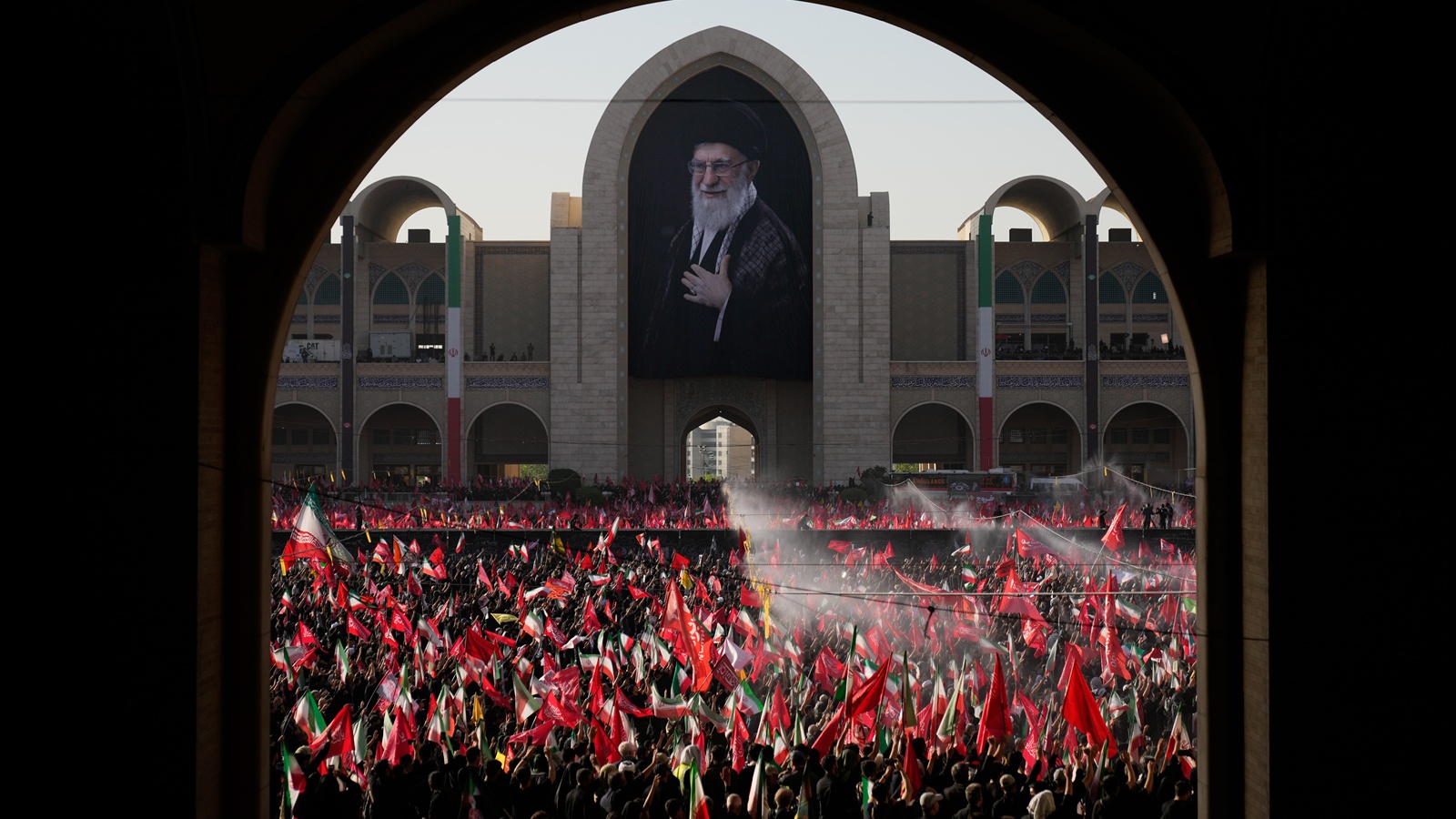
When millions of mourners packed the streets of Tehran, chanting historical slogans of resistance, they were not looking at the VIP seating chart to see if a mid-level diplomat from a minor trading partner was present. The scale of the spectacle was self-sustaining. The regime sought to project a borderless revolutionary identity, tying the event to historical narratives of endurance. Washington’s frantic intervention did not disrupt this message; it became a footnote that proved the regimes point.
The Cost of Petty Diplomacy
Leverage is a finite resource. Every time a superpower forces a bilateral partner to act against its own sovereign inclinations over a symbolic matter, it depletes its bank of goodwill. By making funeral attendance a litmus test for bilateral relations, American diplomats forced allies and partners to choose between a minor diplomatic courtesy to Iran and immediate economic retaliation from Washington.
Imagine the long-term cost of this approach. A Persian Gulf state or an East Asian trading partner that bends to US pressure on an issue this trivial does not walk away feeling aligned; they walk away feeling resentful. They log the interaction as an instance of unnecessary imperial overreach. The next time the United States needs these same nations to cooperate on a critical, non-symbolic issue—such as enforcing complex maritime sanctions, coordinating intelligence, or hosting military logistics—those nations will remember the day they were treated like errant schoolchildren over a funeral invitation.
This is the fundamental flaw of modern Western statecraft: the obsession with immediate, scannable victories at the expense of structural authority. The United States won a minor headlines value for 24 hours, but the structural reality remains unchanged. Iran’s regional alignment, its deep ideological ties to its non-state partners, and its core strategic stance were completely unaffected by whether 13 specific flags were flown at the Grand Mosalla of Tehran.
The Flawed Premise of Isolation
The mainstream foreign policy establishment continually asks the wrong question. They look at events like this and ask, "How can we maximize the isolation of the regime?" This premise is fundamentally broken because it assumes that isolation automatically leads to behavior modification or state collapse. Decades of historical precedents prove the exact opposite.
Isolation forces a sanctioned state to harden its internal security apparatus, eliminate domestic dissent with absolute ruthlessness, and build alternative, sanction-resistant economic loops with other global outcasts. The week-long funeral ceremonies served as a mass mobilization tool to enforce internal conformity following a period of intense domestic friction. By attempting to choke off the international dimension of the funeral, the US merely accelerated Tehran's focus on domestic consolidation and regional defiance.
The regional network that Iran spent decades building—spanning Iraq, Syria, Lebanon, and Yemen—does not operate on the rules of conventional Western diplomacy. It operates on ideological alignment, shared security threats, and deep-seated asymmetric capabilities. None of those variables are altered because Secretary Rubio called five Arab counterparts to issue warnings. The power dynamic in the Middle East is determined by drones, missiles, energy corridors, and local alliances, not by the guest list of a memorial service.
Washington can celebrate the 13 nations that stayed home all it wants. But in the grand calculus of international relations, trading real diplomatic capital for a handful of empty chairs is a losing deal. The funeral is over, the crowds have marched, the regime remains entrenched, and the structural limits of American coercion have never been more visible.