The operational reality of managing state visits in historically volatile regions requires balancing symbolic diplomatic engagement against an active threat vector. The arrival of King Charles III and Queen Camilla in Belfast for a three-day tour illustrates this delicate equilibrium. While public-facing communications emphasize cross-community reconciliation and cultural integration, the underlying infrastructure relies on a highly sophisticated, multi-agency containment strategy designed to mitigate asymmetric threats without alienating local populations.
Analysing the visit reveals a calculated deployment of soft-power diplomacy operating within a strict hard-security framework, revealing the structural mechanics required to maintain stability in a post-conflict environment.
The Asymmetric Threat Vector and the Substantial Threat Level
The deployment of a high-visibility policing operation by the Police Service of Northern Ireland (PSNI) is a direct response to a measurable escalation in militant activity. The official security threat level in Northern Ireland is classified as substantial, indicating that an attack remains highly likely. This assessment is driven by specific tactical actions from dissident republican groups, primarily the New IRA, which continues to reject the frameworks established by the 1998 Belfast Agreement.
The threat matrix is defined by recent operational precedents:
- The Dunmurry Incident: A successful detonation of an improvised explosive device (IED) targeting a police station, which failed to cause casualties but demonstrated viable operational capability.
- The Lurgan Incident: A coordinated bomb deployment at a police facility in County Armagh. Although the device failed to detonate, it confirmed active logistics and intent.
[Dissident Republican Groups] ---> Asymmetric Tactics (IEDs) ---> Target: State Infrastructure
                                                                           |
[State Security Response] <--- High-Visibility Containment <--------------+
This operational climate dictates the deployment of an unannounced arrival strategy. By minimizing the window of public anticipation, state security apparatuses reduce the timeline available for hostile actors to conduct reconnaissance, acquire assets, or coordinate logistics.
The Dual-Track Soft Power Framework
To offset the stark visual presence of tactical security forces, the visit employs a dual-track diplomatic framework targeting distinct social and political pressure points within the region.
1. Cultural Neutralization via the Fleadh Cheoil na hÉireann
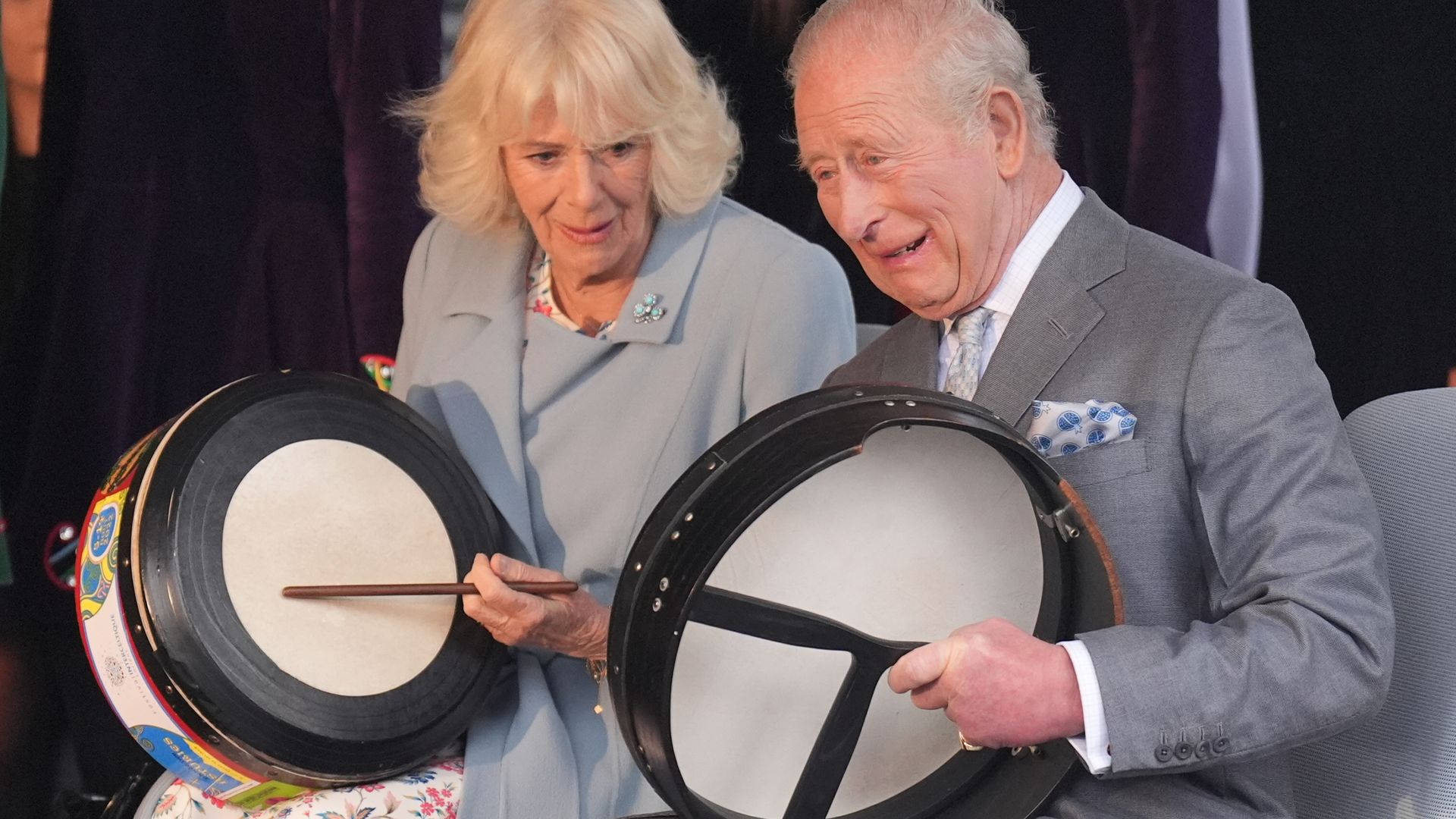
The decision to center the opening day of the tour around Thompson Dock and the organizers of the world’s largest Irish music festival serves a precise strategic function. By engaging with traditional Irish music, language, and culture—historically associated with nationalist identity—the British monarchy actively depoliticizes cultural symbols.
The inclusion of linguistic gestures, such as the King’s previous usage of Irish Gaelic phrases ("tráthnóna maith, a Chéad Aire"), functions as a mechanism to lower political friction. It signals a formal validation of nationalist culture, shifting the monarchy’s role from an emblem of unionist hegemony to a neutral institutional actor capable of operating across traditional sectarian divides.
2. Civic Alignment via Social Justice Interventions
Simultaneously, the itinerary leverages Queen Camilla’s institutional focus on Violence Against Women and Girls (VAWG). This choice targets a critical civic vulnerability in Northern Ireland, where the PSNI reports that 30 women or girls have been violently killed since 2020 within a population of fewer than two million.
By prioritizing an objective social crisis that transcends constitutional politics, the state apparatus shifts the public narrative away from the constitutional question (Unionism vs. Nationalism) and toward universal civic governance.
Macro-Diplomatic Synchronization and the Republic of Ireland
The visit to Belfast does not occur in a vacuum; it is synchronized with broader diplomatic maneuvers between London and Dublin. A day prior to the royal arrival in Northern Ireland, Irish President Catherine Connolly met with the King at Buckingham Palace, issuing a formal invitation for a state visit to the Republic of Ireland.
This cross-border sequencing carries significant diplomatic weight:
| Metric | Historical Precedent (2011) | Proposed State Visit |
|---|---|---|
| Monarchical Era | Queen Elizabeth II | King Charles III |
| Diplomatic Context | Post-Good Friday Agreement Normalization | Post-Brexit Framework Stabilization |
| Geopolitical Function | Historic Reconciliation | Reinforcing the Anglo-Irish Bilateral Axis |
By accepting this invitation, the Crown signals that its engagement with Northern Ireland is structurally aligned with maintaining strong bilateral relations with Dublin. This coordination effectively undercuts the narrative of British isolationism, framing the Belfast tour as part of a wider, cooperative island-of-Ireland strategy.
Structural Vulnerabilities in Public Engagement
Despite rigorous planning, executing a royal visit in a divided society exposes deep-seated structural issues that security frameworks can suppress but not resolve. The primary operational bottleneck remains the requirement to visit both nationalist and unionist areas. While essential for maintaining the appearance of political neutrality, this dual-exposure strategy doubles the geographical search area and significantly increases the number of un-vetted civilian contact zones.
Furthermore, the domestic security environment in Northern Ireland is currently strained by an unrelated but highly volatile variable: a record surge in racially motivated hate crimes. PSNI data indicates over 1,500 racist hate crimes and 2,367 race incidents over the past year, driven by systemic unrest such as the rioting in Ballymena.
This horizontal escalation of violence introduces an unpredictable secondary threat vector. The resource allocation required to monitor far-right elements and protect marginalized communities strains the PSNI’s operational capacity, limiting the density of personnel available for the dedicated, long-term cordoning of royal transit routes.
Operational Execution Strategy
To successfully navigate these intersecting vulnerabilities, state security forces must transition away from static defense models toward a dynamic, intelligence-led containment strategy. The final phases of this three-day tour will require a strict adherence to three tactical imperatives.
First, security commanders must maintain absolute compartmentalization of scheduling information. Transit times and specific venue handovers should be disseminated on a strictly need-to-know basis to preventing internal information leaks. Second, the PSNI and metropolitan security detachments must utilize overt, high-visibility positioning in unionist enclaves to deter dissident disruption, while employing low-profile, plain-clothes intelligence cordons in historically nationalist areas to avoid provoking community resentment.
Finally, the state must continue to rely on the soft-power momentum generated by the cross-border diplomatic endorsements from Dublin. By binding the legitimacy of the visit to a broader framework of Anglo-Irish cooperation, the administration effectively raises the political cost of disruption for dissident groups, rendering any security breach an attack not just on the British Crown, but on the stabilized geopolitical equilibrium of the entire region.