Silence.
Not the polite hush of a golf gallery or the quiet of a library reading room, but the heavy, suffocating quiet that falls over eighty thousand people when a helmet stays still on the turf and trainers wave for help that comes with flashing lights. You hear the hum of stadium generators. You hear the distant squeak of a cleat shifting in the grass. You hear your own heart hammering against your ribs because your brain is running through every worst-case scenario it has ever seen on a Sunday afternoon.
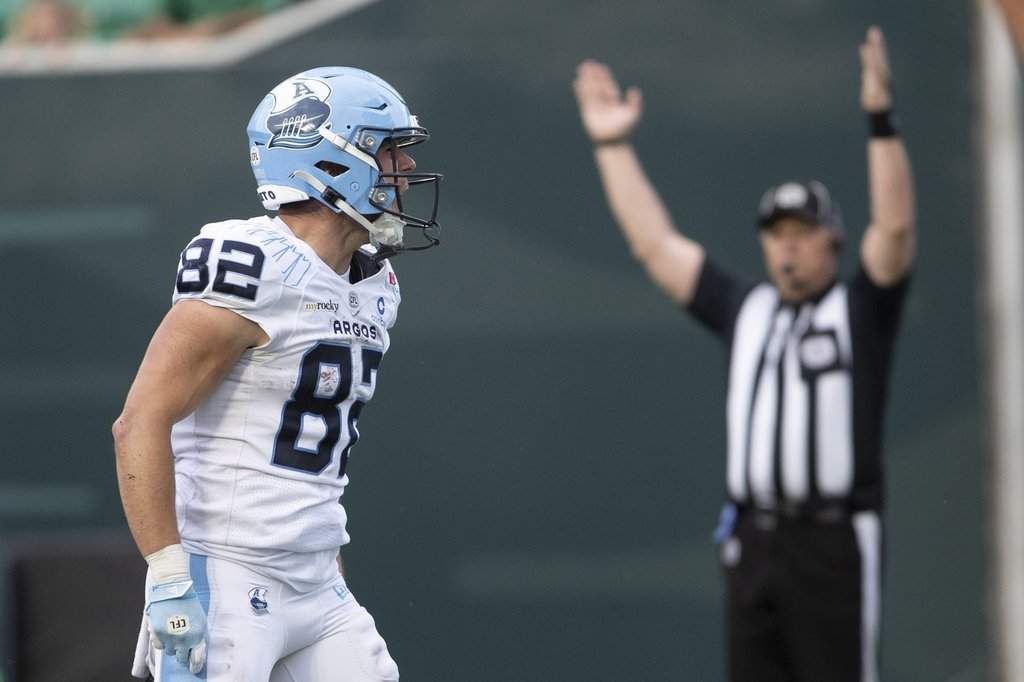
When Green Bay Packers wide receiver Christian Watson left a game in an ambulance and later came back to play again, the internet did what the internet always does. It flattened a complicated human ordeal into a neat little headline about "resurrection."
Resurrection sounds glorious. It sounds clean. It skips the part where a young man is strapped to a backboard, staring up at bright stadium floodlights and wondering if his legs will move the way they used to, or if his career—or worse, his quality of life—just hit a brick wall.
I know what it feels like to wait on news that refuses to hurry. Years ago, during a late-autumn high school game in the Midwest, I stood on a cold sideline watching a teammate lie motionless after a helmet-to-helmet collision that rattled the teeth in my head from ten yards away. The ambulance siren sounded small out there in the open air, almost pathetic, yet it carried all the dread in the world. When he walked into school two weeks later with a stiff neck and a hollow look behind his eyes, the adults around him celebrated a miracle. He just looked tired. He looked like someone who had been handed a second chance without being told what it cost to keep it.
That is the part we miss when we treat a player returning from an ambulance ride like a superhero climbing out of a phone booth.
The Weight of Flashing Lights
To understand why Christian Watson's return hits people so hard, you have to strip away the highlight reels and look at what an ambulance on a football field actually represents.
Football is a collision sport built on speed and torque. A six-foot-four receiver moving at full stride carries enough momentum that a sudden stop or an awkward landing transfers violent forces straight through joints, soft tissue, spine, and brain. Most injuries in the NFL end with a player limping to the blue medical tent, grimacing, maybe getting carted off to the locker room so he does not have to face eighty thousand pairs of eyes while his season unravels.
An ambulance is different. An ambulance signals escalation. It tells the crowd, the television broadcast, the coaching staff, and the player's family that sideline evaluation is no longer enough—that imaging, stabilization, or hospital observation is required before anyone can exhale.
Let us be completely clear here: I am using a metaphor when I compare a stadium ambulance to a trapdoor opening beneath a performer's feet. A real ambulance is a vehicle of care, staffed by professionals trained to protect a patient first and foremost. Yet for the person inside it, the emotional effect can feel like falling through a floor you thought was solid. One second you are chasing a football, competing for a paycheck and a legacy, living inside the rhythm of your own athleticism. The next second you are horizontal, listening to sirens and medical questions, stripped of control.
In the wake of a scare like that, every detail gets pulled apart under a microscope. Fans ask how long he was out. They ask what the diagnosis was. They ask how he could possibly come back so fast, or why he came back at all.
Those questions are fair. Watching someone roll away in an ambulance and then reappear on the field triggers a tug-of-war inside every sports fan. Part of you cheers because you love the game, you love seeing a competitor overcome bad luck, and you want the story to have a triumphant beat. Another part of you—the part that has grown older, or has had a parent go through a health scare, or has watched too many careers end in quiet pain—wonders whether courage and recklessness sometimes wear the same jersey.
Inside the Quiet After the Roar
To make the invisible stakes of that return easier to picture, let us construct a hypothetical scenario—clearly labeled as fiction, though drawn from real patterns in sports medicine and locker-room psychology.
Picture a hypothetical receiver named Marcus, twenty-five years old, built like a track sprinter who grew too tall for his own good. On a crisp October Sunday, Marcus leaps for a ball over the middle, takes a brutal hit mid-air, and lands hard. He does not get up. Within minutes, the medical team stabilizes him, loads him into an ambulance, and takes him to a local hospital. Scans come back cleaner than feared. He stays overnight, goes home sore and shaken, and begins the slow climb back.
Three weeks later, Marcus jogs out of the tunnel. The crowd roars. A commentator calls him unbreakable.
Nobody in the upper deck sees Tuesday morning at 6:30 a.m.
In that hypothetical Tuesday morning, Marcus wakes up before his alarm, not because he is bursting with energy, but because his brain replays the landing like a scratched record. His hamstrings feel tight—or maybe that tightness is just his nervous system guarding against another violent stretch. When a coach asks him to run a deep post route in practice, Marcus hits the top of his stem and feels a split-second hesitation, a tiny tax paid to self-preservation. Not cowardice. Just biology and memory negotiating terms.
That negotiation is the real story whenever a player comes back from a frightening injury. Recovery is never just a line on a trainer's chart. It is physical tissue healing at its own stubborn pace while psychological trust rebuilds much slower.
Think of it like repairing a suspension bridge after a heavy storm. Engineers can weld new steel, replace snapped cables, and declare the span safe for traffic. The structure holds. Still, the first few drivers who cross it grip the steering wheel a little tighter, listening for a sound that is not there. A human body works the same way, except the driver and the bridge are the same person.
Why We Call It Resurrection—and What Gets Lost
There is a reason writers reach for words like "resurrection" when a player returns after an ambulance ride. Humans are pattern-seeking creatures wired for dramatic arcs: fall, darkness, return, triumph. Sports feeds that appetite better than almost anything else because the stakes are visible and the clock is always ticking.
Yet calling a return a resurrection subtly distorts reality. A resurrection implies going into the ground and coming back whole, untouched by what happened. Real athletic comebacks rarely work like that. Even when a player passes every medical check and looks explosive on film, something has shifted. Perspective sharpens. Mortality—or at least physical vulnerability—stops being an abstract concept reserved for retired veterans.
Consider what happens next in the locker room after a scare like Watson's:
Teammates look at the player differently, sometimes with extra warmth, sometimes with quiet awe. Coaches value his availability even more, knowing how fragile a game plan becomes when key playmakers go down. And the player himself has to answer a question nobody on television asks: How much of myself am I willing to spend on a game that will eventually move on without me?
That question is scary. It is also honest.
If you have ever pushed through exhaustion at a demanding job, or returned to a routine after a health scare, or tried to show up strong for people who expect you to be steady, you know that tension. You want to be dependable. You want to prove you are still capable. At the same time, a quieter voice asks whether proving yourself is worth the cost if the bill comes due later.
We do not have to pretend NFL players are fragile glass dolls to respect how heavy that question is. Football players are extraordinary athletes—stronger, faster, and tougher than almost anyone watching from a couch. Their toughness is real. Their risk is real, too. Holding both truths at once is not weakness; it is maturity.
The Unseen Ledger of a Comeback
When an athlete returns to action after leaving in an ambulance, fans often treat the first big play back as proof that the story is finished. A catch over the middle. A long run after the catch. A celebration near the end zone.
It looks like closure. Usually, it is just another chapter.
In sports medicine and performance psychology, returning to competition is a milestone, not the finish line. A body has to absorb real game speed again—not controlled drills in shorts, not scripted plays against scout-team defenders, but full-contact collisions at night when adrenaline is high and fatigue clouds judgment. Every step tests whether the healed area trusts the rest of the body, and whether the mind trusts the body not to betray it.
And the medical side itself is rarely a single dramatic verdict. It is a sequence of assessments, clearances, symptom checks, and cautious progressions. Even when a player is cleared to play, clearance means the risk is deemed acceptable under medical guidelines—not that zero risk exists. In a collision sport, zero risk does not exist on any snap.
Admitting that uncertainty makes watching the game more intense, not less. When you stop treating a comeback like a magic trick and start seeing it as a deliberate, hard-won return to a demanding craft, the athlete stops being a mere symbol on your screen. He becomes a person making real choices under real pressure.
What Lingers After the Final Whistle
Long after the box score is filed away and the highlight clips stop looping on sports shows, the image that stays with you is not a stat line.
It is the sight of a player standing on a painted blade of grass under stadium lights, chest rising and falling against the chill air, knowing what the inside of an ambulance looks like—and choosing to step back into the arena anyway.