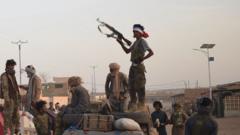
The myth of the strongman is bleeding out on the streets of Bamako and the desert tracks of Kidal. For three years, General Assimi Goïta and his junta promised that trading Western alliances for Russian muscle would secure Mali’s sovereignty. That gamble has now officially failed. The coordinated April 2026 offensive by Al-Qaeda-linked JNIM and the Tuareg-led Azawad Liberation Front (FLA) did more than just seize territory; it decapitated the junta’s leadership and exposed the "Africa Corps" as a paper tiger. When a car bomb effectively liquidated Defense Minister Sadio Camara—the very man who brokered the deal with Moscow—the message was clear. The regime is no longer fighting a war; it is fighting for air.
The Alliance of Convenience That Changed the Map
For over a decade, the international community treated Mali's northern separatists and its jihadist insurgents as two distinct, often warring, threats. The junta’s fatal error was providing them with a common existential enemy. By abandoning the 2015 Algiers Peace Accord and pursuing a scorched-earth policy in the north, Goïta forced the secular FLA and the religious extremists of JNIM into a tactical marriage that was once unthinkable.
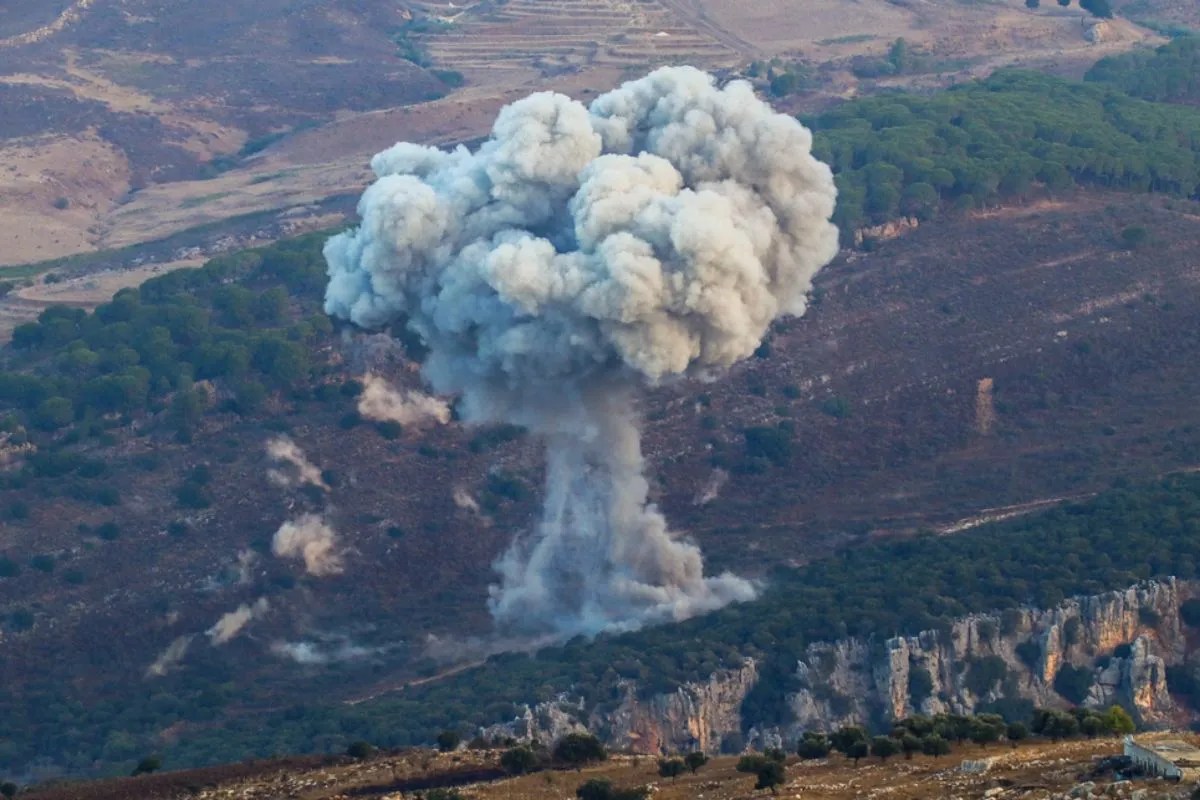
This isn't a merger of ideologies. It is a division of labor. While the FLA focuses on reclaiming its ancestral territory in Kidal and Gao, JNIM provides the asymmetric strike capabilities required to paralyze the capital. The April 2026 strikes were a masterclass in this cooperation. While the world watched the dramatic recapture of Kidal, JNIM cells were already detonating explosives at the Kati military base and the Senou airport.
The strategy is simple:
- Paralyze the south: Use blockades and urban terror to prove the junta cannot protect its own doorstep.
- Decimate the center: Attack logistics hubs like Mopti and Sévaré to snap the spine of the Malian Army (FAMa).
- Reclaim the north: Exploit the vacuum left when FAMa pulls troops south to defend the seat of power.
The Russian Mirage and the Africa Corps Failure
Moscow’s pitch to the Sahel was enticing: "We provide security without the lectures on human rights." But security is a product, and in Mali, the product has proven defective. The successor to the Wagner Group, the Africa Corps, was supposed to be a more disciplined, state-sanctioned evolution of mercenary power. Instead, it has inherited all of Wagner’s brutality with none of its localized adaptability.
The Battle of Tinzaouaten in late 2024 was the first fracture. The recent fall of Kidal is the total break. Reports from the ground indicate that during the April offensive, Russian mercenaries were not the elite vanguard they claimed to be. In Kidal, they were negotiated out of the city, literally escorted away while their Malian counterparts were taken hostage. This wasn't a tactical retreat; it was a realization that their lives weren't worth the paycheck Goïta can barely afford to sign.
The "Mr. Russia" of the junta, Sadio Camara, is dead. With his assassination, the primary bridge to the Kremlin has collapsed. Moscow, currently overextended in other theaters, is unlikely to double down on a failing investment. The junta now finds itself in the most dangerous position a military regime can occupy: they have no victory to show for the blood they’ve spilled, and no ally left to blame for the defeat.
Economic Suffocation and the Domestic Breaking Point
While the headlines focus on gunfire in Bamako, the real threat to Goïta’s survival is the hum of a failing generator. Mali is broke. The withdrawal from ECOWAS and the formation of the Alliance of Sahel States (AES) was marketed as a move toward "true independence," but it has resulted in a crippled economy.
The fuel blockades orchestrated by JNIM in the months leading up to the April offensive were a death blow. Bamako has been enduring 18-hour daily blackouts. When the lights go out, the population stops looking at the junta as liberators and starts seeing them as the cause of their misery. The junta’s response has been predictable: increased censorship and the detention of political dissidents. However, you cannot arrest a power outage, and you cannot intimidate a starving population forever.
The Breakdown of the Officer Corps
The most overlooked factor in the current crisis is the internal rot within the FAMa officer corps. Not every colonel in Bamako is a Goïta loyalist. Many viewed the Russian pivot with skepticism, and that skepticism has turned into resentment as casualty lists grow.
The death of the Defense Minister and the alleged wounding of the National Intelligence Chief have created a power vacuum. In military regimes, vacuums are filled by coups. The rank-and-file soldiers, many of whom have seen their brothers-in-arms abandoned by Russian "instructors" in the north, are a tinderbox.
A State in Splinters
Mali is no longer a unified state; it is a collection of fiefdoms. The north is back in the hands of the FLA. The central regions are a patchwork of JNIM-controlled villages and besieged army outposts. The south is a paranoid fortress waiting for the next car bomb.
The junta's strategy was built on the premise that they could win a conventional war against an unconventional enemy. They ignored the political grievances of the Tuaregs and the socio-economic grievances that feed jihadist recruitment. By the time they realized the "Russian solution" was a mirage, the rebels were already at the gates of Kati.
There is no "rebuilding" from this offensive. The territorial losses are too great, and the psychological blow to the regime is likely terminal. The only question remains whether Goïta will attempt a bloody, last-ditch stand in Bamako or if the next coup will come from within his own inner circle before the rebels reach the palace.
History shows that when military regimes lose their primary reason for existence—the promise of security—they don't fade away. They shatter. Mali is currently listening to the sound of the glass beginning to crack.
The era of the colonels is ending. The era of the fragmented Sahel has begun.