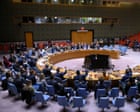
The fluorescent lights of the United Nations headquarters in New York do not hum, but the silence they cast feels heavy, almost clinical. In these corridors, power is rarely wielded with a clenched fist. Instead, it moves in the rustle of tailored suits, the muted click of heavy wooden doors closing, and the polite, devastating phrasing of diplomatic cables.
To the casual observer, the title of Vice President of the UN General Assembly sounds like a bureaucratic afterthought. It is a position often dismissed as ceremonial, a rotating seat meant to keep the massive machinery of global governance oiled and moving. But in the theater of international relations, symbols are currency. For those who lack the traditional levers of global power—massive armies, dominant currencies, or veto-wielding seats on the Security Council—a symbol is sometimes the only shield available.
Recently, the Palestinian delegation sought that shield. They quieted their ambitions, gathered their diplomatic tallies, and prepared to step into the vice-presidential rotation. It was a bid for a sliver of institutional real estate, a chance to hold the gavel, if only for a moment.
Then the phone calls began.
The Anatomy of the Squeeze
Diplomacy at this level functions much like a high-stakes poker game where the chips are invisible and the rules are written in invisible ink. When word traveled to Washington that the Palestinian leadership was positioning itself for the vice-presidency, the response from the United States was swift, quiet, and immense.
It did not come in the form of a public declaration or a fiery press conference on the state department steps. That is not how the machinery works. Instead, it manifested as a series of private, intense conversations behind closed doors. American diplomats reached out directly to Palestinian officials with a simple, unyielding message: withdraw the bid.
To understand why a seemingly minor title could trigger such a heavy-handed response, one has to look at the delicate scaffolding of American foreign policy. For decades, Washington has maintained a strict posture regarding Palestinian participation in international bodies. The stance is rooted in legislation passed by Congress in the 1990s, which mandates the complete defunding of any UN agency that grants full membership or elevated status to the Palestine Liberation Organization (PLO) outside of a negotiated settlement with Israel.
But this wasn't an agency membership. It was a rotational role within the General Assembly. Why the panic?
The answer lies in the concept of precedent. In the calculus of statecraft, allowing a non-member observer state to assume a leadership role—even a temporary, organizational one—is viewed by opponents as a dangerous stepping stone. It builds a quiet legitimacy. It normalizes the presence of a Palestinian flag at the high tables of global governance.
For the United States, allowing this bid to succeed meant risking a chaotic cascade. It would invite fierce domestic political backlash at home and potentially force the defunding of crucial UN programs if legal triggers were met. For Israel, it represented an unacceptable encroachment, an attempt by Ramallah to bypass direct negotiations and achieve the trappings of statehood through international bureaucracy.
So, the pressure was applied.
The Weight on Ramallah
Consider the position of a Palestinian diplomat in Ramallah or New York. You are tasked with advancing the cause of a people living under decades of occupation, fragmentation, and political paralysis. Your options are severely limited. You cannot outspend your rivals. You cannot outmuscle them. Your primary arena is the court of global opinion and the dense thicket of international law.
When the American delegation delivers an ultimatum, it does not arrive in a vacuum. It arrives with the weight of financial leverage, security coordination agreements, and the fragile survival of the Palestinian Authority itself.
The Palestinian Authority is a government existing in a state of perpetual financial vertigo. It relies heavily on international aid and the transfer of tax revenues collected by Israel to pay its teachers, its doctors, and its security forces. When Washington hints at displeasure, the tremors are felt instantly in the bank accounts of ordinary families in Ramallah, Nablus, and Hebron.
The dilemma is agonizing.
If you push forward with the bid, you score a symbolic victory. You show your public that you are still fighting, that you can still demand a seat at the table despite the immense odds. But the cost of that victory could be the literal bankruptcy of your administrative institutions. If you withdraw, you preserve the status quo, you keep the lights on, but you face the bitter wrath of a population that sees their leadership as capitulating to foreign pressure.
It is a choice between a pride that starves and a compromise that suffocates.
The Friction of the Voting Blocs
Behind the scenes, the American strategy wasn't limited to pressuring the Palestinians directly. A parallel campaign was launched to influence the broader voting blocs within the UN.
The General Assembly is often romanticized as a democratic forum where every nation, large or small, has an equal voice. In reality, it is a marketplace. Votes are traded like commodities. A promise of development aid here, a favorable trade tariff there, or perhaps a subtle hint that a bilateral security agreement might face delays if a country votes the "wrong" way.
American envoys worked the phones, engaging with European allies and developing nations alike. The objective was to ensure that if the Palestinians refused to blink, they would find themselves isolated when the ballots were cast. The message to the international community was clear: supporting this bid would introduce unnecessary friction into an already combustible global landscape. It would complicate broader peace efforts. It would alienate the world's superpower.
For many nations, the choice was simple mathematics. Is the symbolic elevation of Palestine worth risking a diplomatic rift with Washington? For most, the answer is a quiet, reluctant no.
This is the invisible architecture of global power. It is not always about the use of military might; it is about the capacity to define what is realistic and what is impossible for everyone else.
The Gavel Falls in Silence
In the end, the true nature of diplomacy is that its most significant battles are the ones that never happen. The public rarely sees the moment of surrender. There are no dramatic walkouts, no tears shed on camera.
Instead, a letter is quietly drafted. A request is withdrawn. A agenda is subtly amended.
The Palestinian leadership, recognizing the wall of opposition built before them and the severe consequences of defying it, moderated their stance. The bid for the vice-presidency was quietly shelved, replaced by the mundane, exhausting reality of waiting for another day, another rotation, another crack in the diplomatic armor.
The halls of the United Nations emptied as the evening session concluded. The delegates drifted out into the New York night, heading toward dinners and receptions where the conversation would shift to other crises, other resolutions.
In the empty General Assembly hall, the green-carpeted desks sat silent under the dimming lights. The podium remained vacant. The gavel lay still, its wooden surface smooth and untouched by the hands of those who had spent weeks calculating its weight, only to find that the price of holding it was far higher than they could afford to pay.