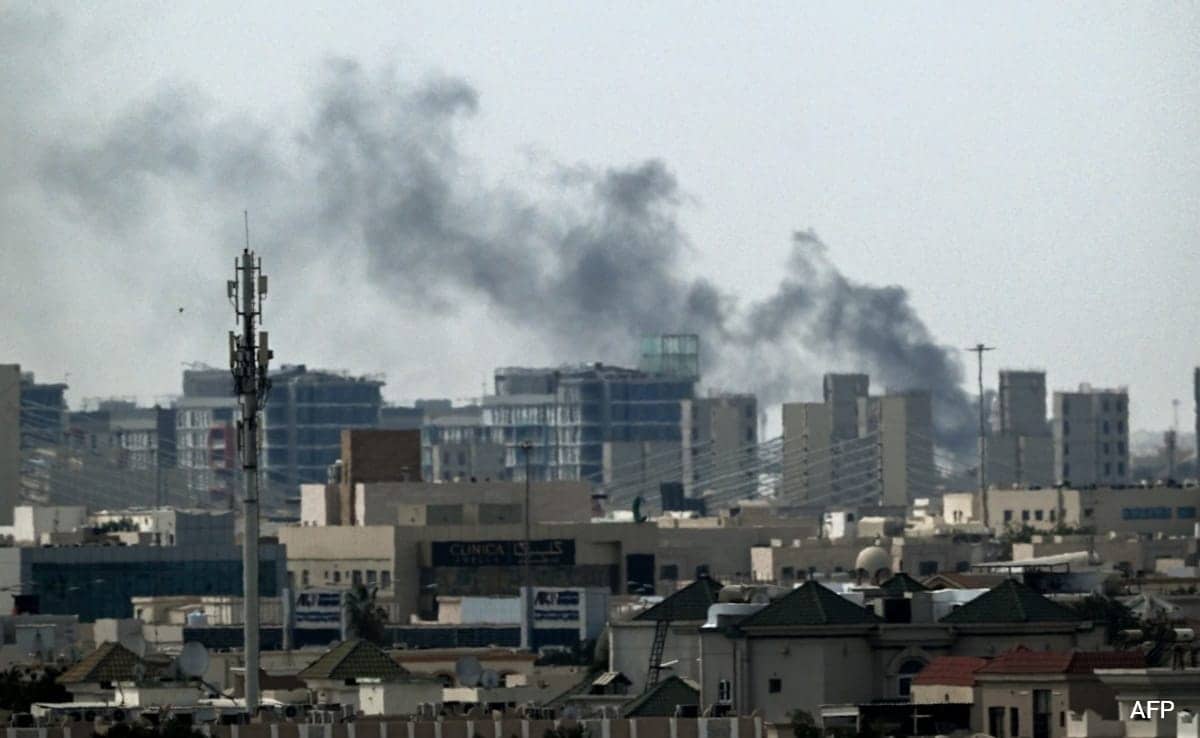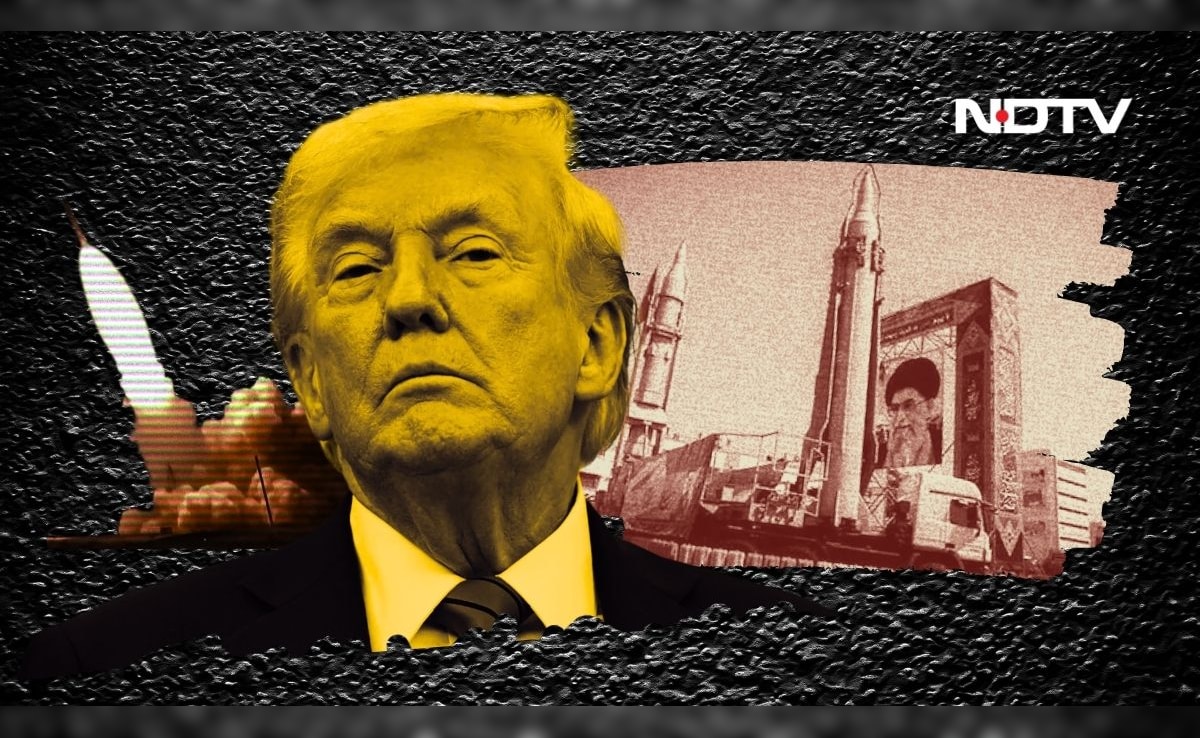
The smoke hanging over Tehran and the silent halls of the Natanz enrichment facility tell two different stories about why the United States and Israel launched Operation Epic Fury on February 28, 2026. President Donald Trump has framed the massive aerial campaign, which resulted in the death of Supreme Leader Ali Khamenei, as a pre-emptive strike to stop a "nuclear disaster" and "obliterate" a program that was allegedly weeks away from a breakthrough. Yet, the friction between the administration's rhetoric and the technical reality on the ground suggests this war was triggered not by what Iran had, but by the terrifying uncertainty of what the U.S. could no longer see.
For years, the Iranian nuclear threat was a game of cat and mouse played in the light of international inspections. That light went out. Following the June 2025 strikes that damaged three key sites, Tehran effectively blinded the International Atomic Energy Agency (IAEA). When you stop the cameras and bar the inspectors, the vacuum isn't filled with nothing; it is filled with the worst-case scenarios of military planners. The decision to go to war in February 2026 was the culmination of a "knowledge gap" that became politically and strategically intolerable for the White House.
The Mirage of Total Obliteration
In the summer of 2025, the administration claimed that Iranian nuclear sites had been "totally and completely destroyed." This was a bold assertion that ignored the fundamental nature of modern nuclear infrastructure. Facilities like Fordow are buried so deep within mountains that even the most advanced bunker-busters often only collapse the "straws"—the ventilation and access shafts—rather than the "drink," which is the centrifuge halls themselves.
By January 2026, satellite imagery began showing a different reality. Activity at Natanz and Isfahan suggested that while the buildings above ground were scarred, the technical heart of the program remained beating. This created a political trap for the administration. If the program was "obliterated" in 2025, how could it be an "imminent threat" in 2026? The shifting rationale—moving from nuclear enrichment to "missiles that will soon reach America"—points to a deeper anxiety. The administration wasn't striking a finished weapon; they were striking the potential for one that they could no longer monitor with any degree of certainty.
The Intelligence Vacuum as a Casus Belli
The true "red line" in the Middle East has always been enrichment to 90%, the threshold for weapons-grade material. Since 2024, Iran had hovered at 60%, a provocative level that serves no civilian purpose but remains a step away from a bomb. However, "breakout time" is a theoretical metric. Having the fuel is not the same as having a warhead. To turn highly enriched uranium into a deliverable weapon, a country needs a sophisticated "physics package"—the miniaturized components that trigger a nuclear blast.
The U.S. Intelligence Community assessment in late 2025 indicated that while Iran had the material, it had not reauthorized the actual weaponization program suspended in 2003. But intelligence is rarely a monolith. By February 2026, the absence of IAEA data allowed more hawkish voices in Washington and Jerusalem to argue that "absence of evidence is not evidence of absence." If the U.S. could not prove Iran wasn't building a bomb behind closed doors, the strategic logic shifted toward the assumption that they were.
The Failure of the "Oman Path"
Before the first bombs fell in late February, there was a frantic, short-lived diplomatic effort in Oman. The talks failed because the two sides were speaking different languages of power.
- The U.S. Demand: A total permanent halt to all enrichment and the destruction of the ballistic missile program.
- The Iranian Counter: Immediate removal of all "snapback" sanctions and a guarantee of no further military strikes.
The administration viewed the Iranian position as a stall tactic to buy time for the "physics package" to be completed. Tehran viewed the U.S. position as a demand for unconditional surrender. When these talks collapsed in early February, the path to Operation Epic Fury was paved. The administration decided that the cost of a "forever war" was lower than the risk of a "nuclear surprise."
The Missile Gap and the Reach of Tehran
While the nuclear program provided the moral justification, the ballistic missile program provided the immediate military urgency. The administration claimed Iran was developing missiles capable of reaching the United States. This is a significant escalation of previous assessments, which capped Iranian reach at roughly 2,000 kilometers—enough to hit Israel or U.S. bases in the Gulf, but far short of the American mainland.
The "imminent threat" cited by Secretary of State Marco Rubio likely referred to the Khorramshahr-4 and other solid-fuel variants that are harder to track and faster to launch. The fear was a repeat of the 2020 and 2025 strikes on U.S. bases, but on a scale that would overwhelm regional missile defenses like the Arrow or David’s Sling. By striking first, the U.S. sought to "raze the missile industry to the ground," yet the subsequent retaliatory strikes on the Fifth Fleet in Bahrain suggest that much of that arsenal was already dispersed to hidden "missile cities" underground.
A Region in the Crossfire
The war has moved far beyond the borders of Iran. By killing the Supreme Leader, the U.S. and Israel didn't just decapitate a government; they shattered a regional order. The "Axis of Resistance"—proxies in Lebanon, Iraq, and Yemen—now operates with a degree of autonomy that is arguably more dangerous than when they were under Tehran's direct control.
The economic fallout is just beginning. Strikes on oil facilities in the Gulf and the potential closure of the Strait of Hormuz have sent shockwaves through global markets. The administration’s gamble is that a short, sharp shock to the Iranian system will lead to a "once-in-a-generation" uprising by the Iranian people. However, history shows that foreign invasion often does the opposite, forcing even a dissatisfied population to rally around the flag against an outside aggressor.
The brutal truth is that we are witnessing a war of choice based on an intelligence "maybe." The U.S. struck because it could no longer tolerate the ambiguity of a nuclear program it couldn't see and a regime it couldn't predict. Whether this leads to a safer Middle East or a decades-long quagmire depends on whether the administration has a plan for the day after the smoke clears in Tehran.
Ask yourself if the mission is truly "complete" when the knowledge of how to build a bomb remains in the minds of the scientists, even if the labs are in ruins.
Would you like me to analyze the specific technical capabilities of the "physics package" Iran was allegedly developing?