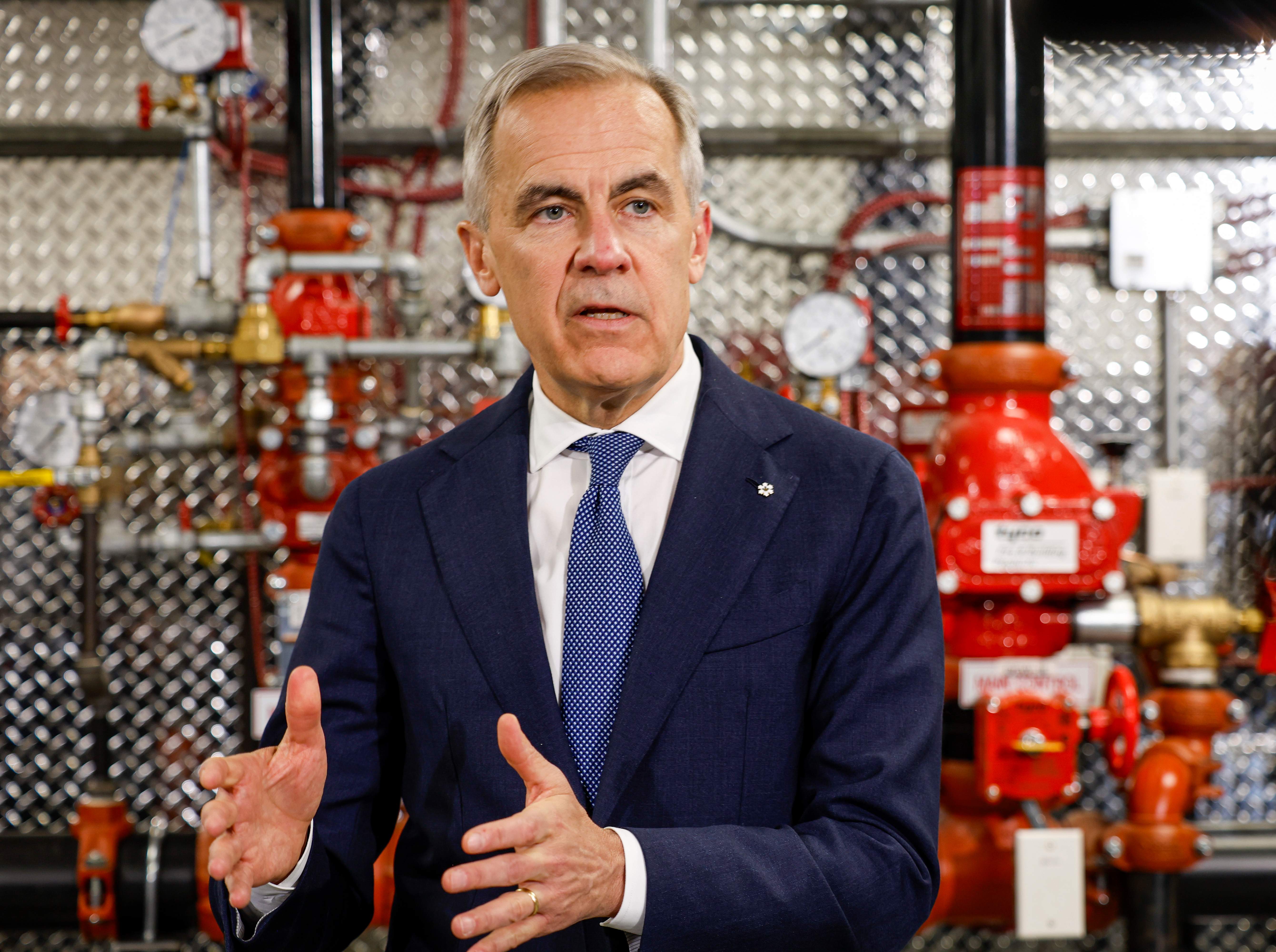
The Pentagon’s decision to freeze its participation in the historic Permanent Joint Board on Defense (PJBD) is not a minor bureaucratic hiccup. It is a direct retaliatory strike against Ottawa’s shifting geopolitical allegiances. While Canadian Prime Minister Mark Carney publicly insists that observers should not overplay the importance of the paused military board, his deliberate nonchalance masks a deep structural rift.
Washington is using the 86-year-old bilateral advisory body to signal that its defense umbrella is no longer unconditional, exposing a dangerous mismatch between Canada’s newly minted defense spending numbers and its broader strategic posture.
On paper, the logic behind the American freeze looks paper-thin. U.S. Undersecretary of Defense for Policy Elbridge Colby claimed the pause was triggered because Canada "failed to make credible progress on its defense commitments." Yet, only months prior, Ottawa engineered the single largest year-on-year increase in Canadian defense investment in a generation, injecting $63.4 billion into national defense in 2025. This historic push finally lifted Canada past the elusive NATO target of spending 2% of its gross domestic product on defense.
The Carney government has even committed to an additional $81.8 billion over the next five years, plotting a trajectory to hit the White House's aggressive 3.5% target established at the Hague Summit. If money were the actual issue, Washington would be celebrating a policy victory. It is not.
The Davos Rupture and the Sovereignty Shock
The true catalyst for the freeze sits on a server at the World Economic Forum, not in the ledger books of the Department of National Defence.
When Elbridge Colby announced the suspension of the PJBD via social media, he specifically attached a transcript of Mark Carney’s January speech in Davos. In that address, Carney spoke openly of a "rupture in the world order," advising middle powers to act collectively because "if we're not at the table, we're on the menu." The speech, widely interpreted as a direct rebuke of President Donald Trump’s isolationist trade policies and recurring threats to absorb Canada as the "51st state," deeply irritated the West Wing.
Washington’s message is blunt. If Ottawa wants to build a foreign policy independent of the American sphere, it will not do so under the comfortable protection of shared continental defense architecture.
The friction is magnified by a series of aggressive economic and diplomatic maneuvers:
- The Bridge Sabotage: The White House has actively threatened the completion of a critical international bridge project between Ontario and Detroit, using infrastructure as a tool of political leverage.
- The Alberta Subversion: Rumors continue to swirl regarding meetings between White House officials and leaders of Alberta’s separatist movement, including backroom discussions regarding a theoretical $500 billion line of credit for an independent, resource-rich province.
- The Beijing Pivot: Ottawa's strategic decision to quietly deepen diplomatic and commercial ties with China has triggered alarm bells across the American defense establishment, which views any backchannel to Beijing as a direct threat to North American security.
Hard Power and the Procurement Trap
By freezing the PJBD, Washington is applying direct pressure on upcoming, multi-billion-dollar Canadian procurement decisions.
The defense board, established in 1940 by Franklin D. Roosevelt and William Lyon Mackenzie King, has long served as the quiet engine room for continental defense planning, managing everything from early Arctic surveillance networks to the foundational agreements underlying NORAD. Its suspension does not halt active, day-to-day military operations, but it does deliberately inject friction into long-term strategic alignment.
The most immediate casualty of this friction is the ongoing negotiation surrounding the acquisition of U.S.-made F-35 fighter jets.
Canadian Defense Spending Trajectory (2025-2035 Goals)
+----------------+--------------------+-----------------------+
| Fiscal Year    | Total Spend (CAD)  | % of GDP Achievement  |
+----------------+--------------------+-----------------------+
| 2025           | $63.4 Billion      | 2.0% (NATO Benchmark) |
| 2026 (Current) | Ramping Upward     | Under Review          |
| 2035 (Target)  | $150.0 Billion     | 5.0% (US Demand)      |
+----------------+--------------------+-----------------------+
American defense contractors are aggressively lobbying Ottawa to finalize a massive purchase of these aircraft. However, senior Canadian defense officials have hesitated, raising concerns over Washington's insistence on retaining ultimate, unilateral control over the software updates and mission-data files required to operate the jets.
By pulling out of the policy board, the Pentagon is sending a clear warning. If Canada attempts to source its hardware elsewhere or demands operational autonomy over American tech, the entire continental defense partnership will be systematically dismantled.
The Illusion of a Quiet Pause
Carney’s attempt to downplay the crisis by noting that the board has not formally met since November 2024 is a calculated political defense mechanism.
It is designed to soothe a domestic public increasingly wary of American erraticism. It ignores the reality that formal committees only languish when the political will to sustain them has dissolved. The freeze is a calculated escalation, transforming a passive absence of meetings into an active, public diplomatic sanction.
Canada remains trapped in a structural paradox. Its military infrastructure, its early-warning radar installations in the Arctic, and its maritime defense systems are inextricably woven into the fabric of the American military apparatus. It cannot decouple its defense sector overnight, yet it can no longer rely on the political stability of its southern neighbor.
While Foreign Affairs Minister Anita Anand maintains that "people-to-people ties are strong" and that Ottawa remains ready for constructive discussions, the reality is that Washington has changed the rules of the game. Forcing an allied nation to choose between absolute geopolitical compliance and continental isolation is no longer a fringe policy proposal inside the Pentagon. It is operational reality.