Two hundred eighty-one thousand.
Say it slowly, the way you would count coins dropped onto a stone floor in a quiet room, each clink a tiny weight settling out of sight while the rest of the world keeps talking. In a wire report, 2.81 lakh—two hundred eighty-one thousand people—looks neat. It fits inside a headline. It sits beside a comma and a date and moves on by noon.
When you have spent enough time listening to people who lost everything between dusk and dawn, numbers stop behaving like numbers. They turn into dust on a windowsill. They turn into a child’s shoe left behind in a hallway because nobody had a second hand to carry it. They turn into the sudden, hollow quiet of a kitchen where the kettle is cold and the flour sack has a tear in the bottom.
I cannot pretend to know every alley of Sanaa, Taiz, Marib, or Hodeidah from the inside out, nor can I claim to sit beside every family watching a front line shift across a ridge. I am writing from outside the blast radius, with all the limits and honest doubts that brings. Sometimes the hardest part of writing about a long war is admitting how easily distance numbs us—how a conflict that drags on for years starts sounding like background static, even to people who care. Still, I have stood in enough rooms where people were trying to explain sudden loss to children who only knew yesterday’s routine to recognize the look on someone’s face when home stops being a noun and becomes a memory.
To make sense of what a figure like 281,000 displaced people actually means on the ground, let me introduce a hypothetical family—a composite drawn from real patterns of flight and shelter across Yemen rather than one single named household. Call the father Tariq, call his wife Layla, and call their eight-year-old son Sami. They are fictional characters used here to ground real human stakes; the displacement statistics, economic pressures, and fractures in basic services are real.
The Night a Front Line Moved Across the Ridge
Displacement rarely begins with a grand speech or an orderly evacuation line. Usually, it begins with a sound that does not belong to the hour.
In our hypothetical scenario, Tariq is folding a spare blanket on a woven mat while Layla checks the latch on the courtyard gate. Outside, the air carries that dry, mineral sharpness common to Yemen’s highlands—cold enough to sting the knuckles after sunset, warm enough by midday to make stone radiate heat. For months, people in their district have lived in a strange, suspended truce with uncertainty. Markets opened. Water trucks rattled down uneven lanes when fuel allowed. Neighbors traded news about prices the way people elsewhere trade news about traffic.
Then came the shelling a few valleys over, followed by rumors that the road north might close by morning.
Think of a family like a tightrope walker carrying a heavy crate across a narrow wire. Everything works—balance, breath, muscle, trust—until a sudden gust hits from the side. You do not fall because you forgot how to walk. You fall because the weight shifts faster than your hands can adjust.
When displacement hits, every ordinary weight shifts at once. You do not pack a suitcase like a traveler heading to a cousin’s wedding. You grab what fits into two arms without slowing your stride: a document folder wrapped in plastic, a tin of dried milk, a heavy coat, maybe a small radio or a charger for a phone whose battery is already at thirty percent. You leave behind the cast-iron skillet seasoned over ten years. You leave behind the schoolbooks stacked neatly under the table.
Why do people leave in waves that keep swelling past two hundred eighty-one thousand? Because war in Yemen has never been a single, clean clash between two armies on an empty field. It has unfolded across overlapping front lines, shifting alliances, economic strain, and fragile truces that crack just when families start daring to repair a roof or restock a shop. When clashes flare in one governorate or along a contested corridor, people flee toward districts they hope are quieter—only to find that safety in war is often temporary, conditional, and expensive.
A Map Drawn in Tarps and Borrowed Rooms
Once a family crosses out of their own neighborhood, the geography of their life changes shape.
Imagine a metaphor: a household is like a tree. Its roots are deep—kinship networks, familiar water sources, a clinic where the nurse knows your name, a baker who saves a warm loaf if you arrive late. Displacement pulls the tree up by the roots and sets it on bare rock. Even if someone hands it a bucket of water, it cannot drink the way it used to.
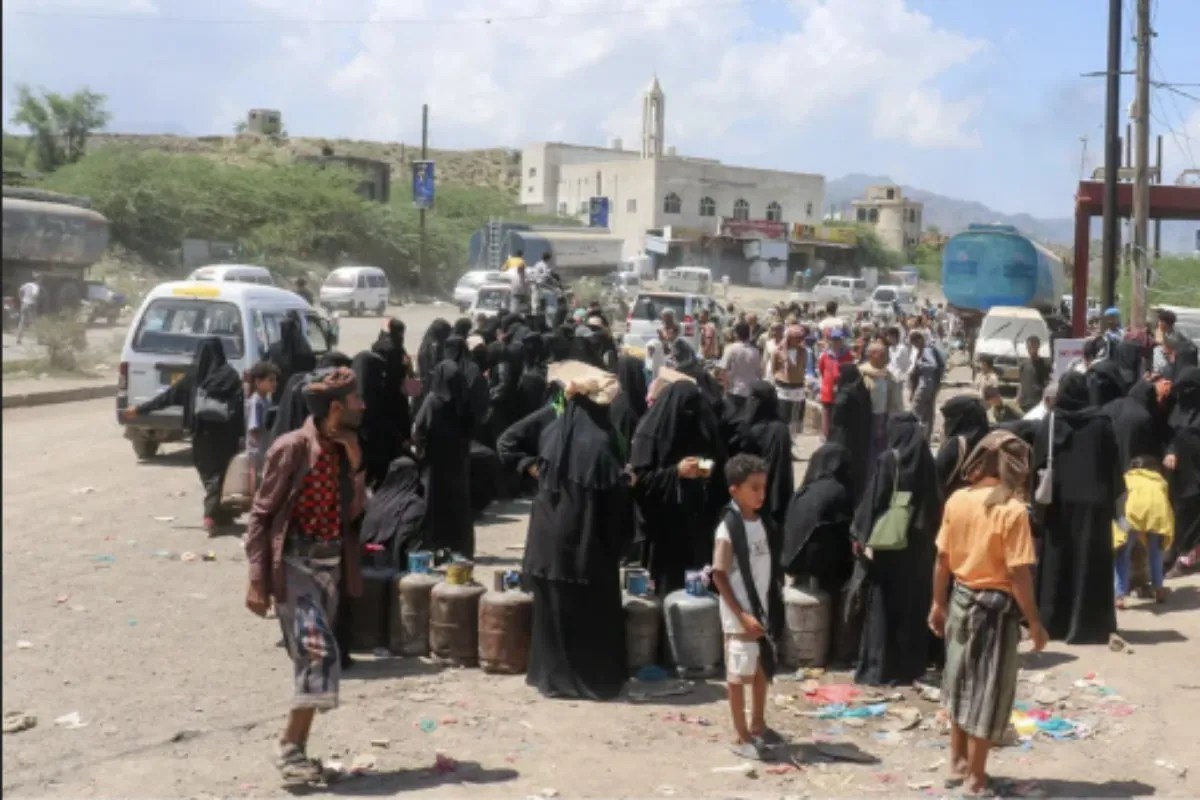
For Tariq, Layla, and Sami in our hypothetical story, the first night away from home is spent in a crowded room shared with relatives who already have too little space and too few mattresses. Two weeks later, the strain on everyone’s rations forces another move—this time to a makeshift shelter or an informal settlement on the edge of a town where wind whips grit under plastic sheeting.
Consider what happens next:
Sami asks why he cannot go to his usual classroom, or why the water in the jerrycan tastes metallic and comes in rationed portions. Adults try to sound steady while calculating how many days a bag of rice can stretch if prices jump again next week. A mother who used to manage a household with quiet authority suddenly has to ask strangers or aid workers for basic necessities.
Dignity takes a quiet beating in displacement. People talk a lot about calories, tents, and medical kits—and rightly so, because bodies need food, clean water, and care to survive. Yet anyone who has watched a proud person stand in a line for assistance knows there is another wound underneath: the ache of watching your children grow up in temporary quarters while your own hands have fewer tools to protect them.
Historically, Yemen has always been a crossroads—a place of ancient trade routes, terraced mountain agriculture, towering mud-brick and stone architecture, and deep social resilience. Communities in Yemen have weathered harsh terrain and lean seasons for generations through mutual support and tight family ties. A prolonged conflict tests even the strongest social fabric when shocks repeat year after year. When hundreds of thousands of people are forced from their homes, host communities absorb pressure too. Rent rises in safer areas. Schools double up or host displaced families. Clinics stretch thin supplies across twice as many patients.
Why 281,000 Is Never Just a Headcount
When news reports cite over 2.81 lakh—or 281,000—displaced people, it is tempting to treat that number as a ceiling or a fixed scoreboard.
It is neither.
Displacement is a moving current, not a frozen pond. Some families manage to return home when fighting eases in a pocket of territory, only to find shattered walls, unexploded hazards, lost livelihoods, or ruined farmland. Others are displaced a second, third, or fourth time as clashes flare elsewhere or economic hardship pushes them from one temporary spot to another. One headline number cannot hold all of those overlapping stories at once.
People sometimes ask a fair, blunt question: why don’t displaced families just settle permanently wherever they end up?
Because "settling" requires a foundation. A family cannot simply plant roots in a camp or a borrowed room when there is no steady income, no land title or long-term housing security, no guarantee of clean water or reliable healthcare, and an aching pull toward the home they never meant to abandon. Most displaced people are not wandering by choice; they are waiting for a safe enough opening to go back—or at least to breathe without bracing for the next shock.
Another question comes up just as often: when a crisis lasts this long, why do conditions still feel so fragile?
Because recovery is slow while disruption is fast. A bridge or water pipe can be damaged in minutes and take months—or years—under constrained funding and access hurdles—to rebuild. Meanwhile, inflation, currency swings, disrupted trade, and strained public services keep tightening the screws on ordinary households. Even when headlines quiet down for a few weeks, the underlying pressures keep grinding away at families trying to piece together a normal day.
The Invisible Stakes Behind Every Closed Door
Look closely at what gets lost when a crisis becomes routine.
It is not only houses. It is childhood routines that give young minds a sense of order. It is preventive healthcare—vaccines missed, chronic illnesses left unmanaged, pregnancies monitored late because travel is costly or unsafe. It is small businesses—tailors, mechanics, farmers, shopkeepers—whose savings were wiped out when they had to flee or shut their doors.
Let’s return to Sami in our hypothetical family. At eight years old, he does not read policy briefs or track diplomatic negotiations. He notices whether his mother slept. He notices whether there is bread for breakfast. He notices when the adults go quiet at the sound of an engine outside. When displacement stretches on, children carry adult worries inside small bodies, sometimes growing older in their eyes long before their years catch up.
And there is a mirror here for the rest of us, too.
We live in an era saturated with urgent alerts. Every day brings another crisis competing for our attention before lunch. It is human to feel overwhelmed, even helpless, when the scale of a humanitarian emergency feels vast and distant. Admitting that fatigue is not coldness; it is honesty. The danger is not feeling tired—the danger is letting fatigue turn into indifference, treating two hundred eighty-one thousand human beings like background scenery in someone else’s tragedy.
Care does not have to be theatrical to be real. Paying attention without looking away matters. Supporting credible humanitarian organizations that deliver food, clean water, shelter, and medical care on the ground matters. Refusing to flatten complex human lives into a single passing headline matters.
A Lamp Left Lit by the Window
Picture a room in a borrowed house at dusk.
There is no fancy furniture. Maybe a woven rug, a dented kettle, a folded quilt, and a small lamp casting a warm, amber circle against rough plaster. Outside, the wind moves across dry stone, carrying the familiar chill of evening. Inside, a father sits with his knees drawn up, trying to think through tomorrow’s route for water and bread, while a child traces patterns in the dust on the floor with one finger.
Two hundred eighty-one thousand people is not a footnote in a war report. It is two hundred eighty-one thousand separate evenings like that—each one holding a name, a memory of a front door, and a quiet refusal to stop hoping for morning.