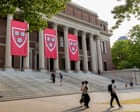
The midnight oil in a Harvard dorm room doesn't smell like romance. It smells like stale coffee, cheap energy drinks, and the distinct, metallic tang of panic.
Picture a student—let’s call her Maya. Maya spent her entire youth being the best. She was the valedictorian of her high school, the captain of the debate team, the kid who scored a perfect 1600 on her SATs while battling a flu. Her identity is forged in the fires of straight A's. To Maya, an A- is not a grade. It is an existential threat. It is a whispered accusation that she is slipping, failing, revealing herself to be an impostor among geniuses.
For decades, institutions like Harvard accommodated Maya and thousands of her peers. The unspoken contract was simple: if you are smart enough to get through the iron gates of Ivy League admissions, you are smart enough to deserve an A.
But a quiet revolution is brewing in Cambridge, Massachusetts. The administration is drawing a line in the crimson sand. Harvard College is moving to strictly limit the number of top marks its professors can hand out. The era of the guaranteed excellent grade is coming to an end, and the ripples of this decision will shake the very foundation of elite education.
To understand why this matters, we have to look at the numbers that the university has kept close to its chest for years. Grade inflation at Harvard isn't a recent glitch; it is a long-standing culture. By the early 2020s, the median grade awarded to Harvard undergraduates had climbed to an A-. Nearly eighty percent of all grades handed out across the college were either A or A-.
When everyone is exceptional, no one is.
Imagine walking into a luxury car dealership where every single vehicle is labeled a limited-edition supercar. The label loses its meaning. The currency becomes debased. This is the reality of the modern Ivy League transcript. A GPA of 3.9 used to be the hallmark of a generational mind. Today, it is simply the baseline expectation for a student looking to land a corporate internship or a spot at a top-tier medical school.
The faculty at Harvard watched this trend with growing alarm. Professors spoke privately of the immense pressure they faced from students—and sometimes wealthy parents—if they dared to hand out a B+. The grading rubric had compressed to a razor-thin margin. A single point deducted on an essay could spark an hour-long, tearful negotiation during office hours.
So, the university decided to break the system before the system completely broke the value of a Harvard degree. Under the new guidelines, departments will be required to adhere to strict grading curves or percentage caps. Only a predetermined slice of any given class will be permitted to walk away with that coveted, pristine letter at the top of their transcript.
Consider what happens next for students like Maya.
Suddenly, her peers are no longer her collaborators in the late-night study lounges of Widener Library. They are her direct competitors. If the guy sitting next to her in Advanced Macroeconomics gets an A, it literally means there is one less A available for her. The camaraderie of the campus melts away, replaced by a hyper-focused, Darwinian struggle for survival.
This shift introduces a profound psychological weight. The stakes are no longer just about mastering the material; they are about outmaneuvering the person to your left and your right. It forces us to ask a fundamental question about the purpose of higher education: Are universities meant to be collaborative incubators of knowledge, or are they sorting mechanisms designed to rank human capital for Wall Street and Silicon Valley?
The administration argues that this change is a necessary correction to restore academic rigor. They believe that true excellence cannot exist without the genuine possibility of failure—or at least the genuine possibility of mediocrity. A B grade needs to mean what it was originally intended to mean: above average. It should not be viewed as a scarlet letter or a career-killing disaster.
Yet, the anxiety among the student body is palpable. The transition from an inflationary grading environment to a strictly capped one feels like a bait-and-switch to those who have sacrificed their entire childhoods to play by the old rules. They were told that perfection was the entry fee. Now that they have paid it, the house is changing the odds of the game.
The real problem lies elsewhere, far beyond the iron gates of Harvard Yard. The corporate recruiting machine has not yet adjusted its algorithms. Major consulting firms, elite law schools, and medical board admissions software still screen applicants using rigid GPA cutoffs. If a Harvard student graduates with a 3.4 because of a newly imposed curve, the automated screening software at a prestigious firm doesn't know that 3.4 represents immense struggle and deep mastery. It simply sees a number lower than a 3.9 from a state university with different grading standards.
This mismatch creates an environment of intense friction. It pits the idealistic goals of academic purists against the brutal, pragmatic realities of the global job market.
I remember sitting in a seminar room years ago, listening to an aging professor lament the loss of what he called "the beautiful struggle." He argued that the most profound learning happens when a student hits a wall, fails gracefully, and is forced to rebuild their understanding from scratch. He believed that the obsession with maintaining a flawless GPA was turning brilliant minds into timid, risk-averse bureaucrats who only took classes they knew they could ace.
He was right. When the cost of an A- is an identity crisis, students stop taking chances. They avoid the difficult physics elective or the experimental creative writing workshop. They play it safe. They optimize.
Harvard’s decision is an attempt to force students to take risks again, to strip away the safety net of the ubiquitous A. It is an act of institutional tough love. But for the young men and women walking across the campus today, the change does not feel like liberation. It feels like a tightening of the vise.
Walk through Harvard Yard on a crisp autumn evening. The lights are burning bright in the upper floors of the freshmen dorms. Inside, teenagers who have never known anything but absolute validation are staring at syllabi that now contain an explicit warning: perfection is no longer guaranteed.
The ink on the new policy is dry, the committees have voted, and the directive has been issued to every department chair. The transcripts of the future will look radically different from the transcripts of the past.
Somewhere in a darkened library stack, a student turns the page of a heavy textbook, takes a slow breath, and looks at the clock. The deadline is approaching. The room is quiet, save for the furious, rhythmic tapping of a keyboard—the sound of a generation learning to run a race where the finish line has just been moved further into the dark.